🔴 Nori (purple laver)
Porphyra umbilicalis · Bangiaceae
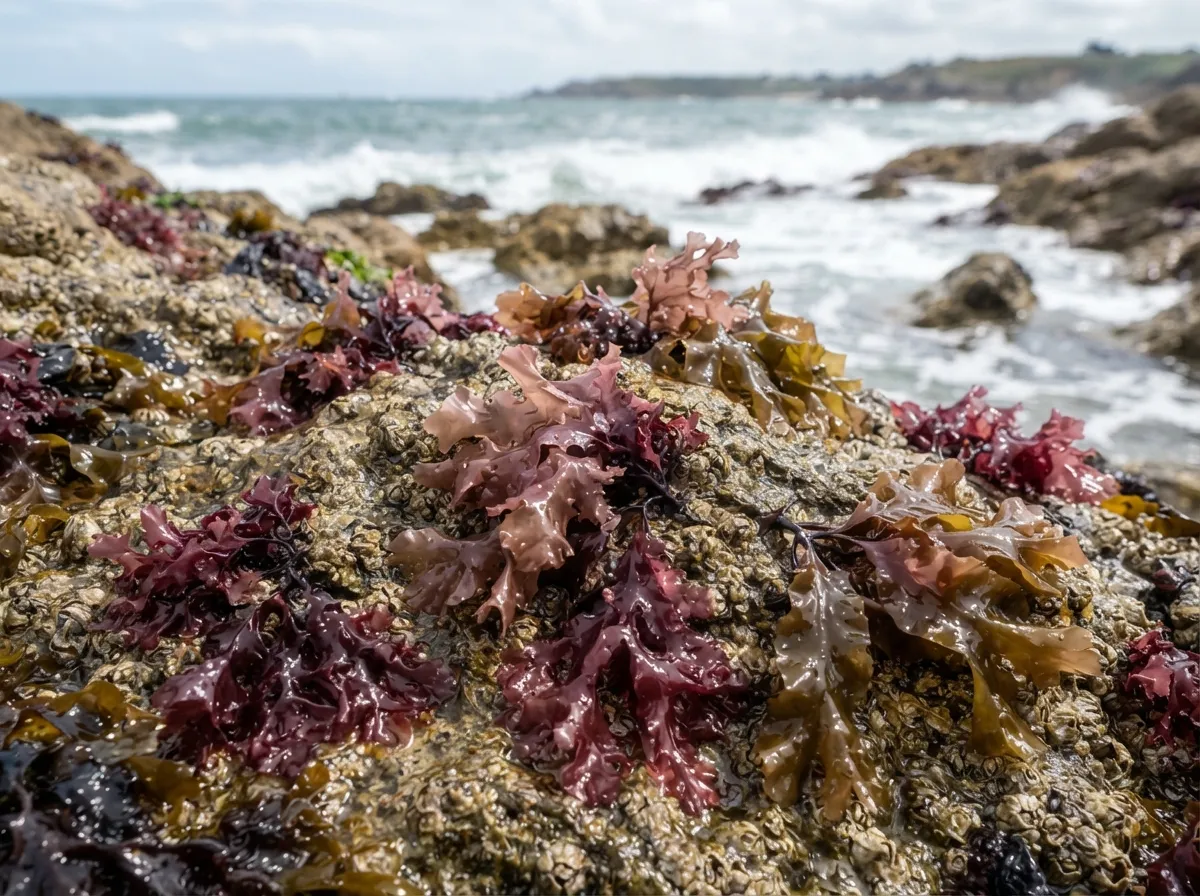
🔍 Identify it without mistakes
Red alga with a very thin, almost translucent sheet-like frond, forming irregular shreds stuck to intertidal rocks. At low tide, you could easily mistake it for washed-up dark plastic bags because it is so flat and pliable. Purple-red when wet, it turns black as it dries in the sun.
- single, thin, translucent sheet-like frond without midribs, irregular and not lobed into finger-like shapes
- purple-red to brownish-green when fresh, turning black as it dries on the rocks
- literally sticks to rocks in the upper intertidal zone, often forming dark mats at low tide
⚠️ Not to be confused with
To tell them apart: the different Porphyra/Pyropia species are mainly distinguished under a microscope; in practice, any thin translucent sheet-like alga sticking to high intertidal rocks, without midribs or latex, belongs to this safe edible group with no known danger
🍽️ Eating it
Preparation : traditionally washed then simmered for hours to yield Welsh 'laverbread', a dark paste rolled in oatmeal and fried; you can also dry it into thin sheets and toast it, just like Japanese nori, its close cousin
USDA FoodData Central, raw laver seaweed, per 100 g; the dried version concentrates nutrients (around 255 kcal and 7 g of protein per 100 g of dry nori)
💊 Healing with it
traditionally consumed in Wales for centuries as a mineral- and iodine-rich sea vegetable, popularized by Welsh miners as a cheap nutritious supplement
Level of evidence : traditional use — ANSES — Opinion on the risk of excess iodine intake linked to seaweed consumption
⚠️ more moderate iodine content than kelps or wracks, making it one of the best-tolerated seaweeds, but still consume in moderation (ANSES advice on seaweeds); avoid harvesting in the immediate vicinity of ports
Sources (4)
No entry replaces a certain identification in the field, or medical advice. When in doubt: don't eat it. If ingestion is suspected: poison control or 112/911.