🌰 Common Walnut
Juglans regia · Juglandaceae
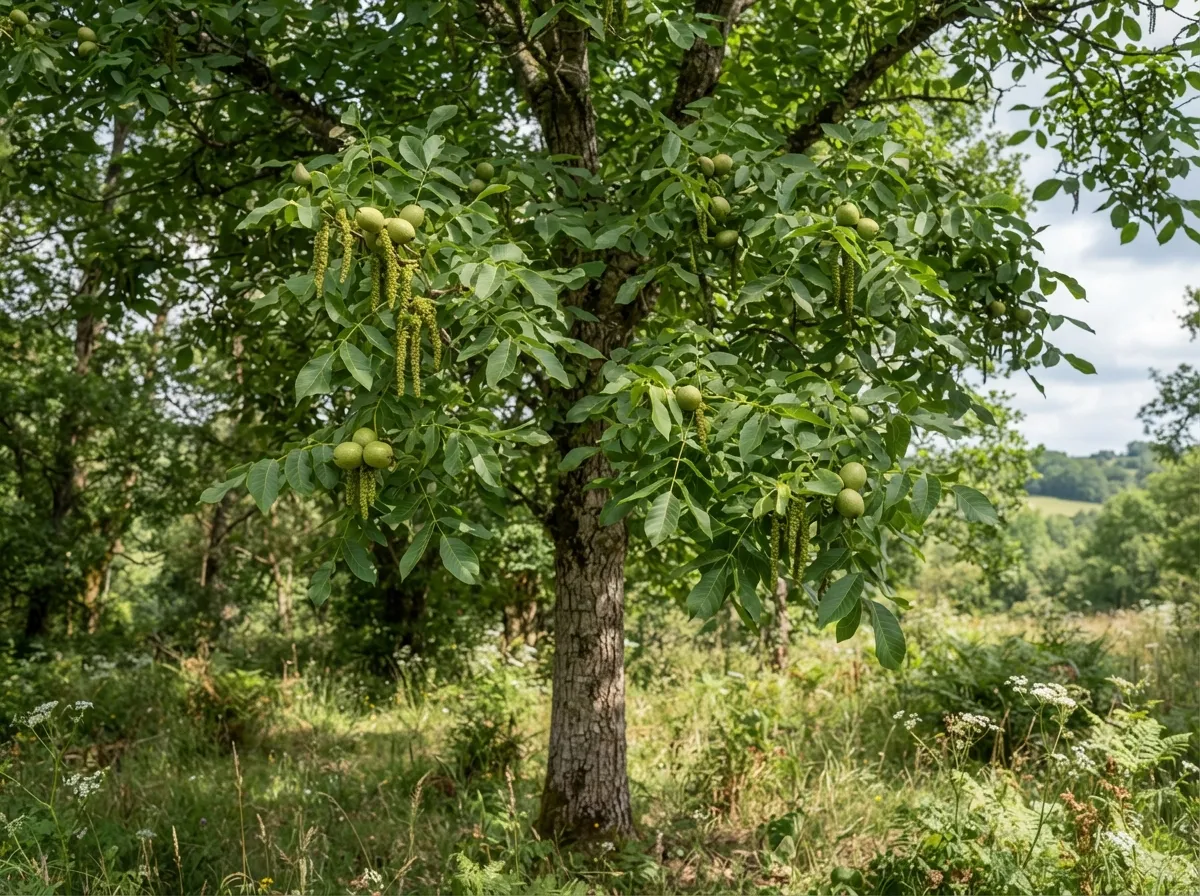
🔍 Identify it without mistakes
Large tree with a broad, majestic canopy, widely planted but also naturalized in forests. Recognized by its large, aromatic compound leaves (a characteristic smell when crushed) and its smooth gray bark that cracks into shallow plates as it ages. Its fruits, walnuts, are enclosed in a green husk that turns black and splits open at maturity.
- compound leaves, 5-9 leaflets (often 7), the terminal one larger, strong characteristic smell when crushed
- gray bark, smooth on young trees, becoming cracked in shallow plates with age
- fruit (walnut) enclosed in a fleshy green husk, turning black and splitting open when ripe
- conspicuous drooping male catkins in spring, appearing before the leaves
- large tree with a broad, spreading canopy, often planted individually
⚠️ Not to be confused with
To tell them apart: the black walnut has more numerous (11-23) and narrower leaflets, a darker and deeply furrowed bark, and a husk that stains the skin brownish-black very persistently
🍽️ Eating it
Preparation : ripe walnuts are eaten raw after cracking the shell; the green husk (before the shell hardens, in late June) is traditionally used to prepare walnut wine or walnut liqueur, macerated in alcohol with sugar and spices
USDA FoodData Central, dried kernels, per 100 g
💊 Healing with it
leaves are traditionally used externally (skin astringent) and the green husk as a bitter tonic; usages are less standardized than other European medicinal plants
Level of evidence : traditional use — ethnobotanical compilations (PFAF)
⚠️ walnut allergy is among the most common and potentially severe food allergies; the husk leaves long-lasting stains on skin and clothing (juglone)
🪓 Other bushcraft uses
- all parts of the tree, especially the roots, secrete juglone, an allelopathic substance that inhibits the growth of many other plants around it — a phenomenon well-known to gardeners who avoid planting tomatoes or potatoes under a walnut tree
- walnut wood is highly sought after in fine cabinetmaking and gunstock manufacturing for its fine grain and warm brown color
Sources (3)
No entry replaces a certain identification in the field, or medical advice. When in doubt: don't eat it. If ingestion is suspected: poison control or 112/911.