🌰 Black walnut
Juglans nigra · Juglandacées
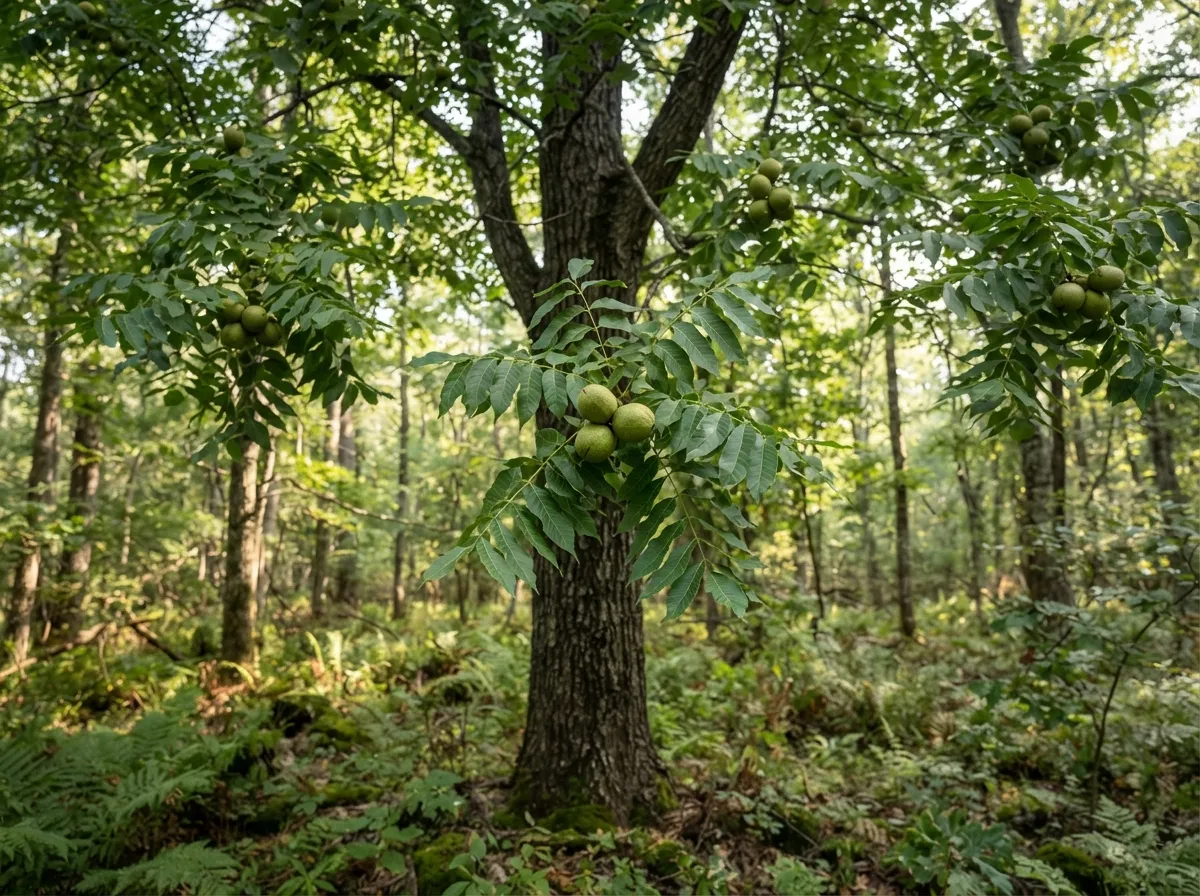
🔍 Identify it without mistakes
Large hardwood tree with dark bark deeply furrowed into diamond patterns, compound leaves with numerous leaflets (15-23) releasing a characteristic strong aromatic scent when crushed. Large round fruits with a fleshy green husk that turns black and heavily stains hands, containing a nut with an extremely hard, thick shell deeply sculpted with grooves.
- dark bark with deep diamond-patterned furrows
- compound leaf with 15-23 leaflets, strong smell when crushed
- round fruit with a fleshy green husk that turns black and stains
- extremely hard nut shell, deeply grooved
⚠️ Not to be confused with
To tell them apart: black walnut has more (11-23) and narrower leaflets, darker and more deeply furrowed bark, and a husk that stains the skin dark brown-black very persistently
🍽️ Eating it
Preparation : remove the fleshy green husk (wear gloves, it permanently stains the skin) then dry the nuts for 2-3 weeks before cracking them — a tough job that requires a sturdy tool (vice, hammer) due to the exceptional thickness and hardness of the shell; the kernels are eaten raw, roasted, or used in baking
💊 Healing with it
husk (green outer shell) and bark traditionally used as a dewormer and in antifungal skin tinctures; leaves used as tea for digestive purposes
Level of evidence : traditional use — Morton Arboretum — Black Walnut Toxicity
⚠️ black walnut produces juglone, an allelopathic compound toxic to many plants growing near its roots (especially tomatoes) and to horses upon contact with its wood sawdust or shavings (foundering) — this toxicity affects the environment and certain animals, not human consumption of the kernel itself, which is completely safe
🪓 Other bushcraft uses
- dark brown wood, among the most sought-after in the world for woodworking and precision rifle stocks
- green husk used as a traditional, durable brown dye
- crushed shells used as an industrial abrasive
Sources (3)
No entry replaces a certain identification in the field, or medical advice. When in doubt: don't eat it. If ingestion is suspected: poison control or 112/911.