🌿 Sea purslane
Halimione portulacoides · Amaranthaceae (Chenopodiaceae)
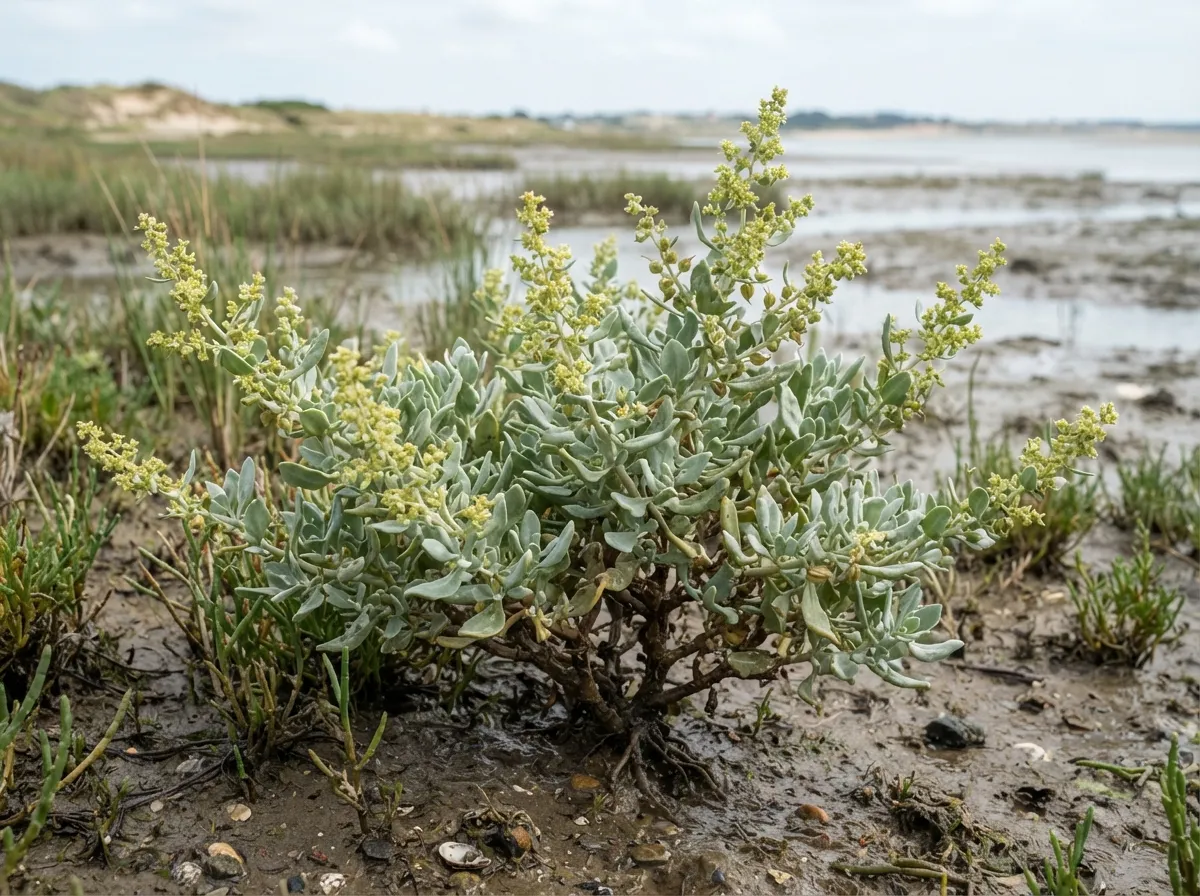
🔍 Identify it without mistakes
A small, highly branched dwarf shrub with a spreading or bushy habit, entirely silvery-grey, which forms dense belts just above the glasswort mats in salt marshes. Its thick, opposite, oval to elliptic leaves, silvery on both sides, are its most reliable identifying feature.
- opposite leaves (not alternate), thick, oval-elliptic, silvery on both sides
- habit of a small spreading or bushy shrub, grey-green to whitish, up to 50 cm high
- forms dense belts or mats just above the glasswort zone in salt marshes, never submerged for as long as the latter
⚠️ Not to be confused with
To tell them apart: sea purslane has opposite leaves, whereas pedunculate sea-purslane (much rarer) has alternate leaves and fruits on long stalks; if in doubt, do not harvest the rare species
🍽️ Eating it
Preparation : eat raw in small amounts in salads for its salty crunch, or dry and crumble it as a chip-like condiment; you'll never need to add salt
💊 Healing with it
no major medicinal uses documented beyond its value as a highly mineralized vegetable
Level of evidence : traditional use — Gerbeaud — L'obione faux-pourpier, une plante de bord de mer comestible
⚠️ none known at reasonable dietary doses
🪓 Other bushcraft uses
- nicknamed 'crab grass' because its dense mats in salt marshes shelter a wide variety of crustaceans
Sources (3)
No entry replaces a certain identification in the field, or medical advice. When in doubt: don't eat it. If ingestion is suspected: poison control or 112/911.