☠️ Hemlock water-dropwort
Oenanthe crocata · Apiaceae
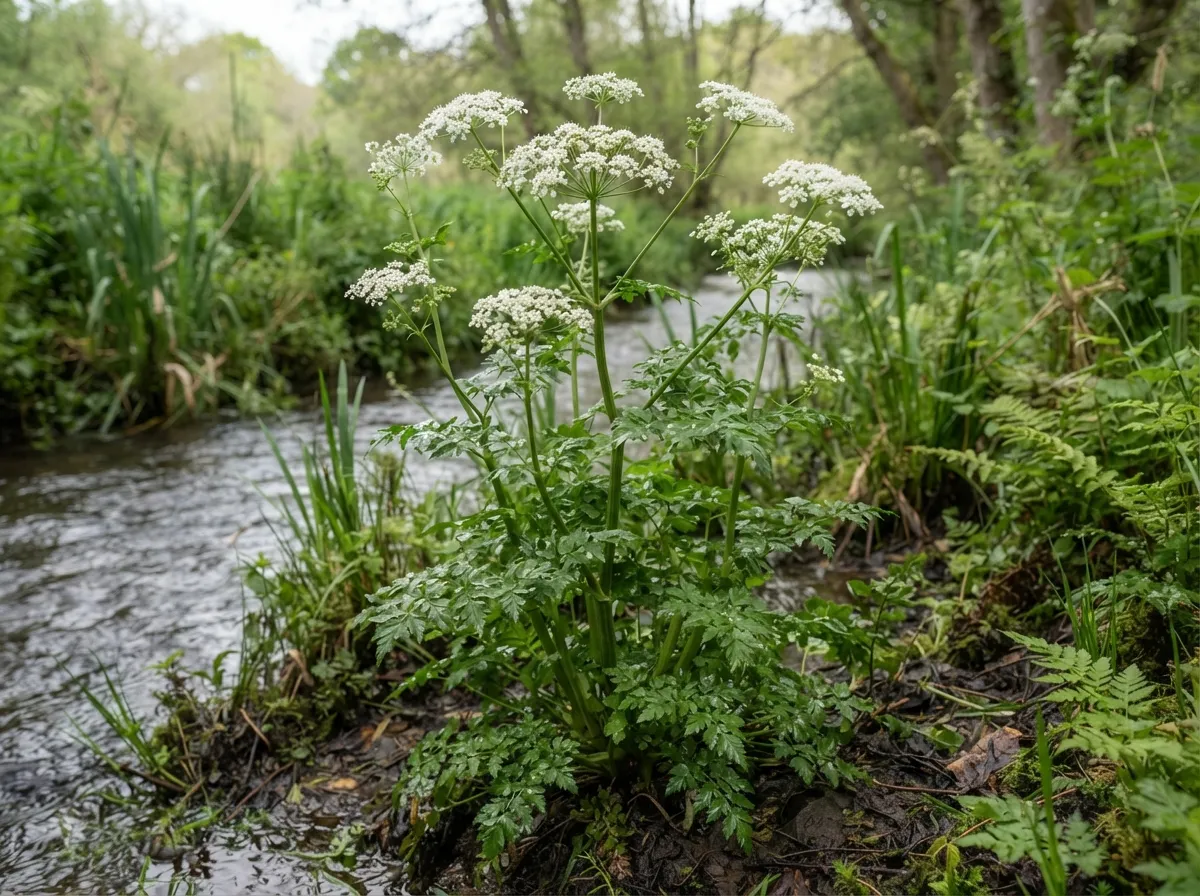
🔍 Identify it without mistakes
Considered one of Europe's most toxic plants, it grows with its feet in the water of ditches, slow-moving rivers, and marshes. Its tuberous root, shaped like a cluster of fleshy fingers, has a sweet parsnip taste that has tricked many foragers. The entire plant exudes a characteristic saffron-yellow sap when cut, which gives it its French name.
- root formed of several fleshy, spindle-shaped tubers, grouped like a cluster of small carrots
- yellowish sap (saffron-colored) oozing when the stem or root is cut
- hollow, grooved, branched stem
- erect white umbels, deeply divided leaves
⚠️ Not to be confused with
To tell them apart: hemlock water-dropwort's root is a cluster of fleshy tubers with saffron-yellow sap, whereas wild parsnip and wild celery have a single taproot without this colored sap
To tell them apart: only reliable botanical expertise can distinguish aquatic umbellifers; in practice, no wild umbellifer root found in wetlands should ever be tasted
To tell them apart: grows in damp/marshy areas (wild carrot prefers dry meadows), root formed by a cluster of fleshy tubers and not a single taproot, celery/parsley smell rather than carrot smell
To tell them apart: rock samphire grows exclusively on rocks/cliffs sprayed by sea foam, with thick, fleshy leaves smelling strongly aromatic; hemlock water-dropwort grows in damp/marshy areas, has tuberous roots and a different smell — if in doubt, do not consume
☠️ What kills
First steps : Call emergency services as an absolute emergency at the very first tremors: convulsions can occur within minutes. Do not induce vomiting during a seizure (risk of aspiration). Keep a piece of the root for identification.
Sources (3)
No entry replaces a certain identification in the field, or medical advice. When in doubt: don't eat it. If ingestion is suspected: poison control or 112/911.