🌵 Eastern prickly pear
Opuntia humifusa · Cactacées
🔍 Identify it without mistakes
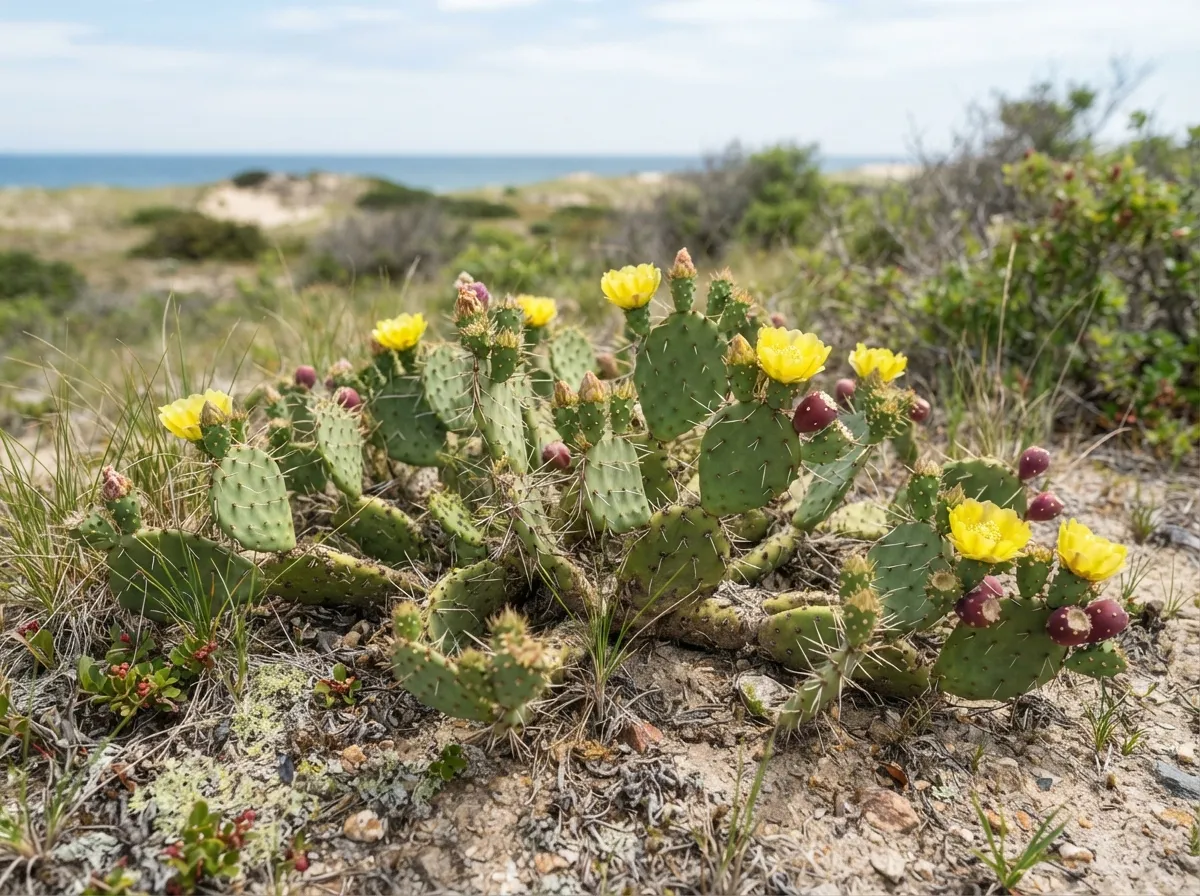
Prostrate cactus with flat, fleshy pads (cladodes), often clustered close to the ground, covered with tufts of fine, highly irritating glochid spines in addition to longer, visible spines. Large yellow flowers, sometimes with an orange center in spring and summer, followed by red-purple fruits (pears) at maturity, which are also covered in glochids. Unlike the Mediterranean prickly pear (Opuntia ficus-indica), this is a low-growing, creeping species native to North America.
- flat, fleshy pads, low-growing and creeping, with areoles bearing fine glochids and spines
- bright yellow flowers, often with an orange center
- oval red-purple fruit when ripe, covered in glochids
- the only true native and common Opuntia species in eastern North America, capable of surviving under snow
⚠️ Not to be confused with
To tell them apart: the low, mat-forming growth habit, the fleshy pads covered with glochids, and its ability to survive under snow distinguish this native Opuntia from any toxic cactus — in fact, the cactus family contains no deadly species
🍽️ Eating it
Preparation : you must absolutely remove ALL glochids (brush vigorously or singe quickly over a flame) before handling; peel the young pads, slice them into strips, and cook them grilled, sautéed, or boiled as a vegetable (nopales); carefully peel the ripe fruits after removing the glochids, then eat the pulp raw, juiced, or in jellies
💊 Healing with it
pad pulp traditionally applied as a poultice on burns, wounds, and insect bites; traditional internal use for digestive disorders
Level of evidence : limited studies — North Carolina Extension Gardener Plant Toolbox — Opuntia humifusa
⚠️ always remove glochids completely before eating or handling with bare hands — they get lodged easily in the skin and are difficult to extract
🪓 Other bushcraft uses
- pad mucilage traditionally used as glue and a binding agent
Sources (2)
No entry replaces a certain identification in the field, or medical advice. When in doubt: don't eat it. If ingestion is suspected: poison control or 112/911.