🌿 Wild Oregano (Wild Marjoram)
Origanum vulgare · Lamiaceae
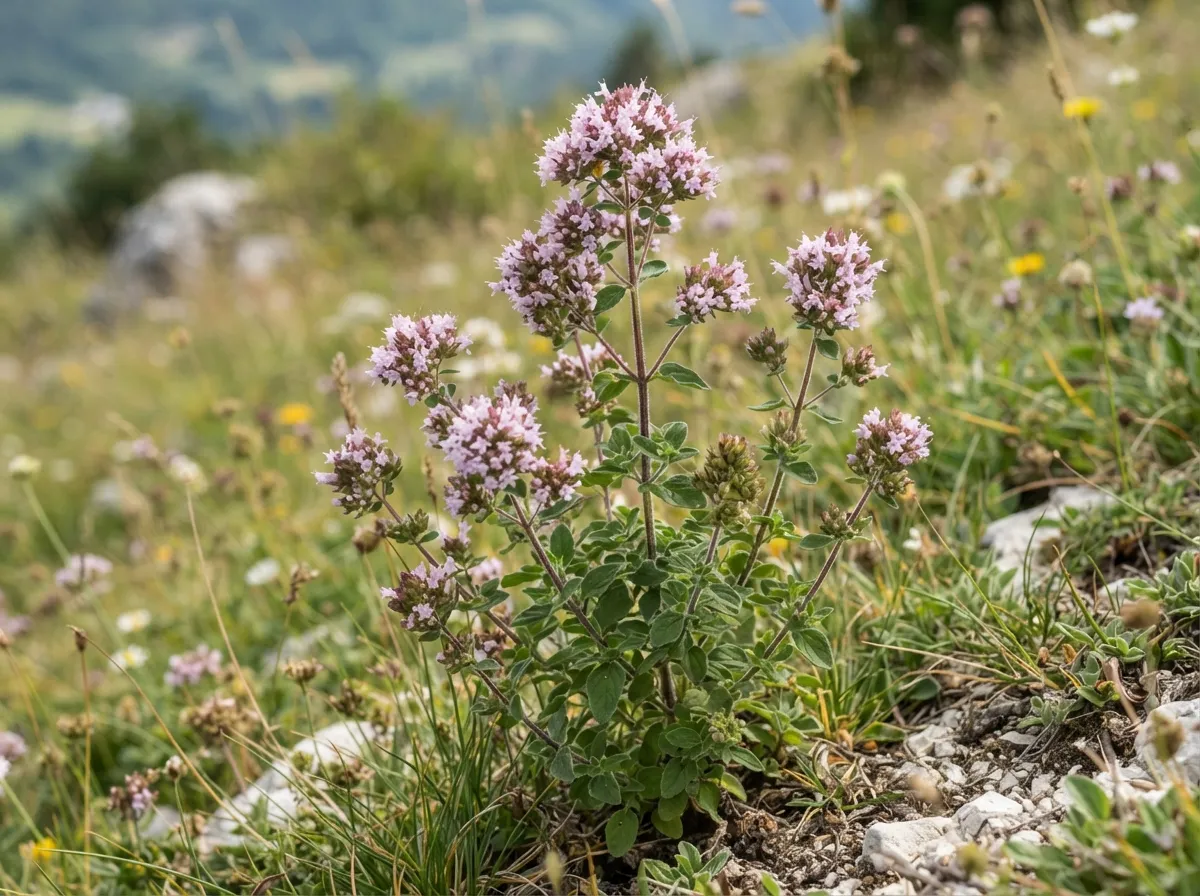
🔍 Identify it without mistakes
A small aromatic plant found on dry, sunny hillsides, easily recognized by its powerful scent as soon as you crush a leaf — it's the oregano that flavors pizzas, growing here in the wild. Hairy square stem, opposite oval leaves, small pinkish-purple flowers clustered in a dense corymb at the top.
- powerful and characteristic aromatic smell (pizza/thyme) when leaves are crushed
- square stem, erect, often tinged with reddish-purple, hairy
- opposite oval leaves, entire or slightly toothed, stalked
- pinkish-purple flowers in small dense clusters (corymbs) at the top of the stems
- conspicuous purplish bracts beneath the flowers
⚠️ Not to be confused with
To tell them apart: oregano has pinkish-purple flowers grouped in a dense corymb with typical purplish bracts; mint has flowers in elongated spikes at the leaf axils
🍽️ Eating it
Preparation : fresh or dried leaves as a condiment (commercial oregano is often this same cultivated species); flowers as a garnish or herbal tea
💊 Healing with it
traditionally used as an infusion for mild digestive disorders and as a respiratory antiseptic; the essential oil (carvacrol, thymol) has documented in vitro antimicrobial activity
Level of evidence : limited studies — ethnobotanical compilations (PFAF); in vitro studies on carvacrol
⚠️ pure essential oil is dermocaustic and must never be applied undiluted; avoid in high doses during pregnancy
🪓 Other bushcraft uses
- flowers are rich in nectar, making them among the most visited by bees and butterflies in dry meadows in late summer
No entry replaces a certain identification in the field, or medical advice. When in doubt: don't eat it. If ingestion is suspected: poison control or 112/911.