🌳 Field Elm
Ulmus minor (syn. Ulmus campestris) · Ulmaceae
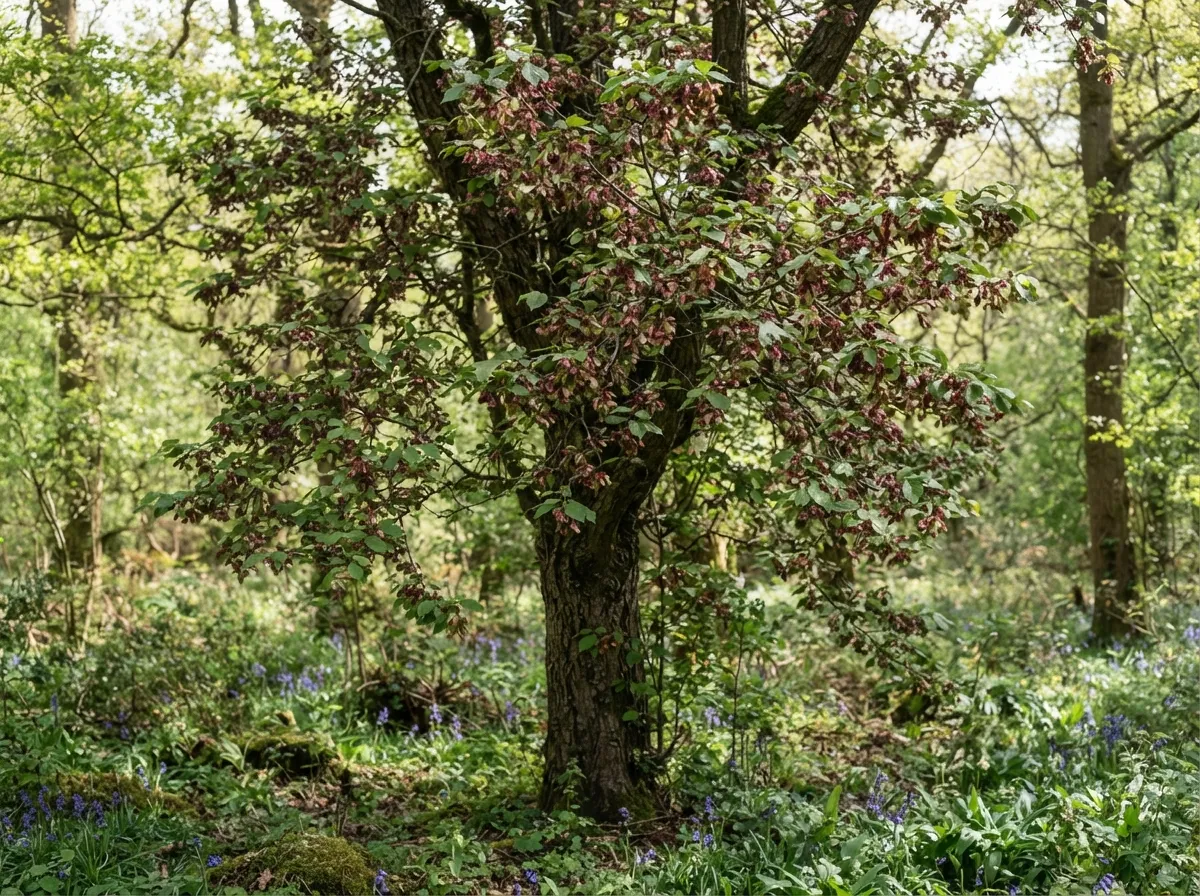
🔍 Identify it without mistakes
Tree with oval, doubly serrated leaves that are asymmetrical at the base (one side of the blade extends further down than the other, a diagnostic key for the genus Ulmus), rough to the touch on top. Small, round, winged fruits (samaras) appear early in spring before the leaves. Grey bark cracking into plates with age.
- asymmetrical leaf base (one side longer than the other)
- doubly serrated leaves, rough to the touch
- round winged samaras appearing before the leaves
- grey bark cracking into irregular plates
- cambium (layer under the bark) mucilaginous and slightly sweet to the taste
⚠️ Not to be confused with
To tell them apart: the asymmetrical leaf base is a reliable signature of the genus Ulmus, rarely shared by other common European trees
🍽️ Eating it
Preparation : cambium (the thin living layer under the bark) scraped and eaten raw, or dried and ground into emergency flour in times of famine — a documented practice among many forest peoples of Europe and North America; young and tender samaras eaten raw, slightly sweet; young leaves in salads at the very beginning of spring
💊 Healing with it
bark traditionally used as an emollient poultice for skin conditions, an application with little modern scientific documentation
Level of evidence : traditional use — ethnobotanical compilations (Couplan, Thayer)
⚠️ no major known contraindications; harvesting cambium must remain limited and sensible (it weakens or kills the tree if the ring girdles the trunk — reserve this technique for true survival situations)
🪓 Other bushcraft uses
- dense wood resistant to rot in wet environments, historically used for submerged foundation piles (part of Venice's foundations rests on elm and alder piles)
- bast fiber used for emergency cordage
Sources (3)
No entry replaces a certain identification in the field, or medical advice. When in doubt: don't eat it. If ingestion is suspected: poison control or 112/911.