🌿 Stinging Nettle
Urtica dioica · Urticaceae
🔍 Identify it without mistakes
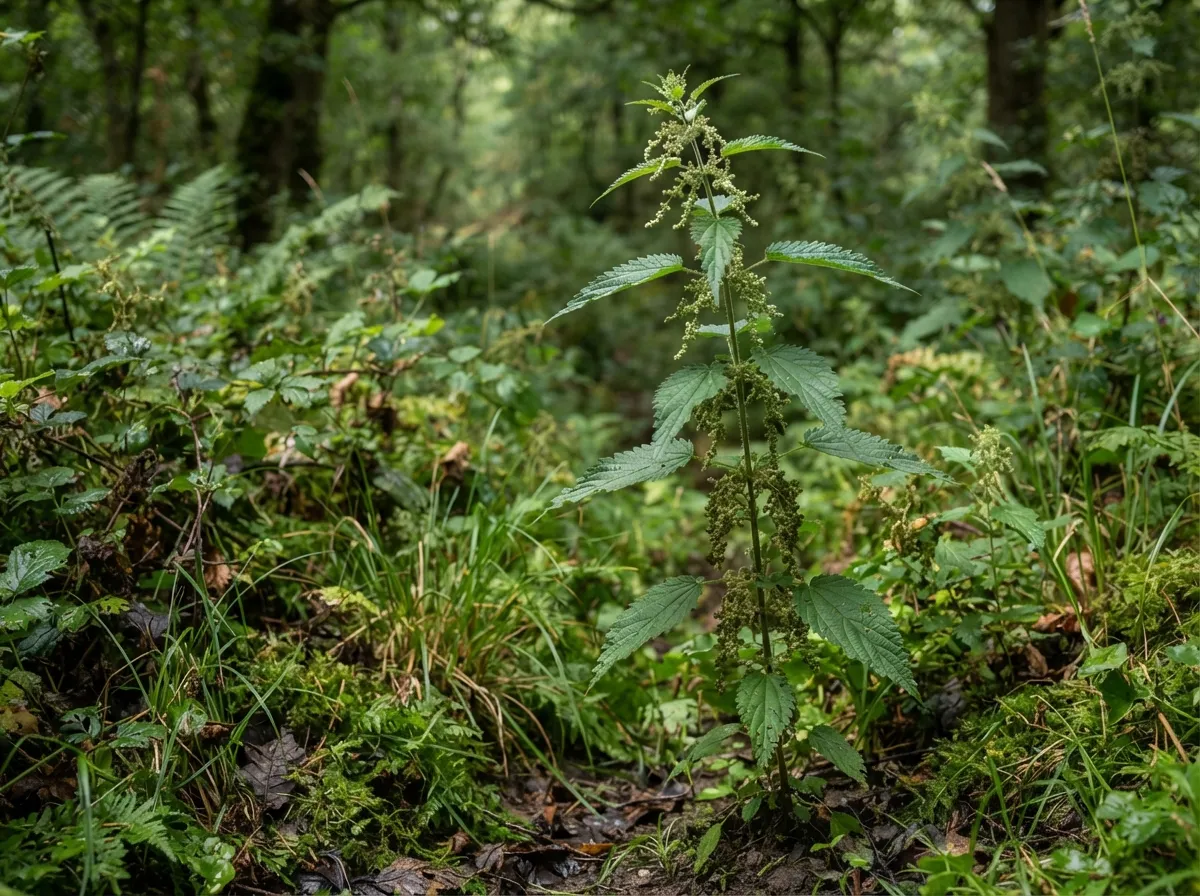
Circumboreal perennial plant, as common in North America as in Europe, with an erect square stem and opposite toothed leaves, entirely covered with microscopic stinging hairs that inject a mix of histamine and formic acid at the slightest contact. Inconspicuous greenish flowers hang in clusters at the leaf axils.
- square stem in cross-section
- opposite toothed leaves, covered with stinging hairs visible against the light
- immediate and prolonged stinging sensation upon contact
- grows in dense colonies on nitrogen-rich soil
⚠️ Not to be confused with
To tell them apart: no stinging hairs, white flowers in whorls, square stem too but leaves are less pointed
To tell them apart: gently touch a leaf: dead-nettle is completely soft, without a single stinging hair, unlike stinging nettle which stings immediately on contact
🍽️ Eating it
Preparation : cook or dry for at least 12 h to neutralize the stinging hairs; soup, pesto, wild spinach; once dried, seeds can be sprinkled raw over dishes
USDA FoodData Central, blanched leaves, per 100 g
💊 Healing with it
diuretic, anti-inflammatory (leaf), benign prostatic hyperplasia (root)
Level of evidence : solid studies — EMA/HMPC, community herbal monograph on Urtica dioica
⚠️ wearing gloves is recommended when harvesting; not recommended for edema caused by heart or kidney failure without medical advice; potential interactions with blood thinners and blood pressure medication
🪓 Other bushcraft uses
- cordage (stem fibers, retting)
- green dye
- fertilizer (plant tea)
Sources (3)
No entry replaces a certain identification in the field, or medical advice. When in doubt: don't eat it. If ingestion is suspected: poison control or 112/911.