🌿 Alpine Sorrel
Rumex alpinus · Polygonaceae
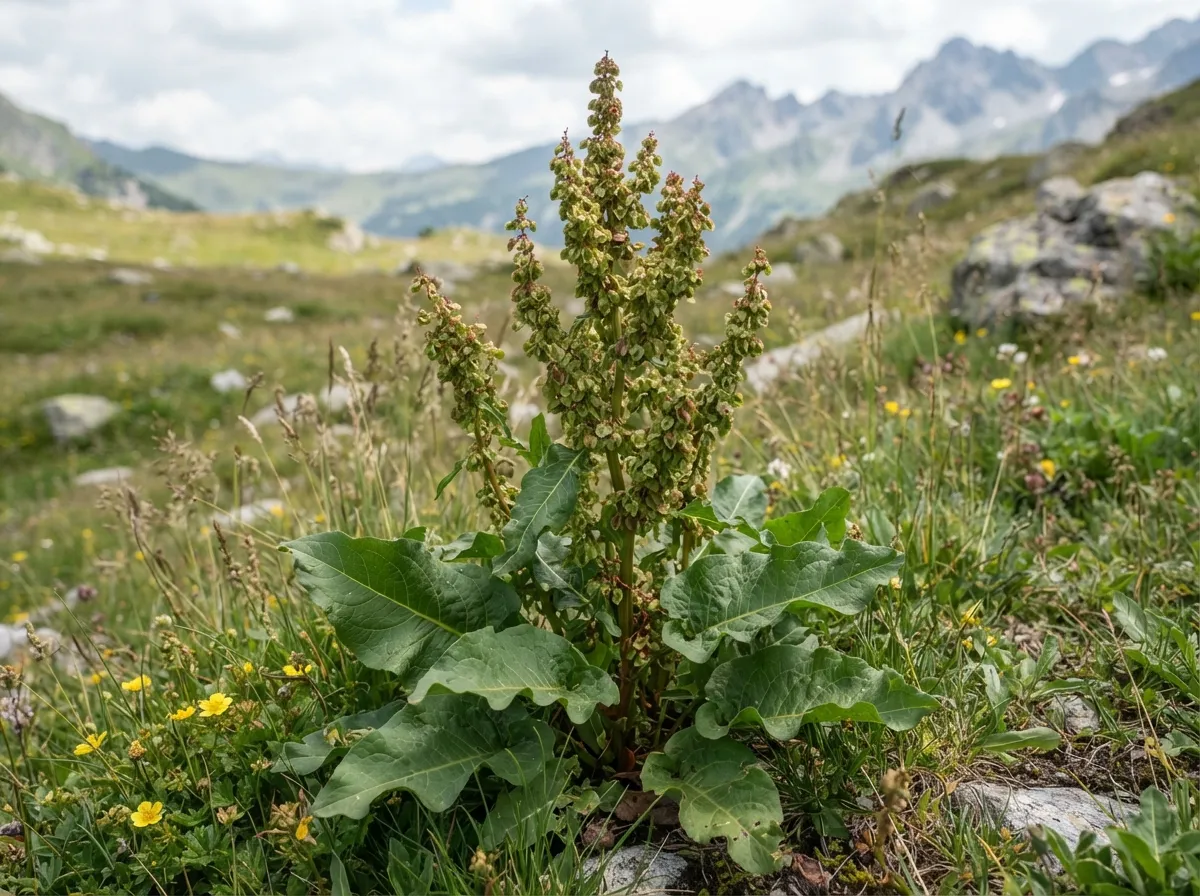
🔍 Identify it without mistakes
Large, robust perennial plant, 0.5 to 1.5 m tall, with broad, heart-shaped basal leaves on long petioles. Bright green in color, it forms very recognizable dense colonies around alpine huts and livestock resting areas (indicating nitrogen-enriched soil). Very numerous greenish then reddish-brown flowers in large erect panicles.
- very recognizable large heart-shaped leaves forming dense colonies
- typical presence around alpine huts and old livestock pens (nitrogen-rich soil)
- sturdy hollow stem
- distinct tart taste when chewing a leaf
⚠️ Not to be confused with
To tell them apart: Alpine sorrel has a stem bearing a thin membranous sheath (ochrea) encircling the stem at each node — a characteristic feature of the Polygonaceae family, absent in false hellebore — and a distinctly tart taste (oxalic acid) when chewed; false hellebore has strongly accordion-pleated/ribbed leaves (prominent parallel veins), no membranous sheath, a solid stem, and a bitter-burning taste with no acidity
🍽️ Eating it
Preparation : cooked like spinach (traditional alpine soup); acidity (oxalic acid) decreases significantly with cooking
🪓 Other bushcraft uses
- indicator of over-enriched nitrogen soils (trampled by livestock), used by shepherds as a sign of a herd resting area
No entry replaces a certain identification in the field, or medical advice. When in doubt: don't eat it. If ingestion is suspected: poison control or 112/911.