🌿 Sorrel
Rumex acetosa · Polygonaceae
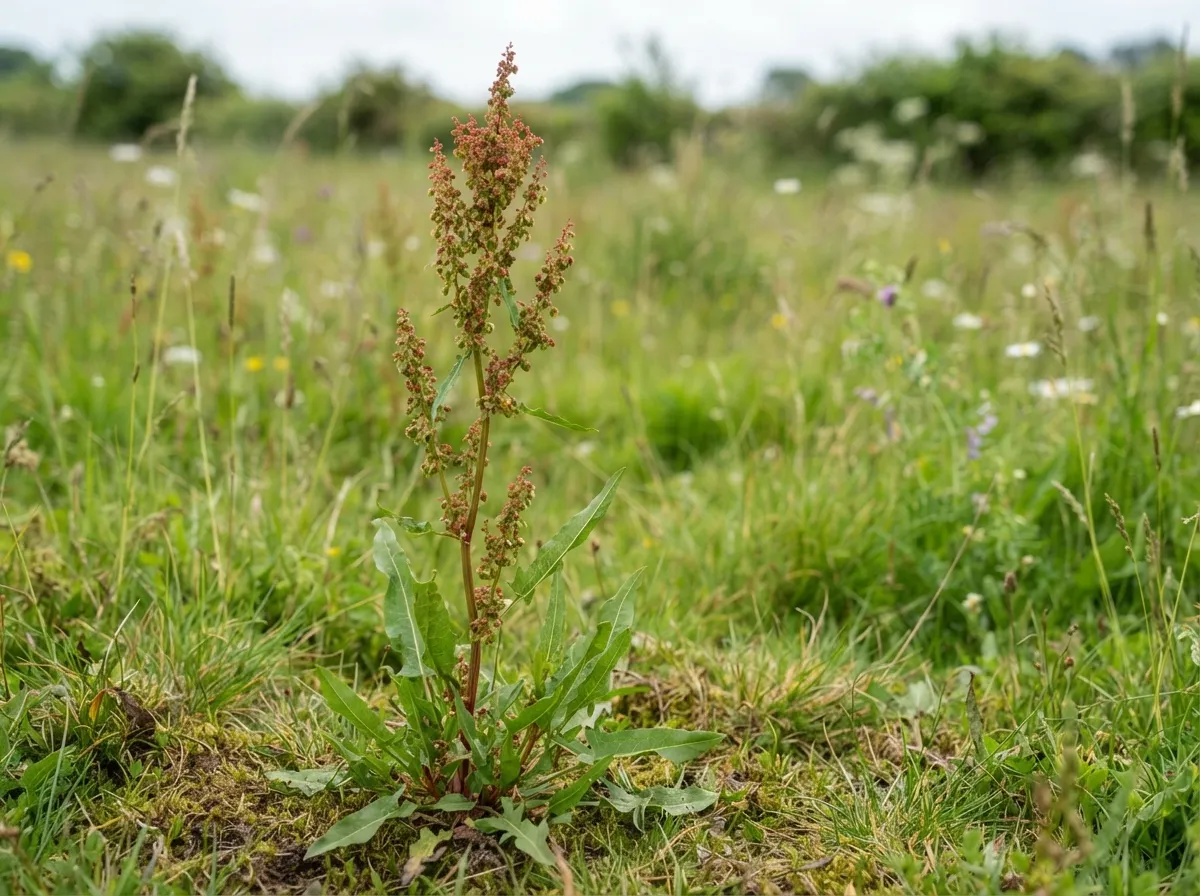
🔍 Identify it without mistakes
Meadow herb with spearhead-shaped leaves featuring two sharp, downward-pointing basal lobes that clasp the stem — your most reliable key feature. Very distinct tangy, sour taste as soon as you chew a leaf, caused by oxalic acid. Greenish to reddish flowers in an erect panicle.
- arrow-shaped (sagittate) leaves, basal lobes pointing straight down
- characteristic sour, lemony taste
- ocrea (membranous sheath) at the base of each leaf, typical of Polygonaceae
- grooved stem turning red late in the season
- reddish flower clusters when mature
⚠️ Not to be confused with
To tell them apart: smaller plant, basal lobes spread out horizontally rather than pointing downward
To tell them apart: arum has no sour taste, its leaves are broader arrowhead-shaped and often spotted with black, without an ocrea
🍽️ Eating it
Preparation : raw in small amounts in salads for its tangy bite, cooked in soups (classic sorrel cream soup) or in sauces to go with fish and eggs
approx, cultivated garden sorrel Rumex acetosa, Ciqual/compilations, wild sorrel has a similar composition
💊 Healing with it
traditionally used to refresh and as a mild diuretic
Level of evidence : traditional use — ethnobotanical compilations (Fournier, Couplan)
⚠️ oxalic acid: avoid in large quantities if you are prone to kidney stones (calcium oxalate), suffer from gout, or for young children; not recommended in case of kidney failure
🪓 Other bushcraft uses
- crushed raw leaves can be used to polish old copper utensils (oxalic acid dissolves oxidation)
No entry replaces a certain identification in the field, or medical advice. When in doubt: don't eat it. If ingestion is suspected: poison control or 112/911.