🌴 Sago Palm
Metroxylon sagu · Arecaceae
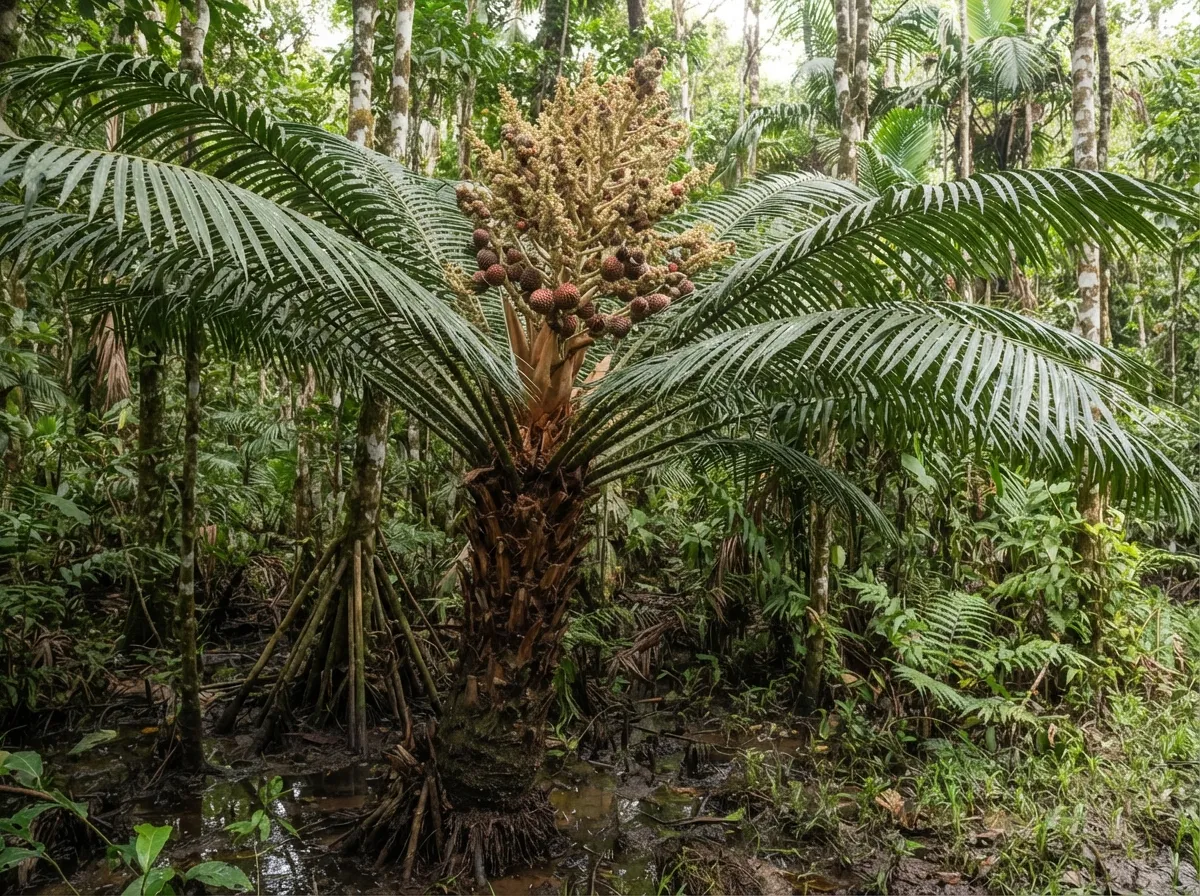
🔍 Identify it without mistakes
Stocky clump-forming palm with a thick ringed trunk reaching up to 60 cm in diameter, crowned with large pinnate fronds that are spiny at the base of the leaflets. Often grows in dense stands in freshwater swampy areas.
- massive ringed trunk, often multiple trunks forming a clump from the same rhizome
- pinnate fronds several meters long with spiny petioles
- almost systematic presence in waterlogged or swampy soil
⚠️ Not to be confused with
To tell them apart: the true sago palm is a real palm (Arecaceae): single smooth ringed trunk, crown of large pinnate fronds, no cones; the cycad is a cycadale (gymnosperm): shorter scaly trunk, and above all a cone or a mass of orange seeds at the base of the leaves — the presence of a cone automatically rules out any true palm
🍽️ Eating it
Preparation : felling the palm before flowering, splitting the trunk lengthwise, extracting the fibrous pith, pounding/kneading it in water to release the starch, filtering out the fibers, then letting the resulting white starch (sago) decant and dry; the heart of the terminal bud can be eaten raw or cooked as a vegetable
dried sago (pure starch), order of magnitude from nutritional tables for commercial sago starch
💊 Healing with it
no notable medicinal use; strictly a food and caloric resource
Level of evidence : traditional use — Springer - Nutritional, cultural and industrial significance of Metroxylon sagu
⚠️ none known
🪓 Other bushcraft uses
- leaves for roofing thatch
- residual fibers for animal bedding or fuel
- a single adult trunk can yield 150 to 300 kg of starch
Sources (2)
No entry replaces a certain identification in the field, or medical advice. When in doubt: don't eat it. If ingestion is suspected: poison control or 112/911.