🌳 Blue Palo Verde
Parkinsonia florida · Fabaceae
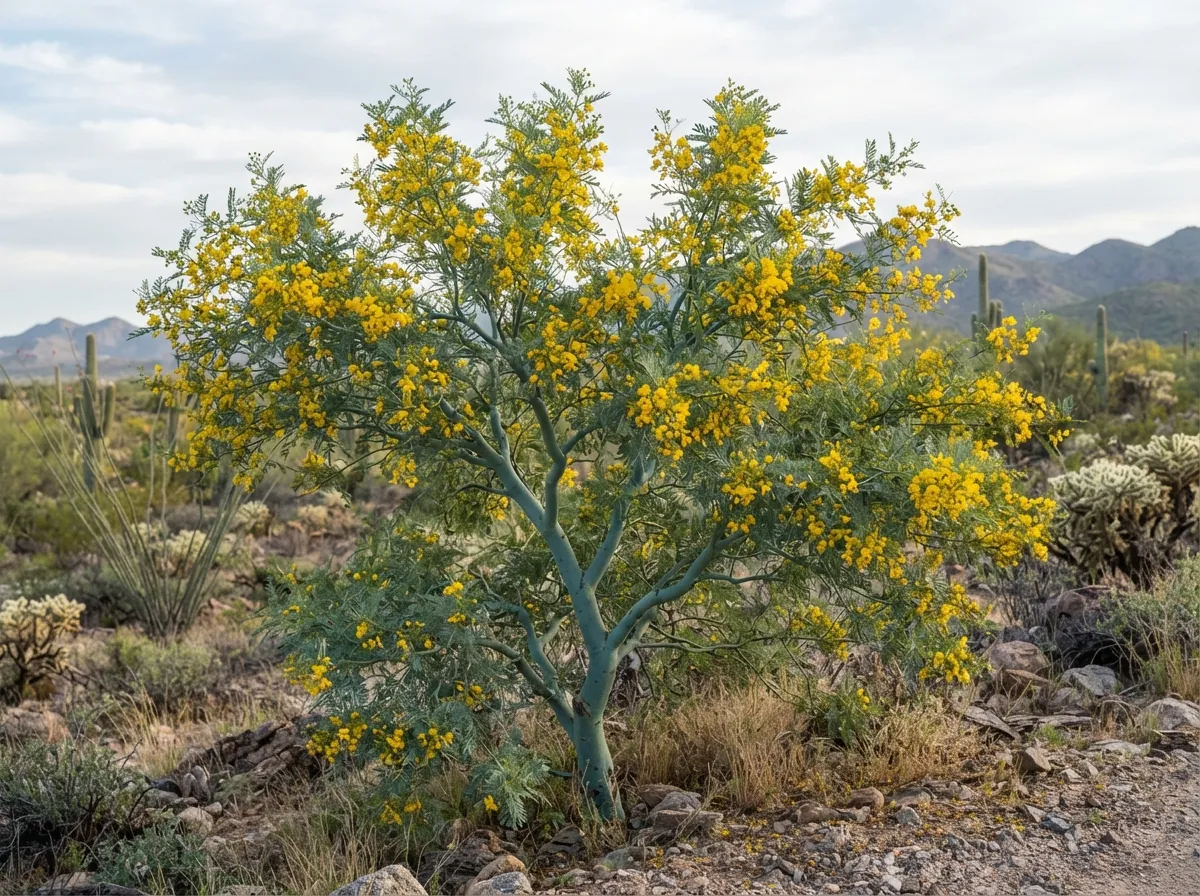
🔍 Identify it without mistakes
Sonoran Desert tree of about 10 m, recognizable by its green bark and trunk ("palo verde" means "green stick/wood" in Spanish), which carry out photosynthesis even after leaves drop during dry spells. Small deciduous compound leaves, fine thorns, bright yellow flowers in spring that are highly melliferous, followed by flattened pods with a harder shell than those of the foothill palo verde, its close relative.
- green bark and trunk performing photosynthesis even without leaves
- small deciduous compound leaves, shed quickly in drought
- abundant bright yellow flowers in spring
- flattened pods with a hard shell, larger than those of the foothill palo verde (Parkinsonia microphylla)
⚠️ Not to be confused with
To tell them apart: the palo verde is instantly recognizable by its green bark and trunk that carry out photosynthesis, absent in the mesquite whose bark remains brown and foliage fine, feathery bipinnate; palo verde pods are flattened with a hard shell, while mesquite pods are long, straight, and sweet with a characteristic smell
🍽️ Eating it
Preparation : flowers can be eaten raw or cooked; seeds inside the pods, traditionally used by the Quechan, Mojave, and Akimel O'odham peoples, are consumed after cooking
💊 Healing with it
no major traditional medicinal uses documented in the consulted sources
Level of evidence : traditional use — Wikipedia — Parkinsonia florida
⚠️ no specific precautions known for properly prepared flowers and seeds
🪓 Other bushcraft uses
- wood traditionally used to carve ladles and utensils
- official state tree of Arizona
Sources (1)
No entry replaces a certain identification in the field, or medical advice. When in doubt: don't eat it. If ingestion is suspected: poison control or 112/911.