🌴 Pandanus (vacoa, screwpine)
Pandanus tectorius · Pandanacées
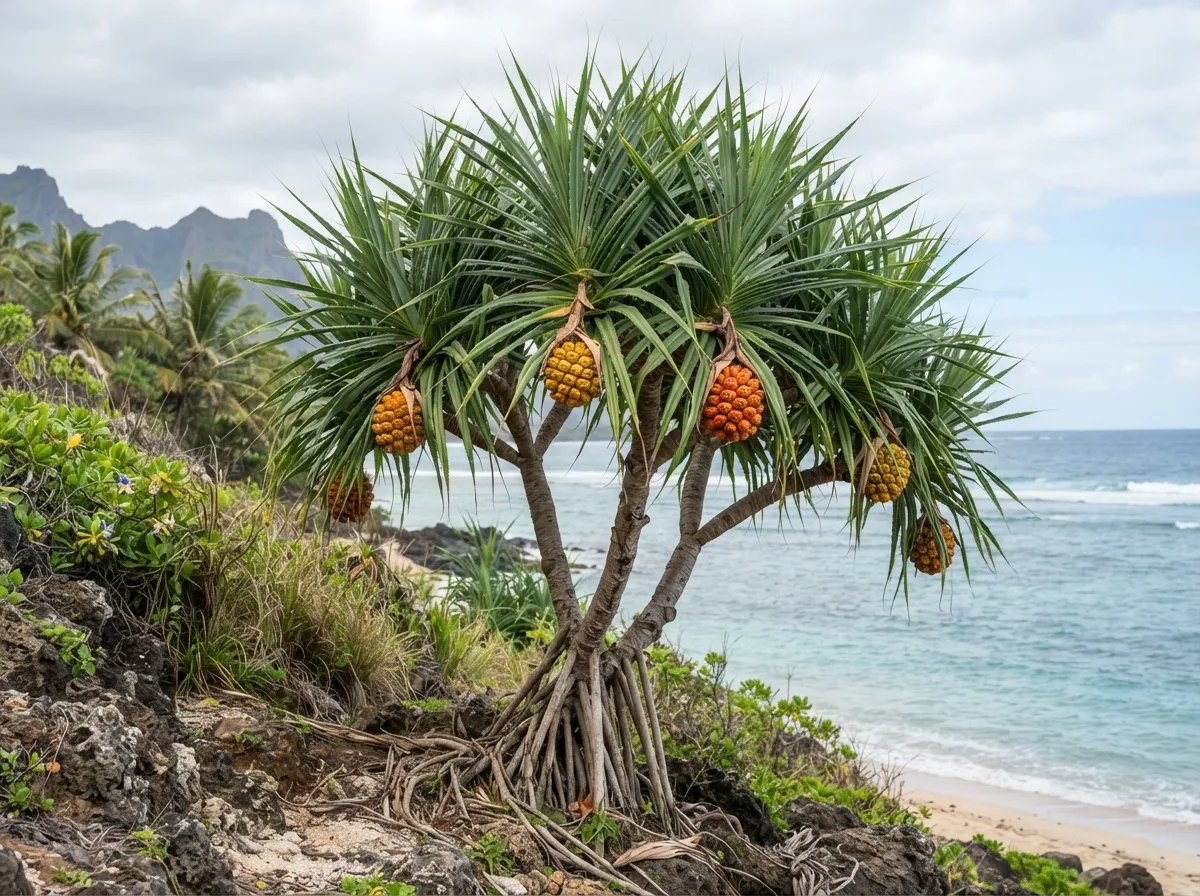
🔍 Identify it without mistakes
Branched shrub to tree of tropical Pacific and Southeast Asian coasts, easily recognized by its aerial stilt roots supporting the trunk and long, strap-like leaves arranged in a spiral, with spiny margins. The fruit, a large globe made of dozens of pineapple-like segments (phalanges), turns yellow-orange when ripe.
- highly characteristic aerial stilt roots supporting the trunk
- long, strap-like leaves arranged in a spiral around the stems (hence the name "screwpine"), with spiny margins and midrib
- globular fruit made of multiple pineapple-like phalanges, yellow-orange when ripe
⚠️ Not to be confused with
To tell them apart: the characteristic aerial stilt roots of the pandanus are absent in agaves and yuccas, which grow in low rosettes directly on the ground without this elevated root system
🍽️ Eating it
Preparation : detach the phalanges from the ripe fruit and chew or suck the sweet, fibrous base of each to extract the juice and pulp; cook the heart of young shoots as a vegetable; leaves of related aromatic species (Pandanus amaryllifolius) flavor rice and desserts in Southeast Asian cuisine
💊 Healing with it
roots and leaves used in traditional Pacific medicine to treat fever and pain
Level of evidence : traditional use — University of Hawaii at Manoa — Traditional Pacific Island Crops, Pandanus
⚠️ no known toxicity in traditional uses
🪓 Other bushcraft uses
- woven leaves for thatched roofs, mats, baskets, and traditional canoe sails
- stilt-root fibers used in basketry and cordage
Sources (2)
No entry replaces a certain identification in the field, or medical advice. When in doubt: don't eat it. If ingestion is suspected: poison control or 112/911.