🍃 Butterbur (pestilence wort)
Petasites hybridus · Astéracées
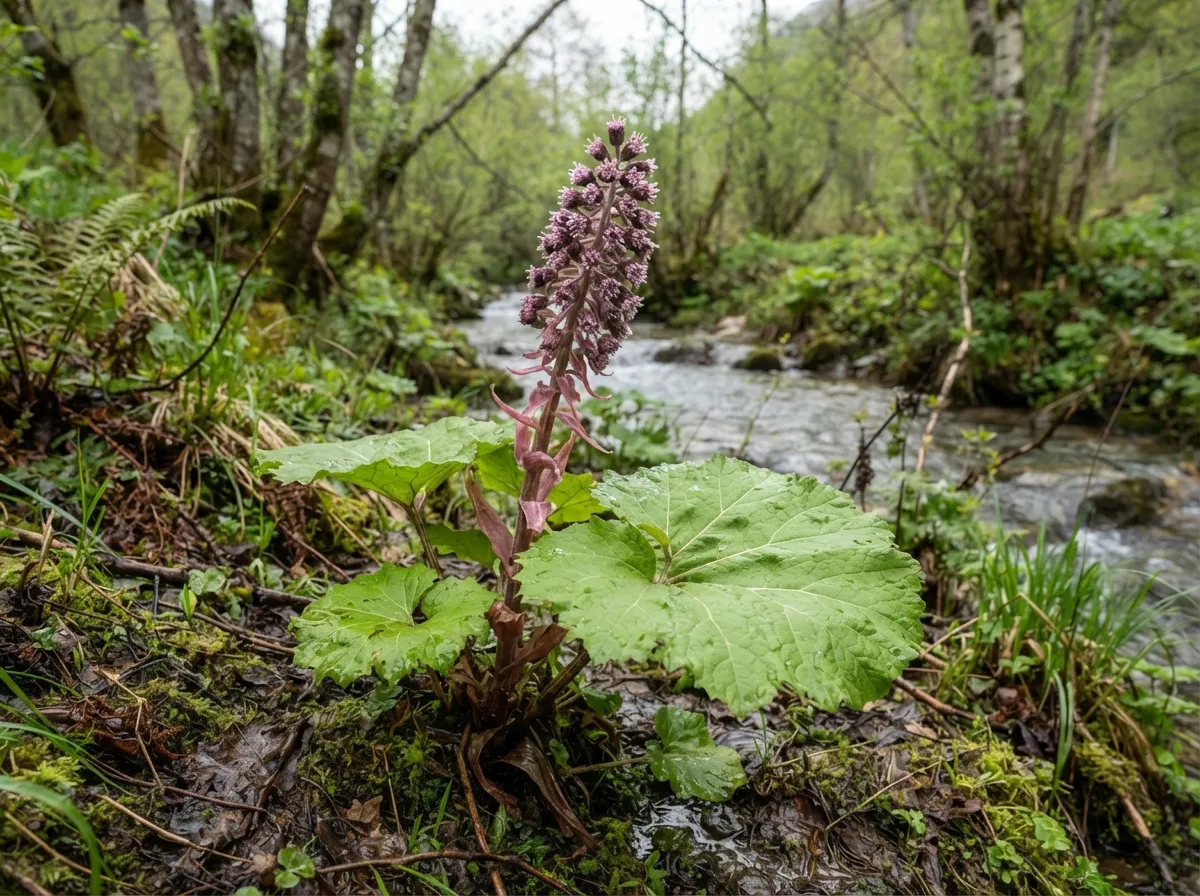
🔍 Identify it without mistakes
A riverbank plant with spectacular growth: like colt's foot to which it is related, it blooms early in spring on a scaly pink-purple stalk before its leaves appear. These leaves then become the largest in the flora of temperate Europe—up to a meter in diameter, shaped like a hat, colonizing vast carpets along rivers.
- scaly pink-purple flower stalk appearing before the leaves, February-April
- subsequent immense leaves (30 cm to over 1 m in diameter), rounded heart-shaped, toothed, dull green above, white-cottony underneath
- colonizes in dense carpets along riverbanks and shaded wetlands
- thick, scaly flowering stem with no true leaves at the time of flowering
- slightly musky-sweet smell of the flowers
⚠️ Not to be confused with
To tell them apart: butterbur is a much larger plant in all its organs (leaves up to 1 m compared to a few cm for colt's foot), pink-purple flowers in a compact cluster rather than a single yellow flower head
💊 Healing with it
used in Europe for over 900 years in traditional medicine; purified and standardized extracts, stripped of their toxic alkaloids, are studied for migraine prevention and allergic rhinitis, with encouraging clinical results
Level of evidence : limited studies — PMC — Phytochemistry, Toxicology and Therapeutic Value of Petasites hybridus
⚠️ TOXIC in its raw state: the plant contains hepatotoxic and potentially carcinogenic pyrrolizidine alkaloids; only industrially manufactured extracts specifically purified and certified free of pyrrolizidine alkaloids can be used for prolonged use; the raw plant (root, leaf) must never be consumed without this purification, and is contraindicated in cases of pregnancy, breastfeeding, or liver disease
🪓 Other bushcraft uses
- large leaves traditionally used as improvised wrapping for butter or cheese before heading out to transhumance, or as a makeshift umbrella due to their size—a use that inspired the genus name Petasites, from the Greek petasos, the wide-brimmed hat of ancient travelers
Sources (2)
No entry replaces a certain identification in the field, or medical advice. When in doubt: don't eat it. If ingestion is suspected: poison control or 112/911.