🌳 Black Poplar
Populus nigra · Salicaceae
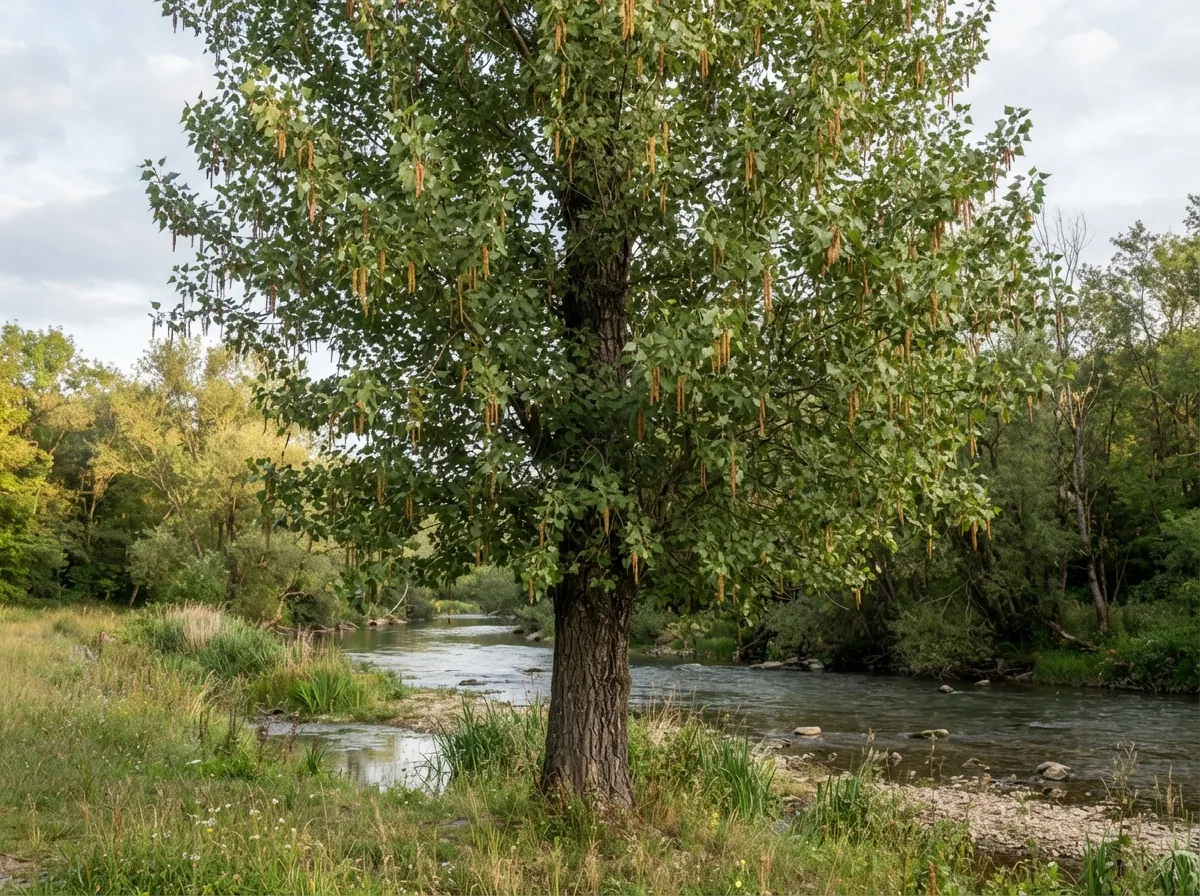
🔍 Identify it without mistakes
Large pioneer tree of riverbanks, with gray bark deeply fissured in diamond shapes at maturity. Sticky and strongly scented buds (balsamic resin), triangular to diamond-shaped leaves borne on a laterally flattened petiole. Reddish catkins before the leaves in spring.
- gray bark deeply fissured in diamond shapes at maturity
- sticky and scented buds (balsamic resin) in spring
- triangular to diamond-shaped leaves, laterally flattened petiole
- always on riverbanks, a pioneer species of shores
⚠️ Not to be confused with
To tell them apart: aspen grows everywhere (not just by rivers), has smoother, paler bark, and its leaves tremble in the slightest breeze thanks to a perpendicularly flattened petiole
💊 Healing with it
macerated resinous buds (oil, ointment) traditionally anti-inflammatory and healing, historical basis of populeum ointment; bark rich in salicin (like willow), traditionally used as a febrifuge
Level of evidence : traditional use — Wikipédia FR — Peuplier noir ; monde-vegetal.fr
⚠️ salicylate allergy, caution if taking anticoagulant treatment
🪓 Other bushcraft uses
- friction (bow-drill): soft and light wood (density ~0.35-0.45), one of the best European woods for hearthboard and spindle, alongside willow and linden
- fire: dry wood that ignites quickly as kindling, but burns fast with few embers — not a night wood
- tinder: the cottony fluff from the seeds in spring ignites instantly with a spark, an abundant natural tinder in May-June
- glue/waterproofing: sticky resinous buds, when heated, form an improvised mastic to plug a crack or fix a point
- famine fodder: bark and leaves fed to livestock when grass was scarce (historical use)
- beekeeping signpost: bees collect resin from the buds to make propolis — a good indicator of wild hives nearby
- light wood used for crates, clogs, and matches (industrial)
No entry replaces a certain identification in the field, or medical advice. When in doubt: don't eat it. If ingestion is suspected: poison control or 112/911.