🏮 Wild Physalis (Cape gooseberry, Peruvian groundcherry, husked cherry)
Physalis peruviana · Solanaceae
🔍 Identify it without mistakes
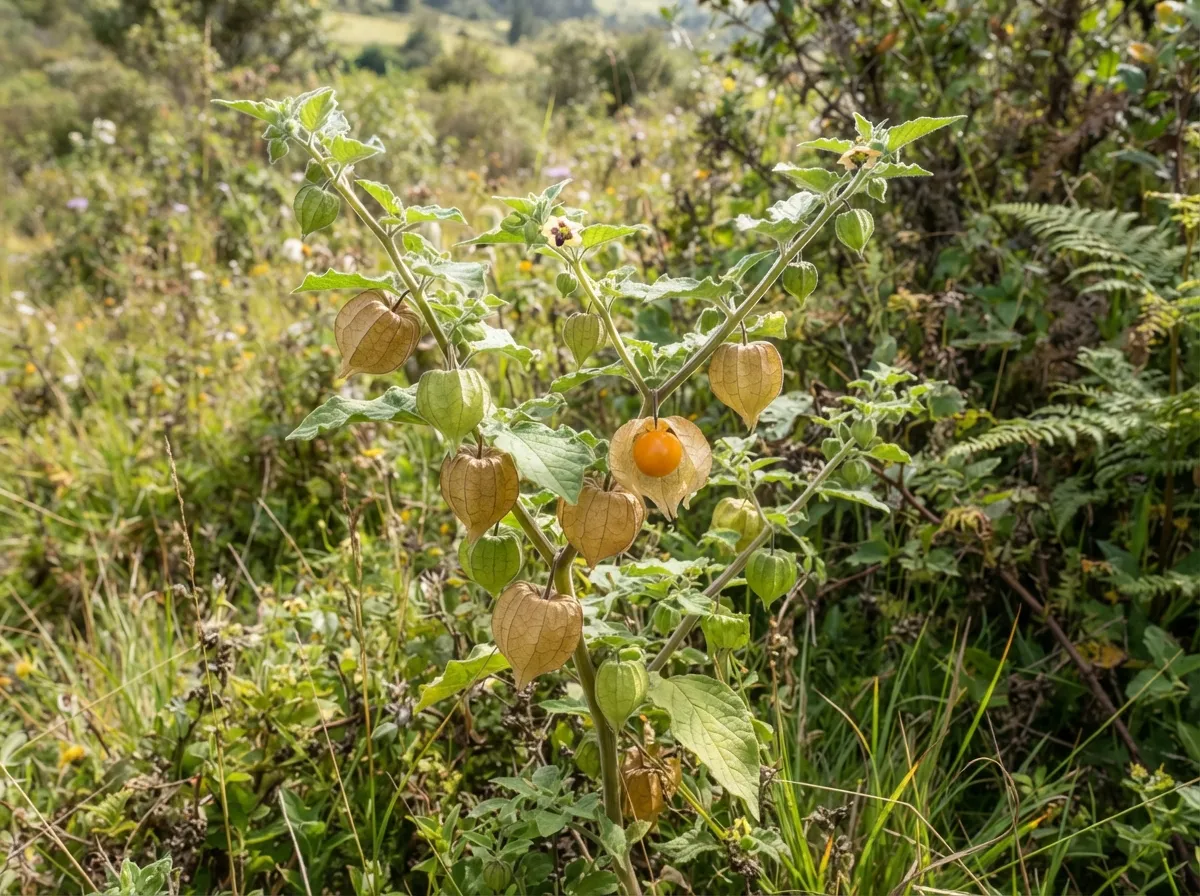
Small pantropical herbaceous plant naturalized in mild temperate climates, immediately recognizable by its round orange fruit enclosed in an inflated, papery calyx shaped like a Chinese lantern (hence the name "Chinese lantern" or "love in a cage"). The fruit is edible only when fully ripe and no longer green.
- inflated papery calyx, shaped like a lantern or small cage, fully enclosing the fruit
- round fruit, orange when ripe, the size of a small cherry, visible through the dry translucent calyx
- simple, alternate, heart-shaped leaves, slightly downy
- angular stem, low bushy plant from 0.5 to 1.5 m
⚠️ Not to be confused with
To tell them apart: the papery lantern-calyx completely enclosing the fruit is unique to physalis and absent in black nightshade, whose small black berries grow naked in clusters without any husk; if in doubt, the absence of a cage means you should double your caution
🍽️ Eating it
Preparation : wait until the fruit is golden-orange and the husk has dried to a light beige color before eating; never eat the green fruit or the foliage, which contain higher levels of solanine and can cause digestive distress; eat it raw, in jams, or dried
💊 Healing with it
traditionally used in several cultures as a mild diuretic and for its antioxidant properties
Level of evidence : limited studies — North Carolina Extension Gardener Plant Toolbox — Physalis
⚠️ restrict consumption to fully ripe fruit only; avoid green fruit and leaves due to the presence of steroidal alkaloids like solanine
Sources (2)
No entry replaces a certain identification in the field, or medical advice. When in doubt: don't eat it. If ingestion is suspected: poison control or 112/911.