🍇 American Pokeweed
Phytolacca americana · Phytolaccaceae
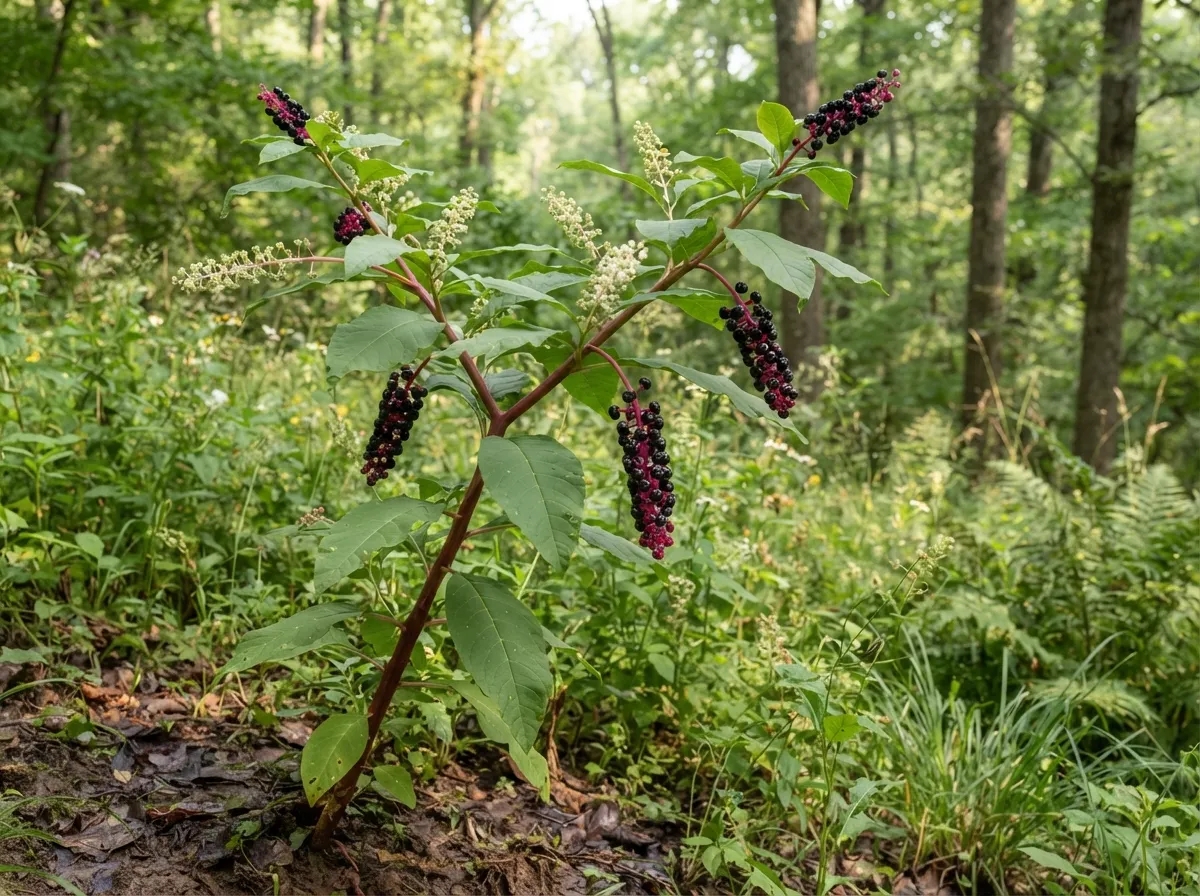
🔍 Identify it without mistakes
Large North American perennial, now naturalized in Europe as well, striking with its bright purple stems carrying long clusters of shiny, purplish-black berries that are very eye-catching in the fall. The entire plant is toxic, with the root being the most dangerous part; very young spring shoots are traditionally consumed in the southern United States ("poke sallet"), but ONLY after a strict triple-boiling preparation changing the water each time—a culinary technique you cannot just improvise.
- thick, smooth stem turning bright reddish-purple during the season
- large, alternate, lance-ovate leaves with entire margins
- erect then drooping clusters of round berries, green turning shiny purplish-black when mature
- huge, whitish, very fleshy taproot
⚠️ Not to be confused with
To tell them apart: pokeweed berries grow on a simple erect then drooping cluster with a thick purple stem, whereas elderberry bears its berries in wide flat-topped compound umbels on a woody branched shrub; the pokeweed stem is never woody
☠️ What kills
First steps : Call Poison Control if berries, root, or unprepared shoots are ingested without using the strict traditional method. Do not induce vomiting. Never eat young shoots without triple-boiling and changing the water every single time; keep a sample of the plant.
Sources (2)
No entry replaces a certain identification in the field, or medical advice. When in doubt: don't eat it. If ingestion is suspected: poison control or 112/911.