🍄 Wood blewit
Lepista nuda · Tricholomataceae
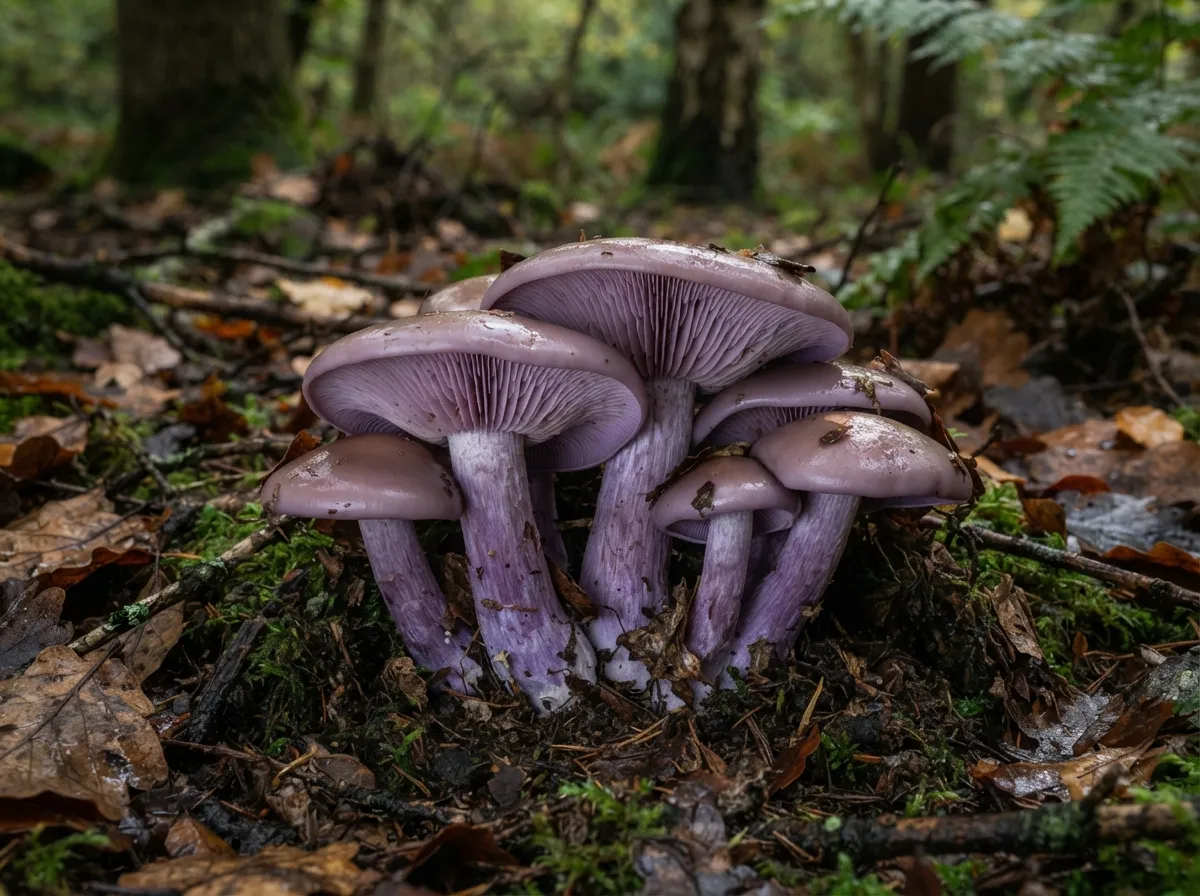
🔍 Identify it without mistakes
Late-season mushroom (often the last of the season, up until the frosts) with a characteristic violet hue, distinguished from violet webcaps by one specific feature: the cortina.
- violet to lilac cap turning beige-brown with age, fleshy, convex then flattened
- violet to duller gills, crowded, notched
- stout stem, blue-violet, pruinose (covered with fine dust), WITHOUT ring and WITHOUT cortina
- pale violet flesh, pleasant fruity smell
- pinkish-cream spore print (never rust-colored)
- grows late in the season, often in rings, in leaf litter
⚠️ Not to be confused with
To tell them apart: the decisive criterion is the CORTINA: young webcaps have a web-like veil (the cortina) connecting the cap margin to the stem, leaving rusty traces from the spores; wood blewits NEVER have a cortina; the wood blewit's spore print is pinkish-cream, while webcaps have rust/ocher spores — systematically check spore print color if you have any doubt
🍽️ Eating it
Preparation : always thoroughly cooked (contains trace irritating compounds destroyed by heat); can cause digestive upset in sensitive individuals even when cooked, so consume in moderate amounts, especially the first time
No entry replaces a certain identification in the field, or medical advice. When in doubt: don't eat it. If ingestion is suspected: poison control or 112/911.