🌸 Pigface (Karkalla / Hottentot Fig)
Carpobrotus spp. · Aizoaceae
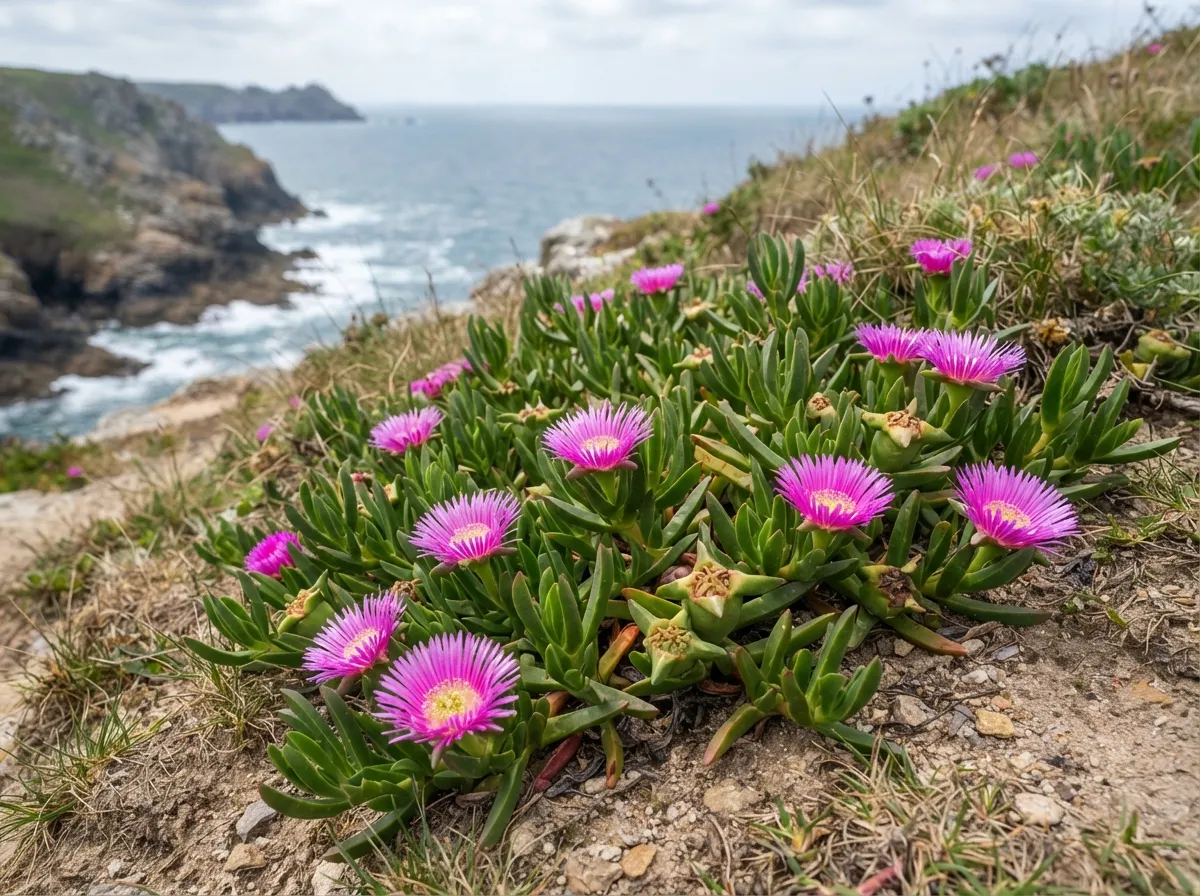
🔍 Identify it without mistakes
Prostrate succulent plant forming long mats, with fleshy leaves triangular in cross-section, and large, showy daisy-like flowers in pink, purple, or yellow. The fleshy, fig-like fruit, called "pigface" because its withered flower resembles a pig's snout, is edible when ripe.
- crawling mat of fleshy stems and thick leaves triangular in cross-section
- large, showy, multi-petaled pink/purple/yellow flowers
- fleshy fig-like fruit at the tip, edible when ripe
⚠️ Not to be confused with
To tell them apart: the fleshy leaves triangular in cross-section (never flat) and the large, showy multi-petaled flowers distinguish pigface from any toxic plant on Australian coastal dunes
🍽️ Eating it
Preparation : fruit eaten raw when fully ripe and soft (slightly salty-sweet pulp); young leaves eaten raw in small quantities or cooked, naturally slightly salty
💊 Healing with it
the juice from crushed leaves is traditionally applied as a mild astringent on jellyfish stings and other skin irritations
Level of evidence : traditional use — Wikipedia - Carpobrotus
⚠️ no known toxicity
🪓 Other bushcraft uses
- used as a firebreak groundcover due to its high water content
- coastal dune stabilization (though sometimes an invasive species outside its native range, displacing local flora)
Sources (1)
No entry replaces a certain identification in the field, or medical advice. When in doubt: don't eat it. If ingestion is suspected: poison control or 112/911.