🌲 Pinyon pine (piñon pine)
Pinus edulis · Pinacées
🔍 Identify it without mistakes
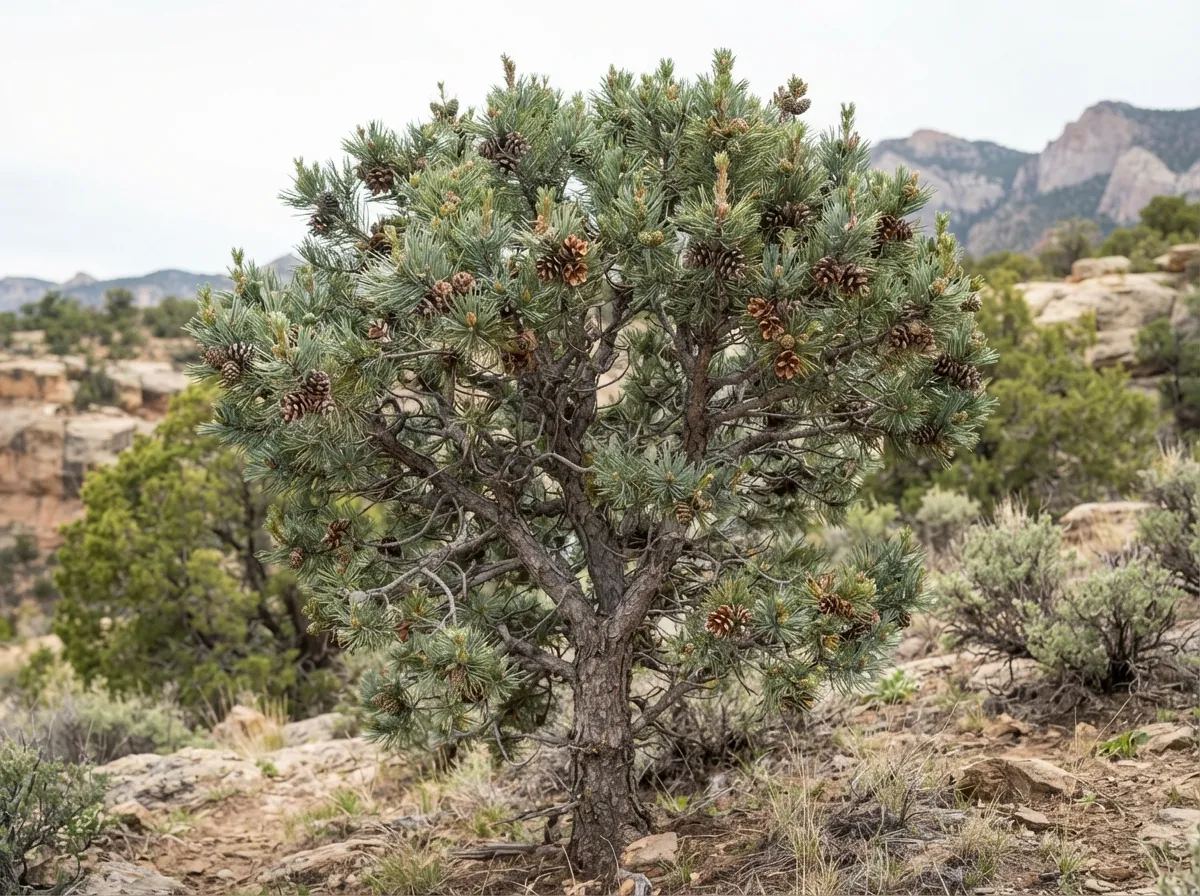
Small, stocky, and often gnarled conifer of the arid Southwest. Short, rigid needles grouped in pairs (unlike the five of the Eastern white pine), forming characteristic stands mixed with juniper ("pinyon-juniper woodland"). Small, round, stocky cones containing large edible seeds without a developed wing, unlike most other pines.
- short, rigid needles grouped in PAIRS
- small, round, stocky cones with thick scales
- large seeds (pine nuts) without a functional wing
- low, gnarled silhouette, rarely exceeding 10-15 m
⚠️ Not to be confused with
To tell them apart: short needles grouped in pairs and small, round, stocky cones with wingless seeds are signature features of the pinyon pine; it grows in desert zones where yew, the continent's only toxic conifer, is absent
🍽️ Eating it
Preparation : harvest cones fallen on the ground before they open completely, or shake open cones onto a tarp; seeds can be eaten raw, dry-roasted in a skillet to intensify the flavor, or pounded into an energetic paste/butter
💊 Healing with it
resin traditionally used as an antiseptic poultice on wounds and bites; needles infused as tea for colds
Level of evidence : traditional use — Native American Ethnobotany Database (Moerman, University of Michigan)
⚠️ no notable toxicity documented for the seeds
🪓 Other bushcraft uses
- resin used as glue, sealant, and fire starter
- wood used as a preferred fuel for its long-lasting embers and characteristic scent
- pine nuts were historically a major food and commercial resource for many Southwestern nations (Navajo, Puebloans, Shoshones, Paiutes)
Sources (3)
No entry replaces a certain identification in the field, or medical advice. When in doubt: don't eat it. If ingestion is suspected: poison control or 112/911.