🌲 Ponderosa pine
Pinus ponderosa · Pine family
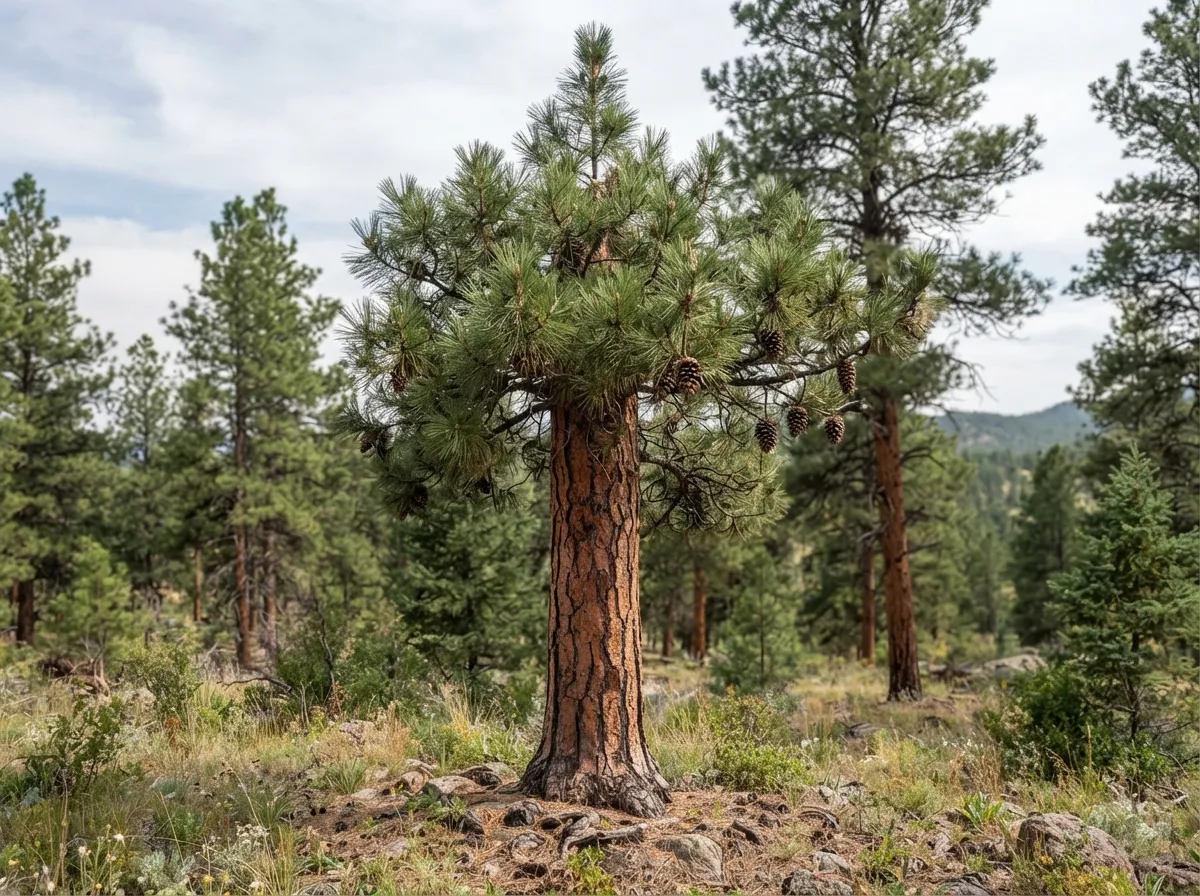
🔍 Identify it without mistakes
One of the largest pines in North America (45-60 m), long needles (up to 25 cm) bundled in threes. Thick bark (up to 10 cm) on older trees, orange to cinnamon-colored, furrowed into broad flat plates, and famous for its vanilla or butterscotch scent noticeable when sniffing between the plates in the sun.
- long needles (up to 25 cm) bundled in threes (sometimes twos)
- thick bark, orange to cinnamon-colored, furrowed into broad flat plates on older trees
- vanilla or butterscotch scent noticeable between bark plates in the sun
- very large tree, massive trunk, up to 60 m
⚠️ Not to be confused with
To tell them apart: ponderosa cones prick your hands ("prickly ponderosa") compared to less prickly scales on the Jeffrey pine; Jeffrey has a more restricted range to the west
🍽️ Eating it
Preparation : seeds roasted like classic pine nuts; outer bark removed to reveal the sweet inner phloem, scraped off and eaten raw or dried — documented and important food source among several Indigenous peoples of the American West (notably the Nez Perce), who scarified trees in spring
💊 Healing with it
resin applied to wounds as an antiseptic and waterproofing agent; bark used as a splint by the Haida for injured limbs; heated resin used as glue to attach arrowheads
Level of evidence : traditional use — US Fish & Wildlife Service — Know Your Trees: Ponderosa Pine
⚠️ needles should be avoided in large quantities during pregnancy out of caution (documented veterinary use in livestock)
🪓 Other bushcraft uses
- versatile resin: waterproofing for canoes and baskets, glue for securing arrowheads, varnish for instruments (used by the Cheyenne inside whistles to improve sound)
- light timber: soft wood easy to work with, a staple in interior woodwork and frames
- fire resistance: thick bark protects the tree from understory fires that would kill other species — reliable indicator of an area historically subjected to regular fire
- edible phloem: spring emergency food source documented among Indigenous peoples of the American West, scraped directly from the living tree
- dye: roots used to produce a traditional blue dye (Cheyenne people)
- fatwood: resin-rich stumps and knots that ignite even when wet, a classic fire-starter from North American pines
- sensory marker: the vanilla scent of the bark is a great sensory identification exercise in mountain forests
Sources (2)
No entry replaces a certain identification in the field, or medical advice. When in doubt: don't eat it. If ingestion is suspected: poison control or 112/911.