🌲 Scots pine
Pinus sylvestris · Pinaceae
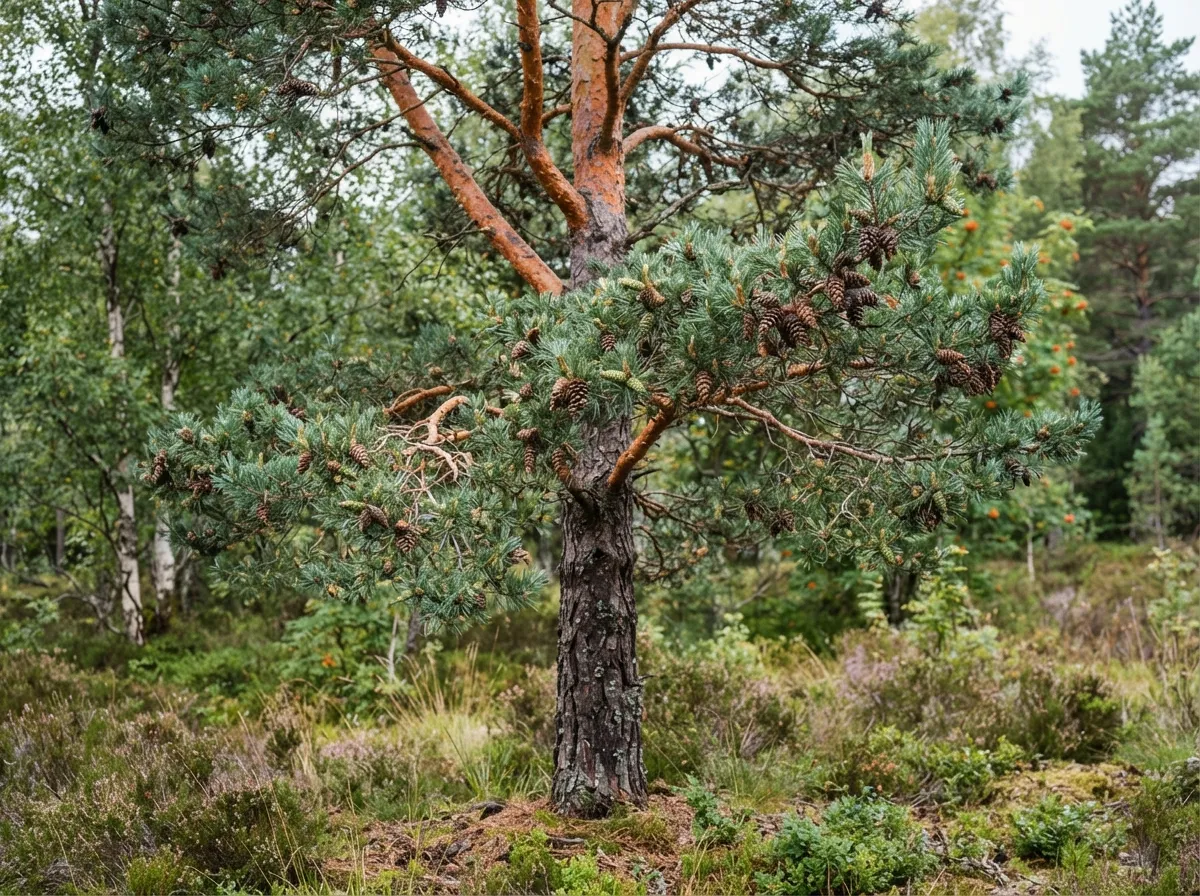
🔍 Identify it without mistakes
Conifer recognizable from afar by its typical orangey-copper bark in the upper third of the trunk, contrasting with the furrowed grey-brown base. Blue-green needles, paired in clusters (fascicles), slightly twisted, 4-7 cm long. Brown, conical-ovoid cones, drooping at maturity.
- orangey-copper bark in the upper part of the trunk
- needles paired in clusters, blue-green, twisted
- small (3-7 cm) brown cones, drooping
- crown often irregular and spreading in older trees
- abundant fragrant resin on damaged bark
⚠️ Not to be confused with
To tell them apart: yew has flat needles arranged in two comb-like rows rather than pairs in fascicles, scaly reddish-brown bark, and fleshy red arils instead of woody cones
🍽️ Eating it
Preparation : raw young shoots with a resinous-citrus flavor or as syrup; chopped needles infused for 10 min for a vitamin C-rich tea, never boil for a long time
approx, fresh needle tea, vitamin C content varies greatly depending on freshness; order of magnitude cited by several Nordic survival sources
💊 Healing with it
traditionally used in inhalations and chest rubs for respiratory ailments (needle essential oil), historical antiscorbutic (fresh needle vitamin C)
Level of evidence : traditional use — herbal medicine compilations (Fournier); historical use documented among polar explorers (Cartier, scurvy)
⚠️ pine essential oil is irritating when pure and must never be ingested as is; avoid direct inhalation if you have asthma
🪓 Other bushcraft uses
- resin used as fire starter and waterproofing pitch for ropes and boat seams
- resin-rich firewood, burns even when slightly damp but deposits creosote in chimneys
- inner bark (cambium) edible in famine situations, dried and ground into emergency flour by the Sami people
No entry replaces a certain identification in the field, or medical advice. When in doubt: don't eat it. If ingestion is suspected: poison control or 112/911.