🌼 Dandelion
Taraxacum officinale · Asteraceae
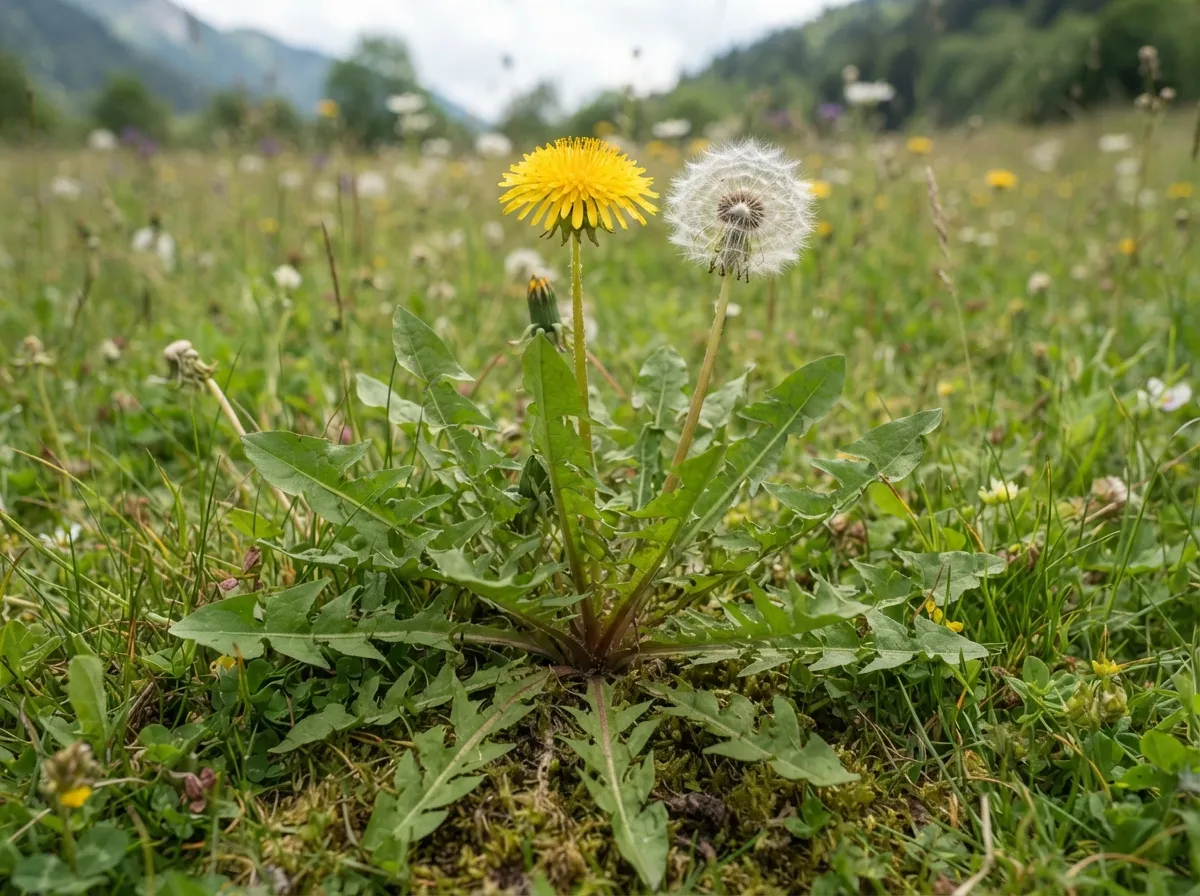
🔍 Identify it without mistakes
Rosette of deeply lobed basal leaves ("lion's teeth"), with no leafy stem. The single yellow flower per hollow stalk filled with white latex closes in the evening and turns into a seed head globe ("clock"). The entire plant exudes a bitter white latex as soon as you snap it.
- hollow floral stalk, single flower, no leaf
- white latex at the slightest snap
- leaves in a basal rosette, toothed, hairless
- single yellow flower head closing in the evening
- spherical seed head after flowering
⚠️ Not to be confused with
To tell them apart: leafy and often branched stem in sowthistles/hawkweeds, whereas dandelion only has a bare stalk and a single flower per stalk
To tell them apart: leaves covered with rough hairs, stalk sometimes branched, unlike the hairless dandelion with a simple stalk
🍽️ Eating it
Preparation : raw leaves in salads (blanched under a board or dome to remove bitterness, forcing technique), flower buds pickled as "false capers", flowers in fritters or jam ("cramaillotte"), roasted root as a caffeine-free coffee substitute
USDA FoodData Central, raw leaves, per 100 g
💊 Healing with it
traditional choleretic and diuretic (leaf and root), digestive support after heavy meals
Level of evidence : traditional use — EMA/HMPC, community herbal monograph Taraxaci folium/radix
⚠️ caution in case of bile duct obstruction or gallstones; may interact with diuretics and certain anticoagulants; possible cross-allergy with Asteraceae
🪓 Other bushcraft uses
- latex used empirically to remove warts (unproven folk remedy)
- flowers for yellow dye
- dried root in digestive herbal tea
Sources (4)
No entry replaces a certain identification in the field, or medical advice. When in doubt: don't eat it. If ingestion is suspected: poison control or 112/911.