🌿 Mastic tree
Pistacia lentiscus · Anacardiaceae
🔍 Identify it without mistakes
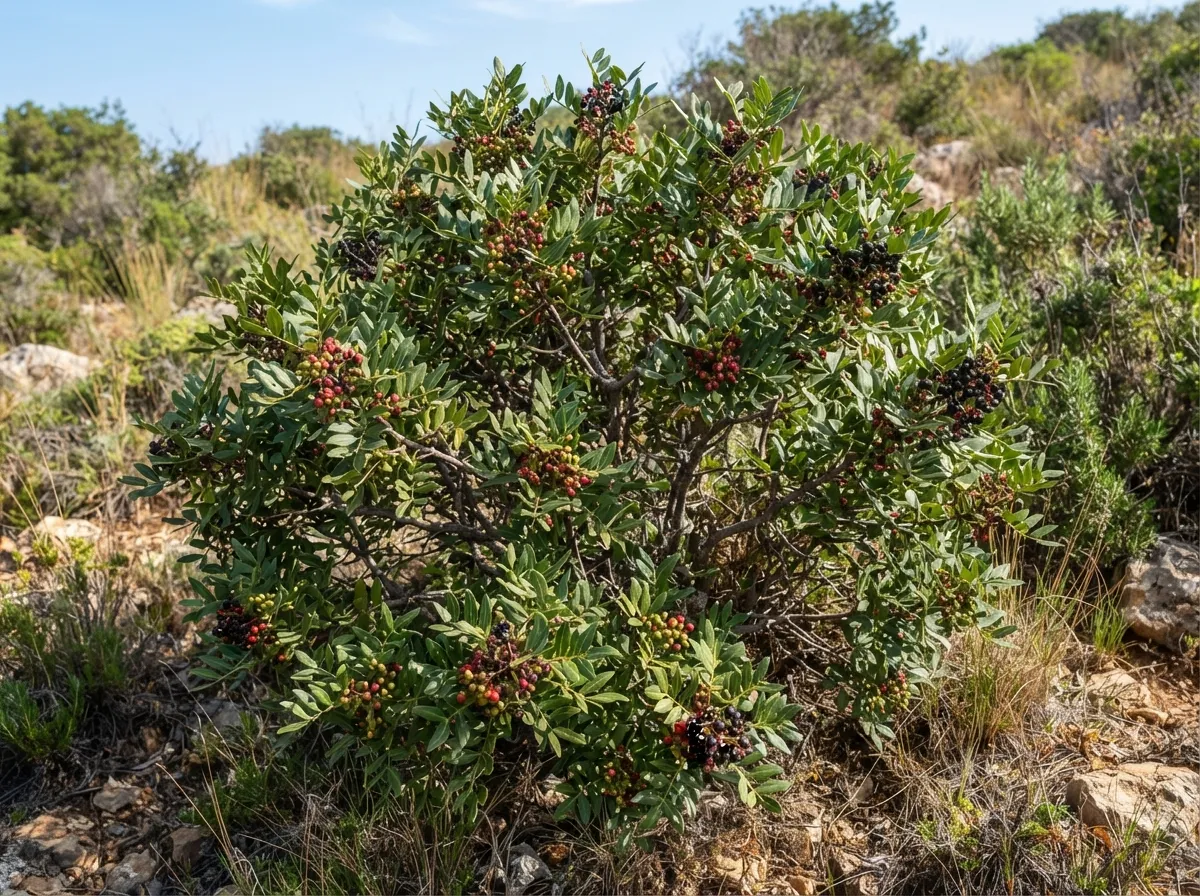
Dense evergreen shrub, 1 to 3 m, with pinnately compound leaves lacking a terminal leaflet (winged rachis ending in a point), leathery glossy leaflets giving off a strong resinous smell when crushed. Small petal-less reddish flowers in spring, followed by small round fruits turning from red to black. Incised bark exudes a fragrant resin, mastic.
- pinnately compound leaves WITHOUT a terminal leaflet (winged rachis ending in a point)
- strong resinous smell when crushed
- small round fruits, red then black in clusters
- dense bushy habit typical of low maquis
⚠️ Not to be confused with
To tell them apart: deciduous leaves with a terminal leaflet present, larger and less glossy leaflets
🍽️ Eating it
Preparation : The hardened resin (Chios mastic) is chewed as is or flavors drinks and pastries; tender young shoots can be added raw in small quantities to wild salads
💊 Healing with it
Traditionally digestive and gastric-healing (Chios mastic, documented antibacterial properties against Helicobacter pylori)
Level of evidence : limited studies — Mediterranean ethnobotanical literature, Greek tradition of Chios
⚠️ No major contraindications at traditional food doses
🪓 Other bushcraft uses
- mastic chewed as a natural gum and varnish (paints, historical dentistry)
- hard wood for small tools
No entry replaces a certain identification in the field, or medical advice. When in doubt: don't eat it. If ingestion is suspected: poison control or 112/911.