💧 Water plantain (European water-plantain)
Alisma plantago-aquatica · Alismataceae
🔍 Identify it without mistakes
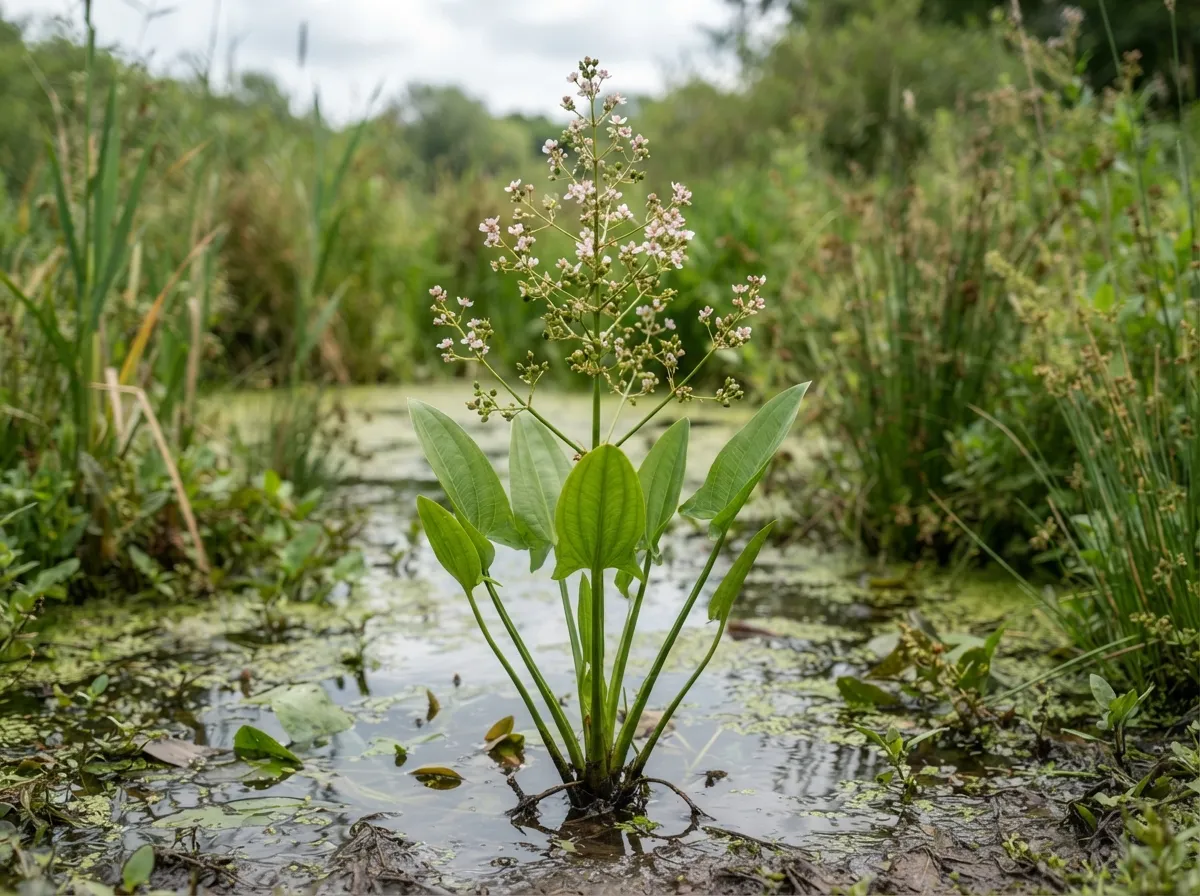
An aquatic plant of calm watersides, not to be confused with broadleaf plantain despite its name: its oval-lanceolate leaves with long parallel veins vaguely resemble those of terrestrial plantain, but it grows in shallow water and produces a tall floral stem branched in a pyramid carrying tiny white-pink flowers. The fresh plant is acrid and slightly irritating, not to be eaten raw.
- oval-lanceolate leaves in a basal rosette, long-stalked, with parallel convergent main veins
- erect flowering stalk, branched in a loose pyramid (panicle), 30-100 cm
- small flowers with 3 white-pink petals, opening only in the afternoon
- short, fleshy rhizome, acrid to the taste
- always grows in shallow water or waterlogged mud, never on dry soil
⚠️ Not to be confused with
To tell them apart: the leaf of water plantain is a simple oval without the characteristic arrow-shaped lobes of arrowhead
💊 Healing with it
used in traditional Chinese medicine (under the name Alisma orientale, a very close species) as a diuretic for edema and hypertension; the European species has similar popular uses but less scientific documentation
Level of evidence : traditional use — pharmacological compilations (RxList — Water Plantain)
⚠️ the fresh rhizome is acrid and slightly irritating to the digestive mucous membranes when raw; literature remains contradictory regarding its exact toxicity depending on sources — treat with caution and consume only after traditional preparation (drying, cooking), never raw
Sources (2)
No entry replaces a certain identification in the field, or medical advice. When in doubt: don't eat it. If ingestion is suspected: poison control or 112/911.