🌿 Plantain (ribwort and broadleaf)
Plantago lanceolata / Plantago major · Plantaginacées
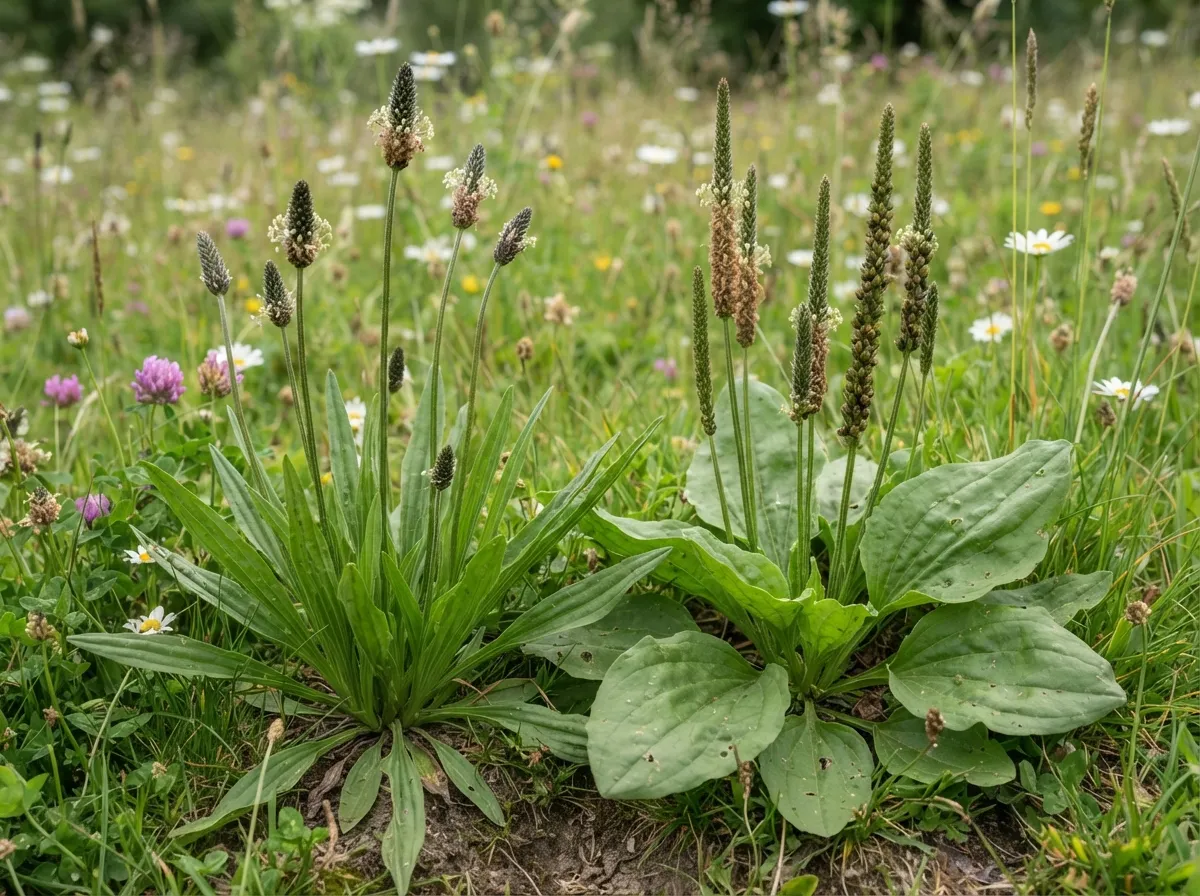
🔍 Identify it without mistakes
Two cousin species, both forming a basal rosette without leafy stems, with characteristic parallel veins that pull out as threads when you tear a leaf across. Ribwort plantain has narrow, erect, lance-shaped leaves, a short, darkish flower spike with a ring of white stamens. Broadleaf plantain has wide, oval, almost round leaves, with a long, slender, green-brown flower spike.
- leaves with parallel veins pulling out as fibrous threads when snapped
- basal rosette with no visible stem
- dense cylindrical flower spike
- ribwort: narrow erect leaves; broadleaf: wide spreading leaves
- no latex, no strong odor
⚠️ Not to be confused with
To tell them apart: the stringy parallel veins when snapped are an almost unique signature among common basal rosettes
🍽️ Eating it
Preparation : young leaves raw in salads or cooked like spinach (older, tough leaves need long cooking or steeping); ribwort plantain seeds are mucilaginous, comparable to psyllium, and should be soaked
approx, raw leaves, Plants For A Future / ethnobotanical compilations
💊 Healing with it
coughs and upper respiratory tract irritations (ribwort plantain leaf, well-established traditional use), skin healing as a poultice of crushed leaves on stings, bites, and small wounds
Level of evidence : tradition (traditional use recognized by the EMA for coughs); etudes-limitees for skin-healing effect — EMA/HMPC, Plantaginis lanceolatae folium monograph
⚠️ no major known contraindications; rare contact allergy
🪓 Other bushcraft uses
- crushed leaf applied directly onto a nettle sting or insect bite (very common field remedy)
- leaf fibers used as a backup thread or makeshift bandage
Sources (3)
No entry replaces a certain identification in the field, or medical advice. When in doubt: don't eat it. If ingestion is suspected: poison control or 112/911.