🟠 American persimmon
Diospyros virginiana · Ébénacées
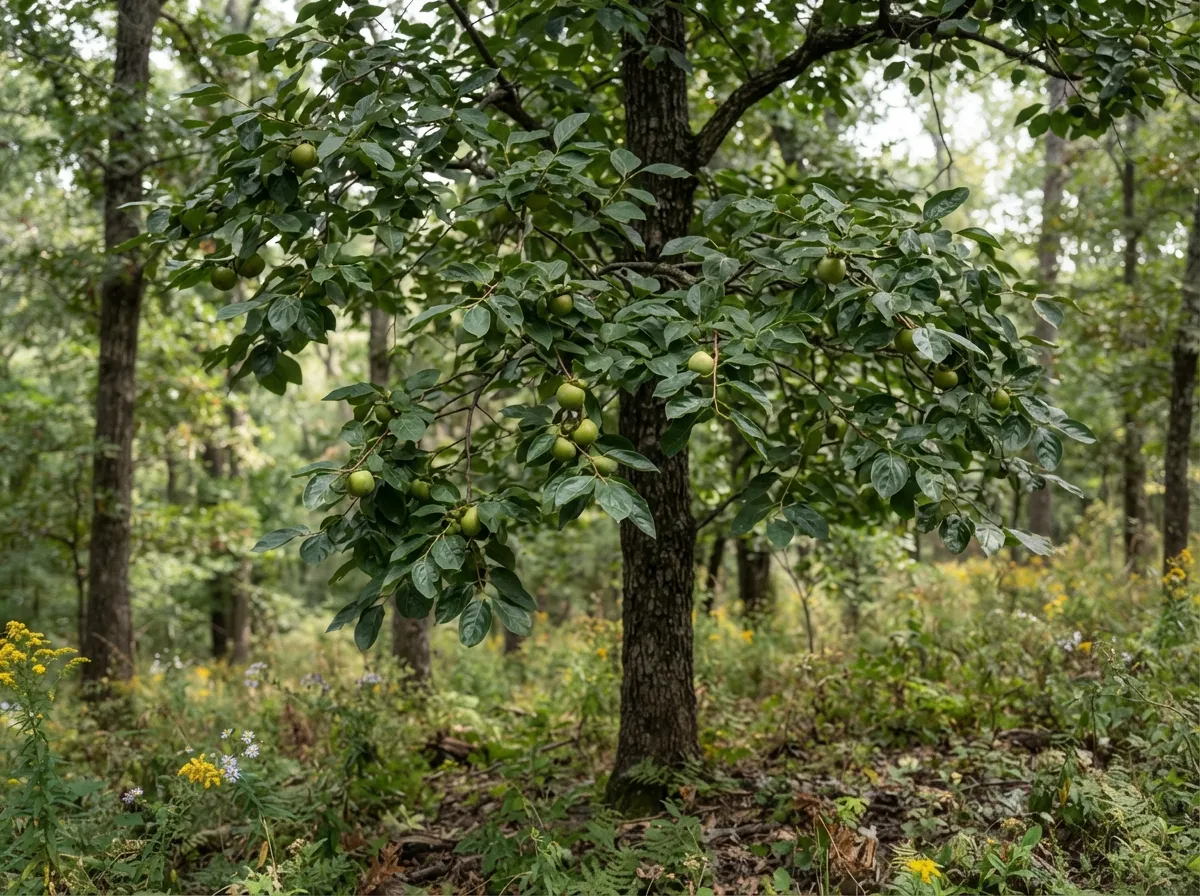
🔍 Identify it without mistakes
Medium-sized tree with very characteristic black bark, divided into small square blocks resembling alligator skin. Simple, alternate, glossy oval leaves. Round orange fruits in fall, remaining on the tree after leaf drop, extremely astringent until completely ripe.
- black bark divided into small square blocks ("alligator skin")
- round orange fruit 2-5 cm across, with a persistent 4-lobed calyx
- fruit only becomes edible after softening completely, often after the first frosts
- dioecious tree: only female trees bear fruit
⚠️ Not to be confused with
To tell them apart: the black bark split into small square blocks like alligator skin and the fruit with a persistent 4-lobed calyx distinguish the American persimmon from any toxic fruit tree in eastern North America
🍽️ Eating it
Preparation : wait until the fruit is so soft it almost collapses, usually falling to the ground on its own — a fruit that is still firm, even if orange, is recklessly astringent; the pulp is used in bread, pudding, jam; seeds and skin are strained out with a sieve
💊 Healing with it
bark and green fruit are highly astringent (tannins) traditionally used as a gargle for sore throats and as a wash for hemorrhoids and oral thrush
Level of evidence : traditional use — North Carolina Extension Gardener Plant Toolbox — Diospyros virginiana
⚠️ consuming large quantities of unripe fruit (high tannin content) has been associated in humans and livestock with the formation of bezoars (phytobezoars) that can obstruct the digestive tract — well documented with the Asian persimmon, a similar risk is attributed to the American species if astringent fruits are eaten in excess
🪓 Other bushcraft uses
- very hard wood used for golf club heads and weaving shuttles
- seeds were formerly roasted as a coffee substitute during times of scarcity (Civil War)
Sources (3)
No entry replaces a certain identification in the field, or medical advice. When in doubt: don't eat it. If ingestion is suspected: poison control or 112/911.