🍄 Oyster Mushroom
Pleurotus ostreatus · Pleurotaceae
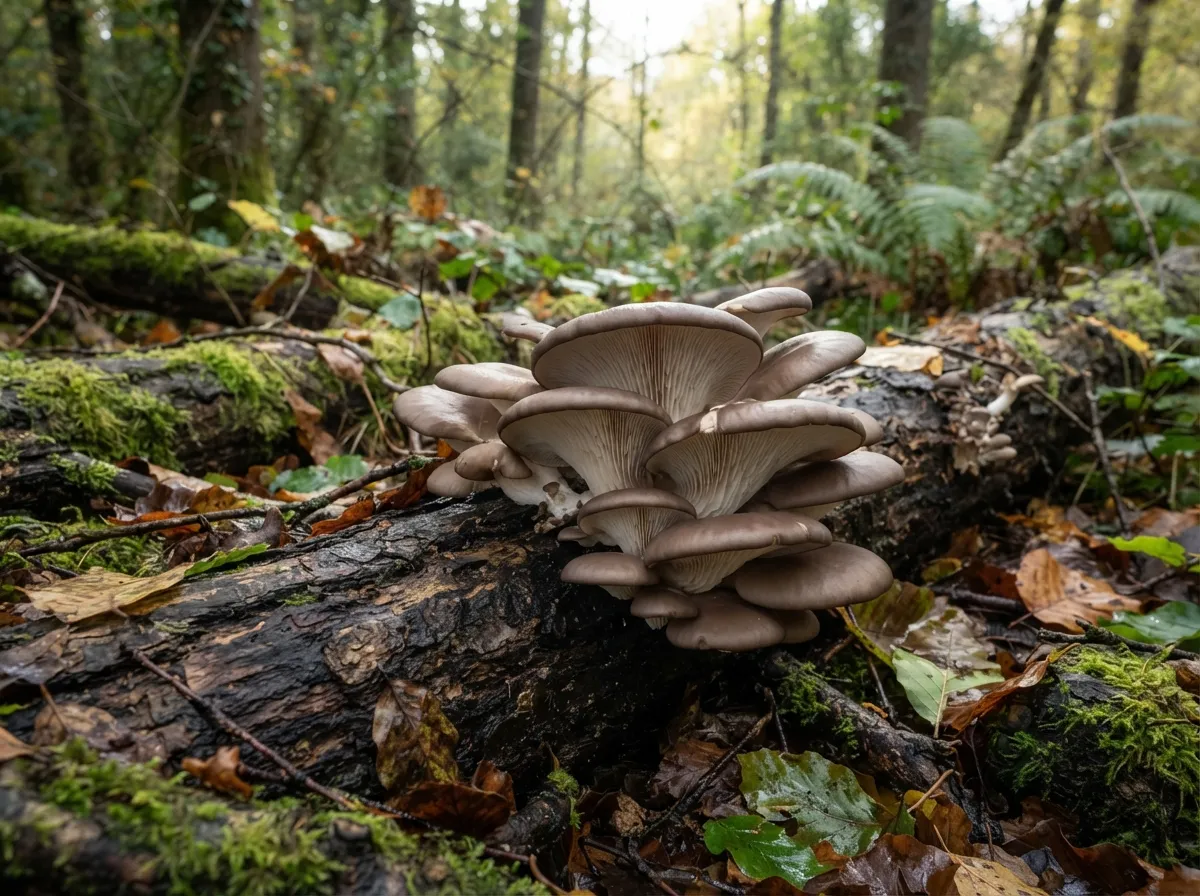
🔍 Identify it without mistakes
Wood-decay fungus growing in large, overlapping clusters on hardwood trunks and stumps, and one of the most cultivated mushrooms in the world. Its most dangerous look-alike is the Jack-o'-lantern mushroom, which is toxic and BIOLUMINESCENT.
- shell- or fan-shaped cap, 5-20 cm, gray-brown to bluish-gray, smooth surface
- white to cream gills, decurrent, crowded, extending far down the stem
- lateral, short stem, often absent or reduced, growing directly from wood in tight clusters
- white, firm flesh
- pale lilac-white spore print
- grows on dead or dying hardwood (beech, poplar), never directly on the ground
⚠️ Not to be confused with
To tell them apart: the Jack-o'-lantern mushroom grows in clumps at the base of olive trees and other Mediterranean hardwoods, has ORANGE gills (never white) that emit a faint greenish glow in total darkness (bioluminescence); the oyster mushroom has white to cream gills and does not grow exclusively on olive trees
🍽️ Eating it
Preparation : always cooked; cook it like cultivated oyster mushrooms, pan-fried or in soups
USDA FoodData Central, raw, per 100 g (fdcId 168580)
Sources (3)
No entry replaces a certain identification in the field, or medical advice. When in doubt: don't eat it. If ingestion is suspected: poison control or 112/911.