🍐 Wild pear (European wild pear)
Pyrus pyraster · Rosaceae
🔍 Identify it without mistakes
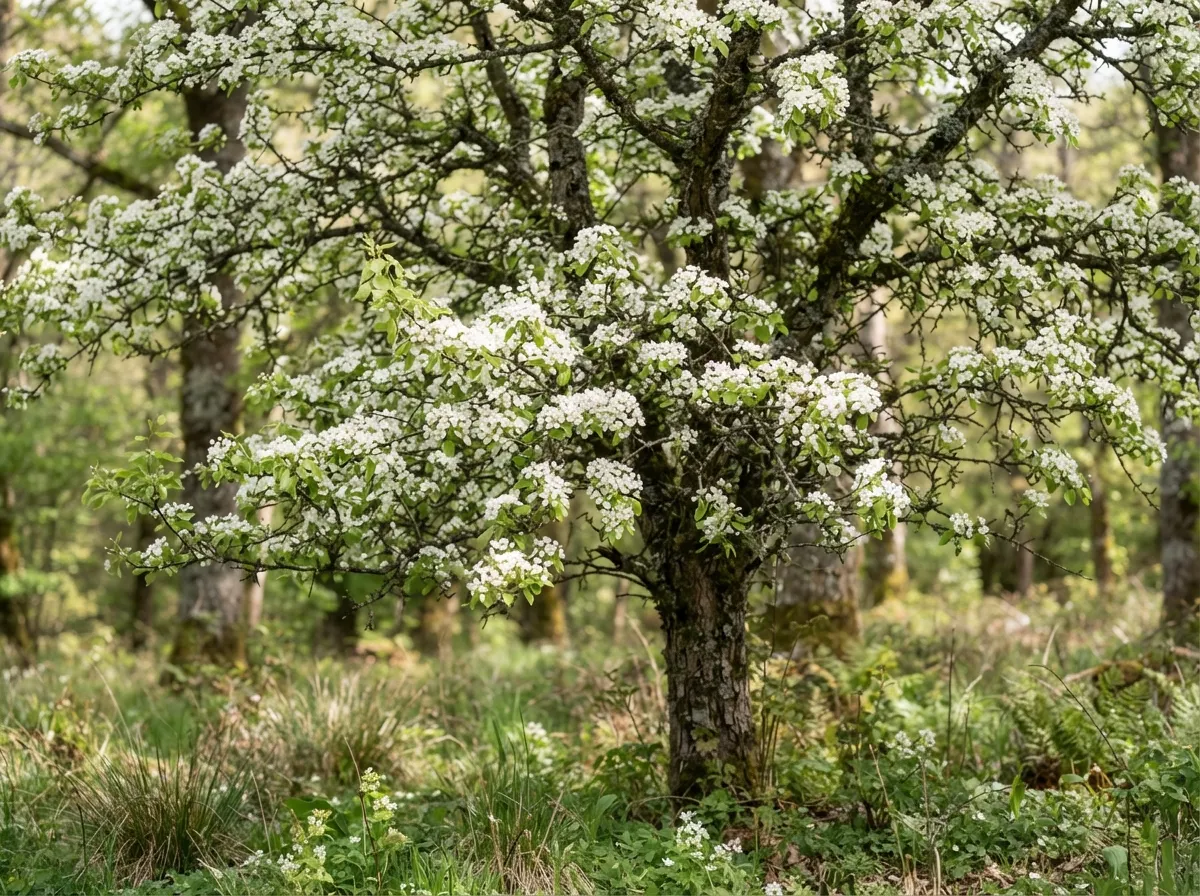
Wild ancestor of the cultivated pear, often a spiny tree with a slender conical silhouette, recognizable by its small, hard, miniature pear-shaped fruits (2-4 cm) that remain harsh and astringent until bletted. Differs from the wild apple tree by its more vertical silhouette and elongated fruit rather than round.
- slender conical silhouette, more vertical than the wild apple tree
- twigs often ending in a spine in the wild state
- small fruits (2-4 cm), pear-shaped (narrowed towards the stalk), hard and harsh before bletting
- oval-rounded leaves, shiny above, with a long petiole
- white 5-petaled flowers, before or at the same time as the leaves, April
⚠️ Not to be confused with
To tell them apart: the wild pear fruit is elongated and narrowed towards the stalk (pear shape), while that of the wild apple tree remains round; the wild pear silhouette is more vertical and conical
🍽️ Eating it
Preparation : fruits are very hard, harsh, and astringent (tannins) when picked, inedible raw until softened by frost or prolonged storage (bletting); cook them into jelly, stewed fruit, or fruit brandy (perry)
🪓 Other bushcraft uses
- one of the identified wild ancestors of cultivated European pears, from which hundreds of regional varieties have been selected since Antiquity through crosses with this species and other wild pears from Europe and Asia
No entry replaces a certain identification in the field, or medical advice. When in doubt: don't eat it. If ingestion is suspected: poison control or 112/911.