🍄 Chicken of the woods
Laetiporus sulphureus · Fomitopsidaceae
🔍 Identify it without mistakes
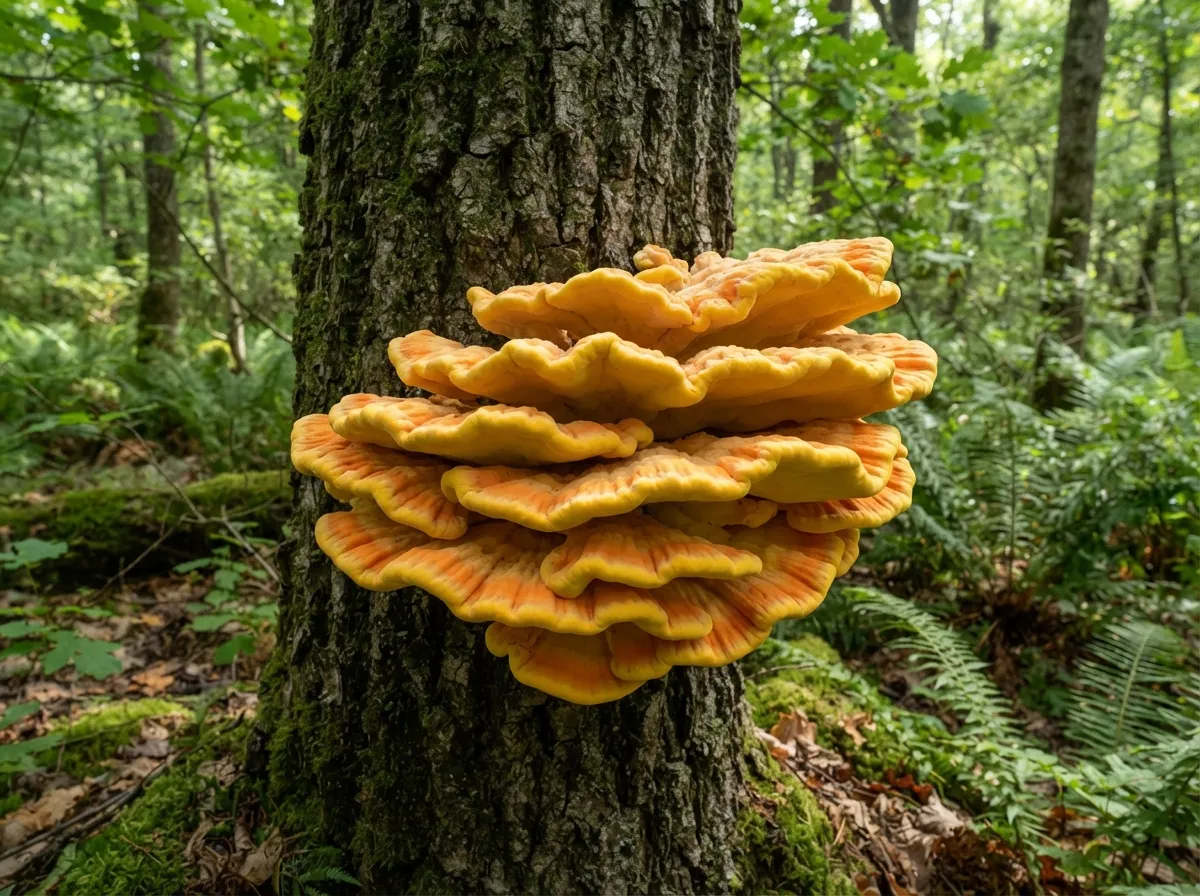
Nicknamed "chicken of the woods" for its texture reminiscent of chicken when cooked, a massive bracket fungus growing in overlapping shelves, impossible to mistake thanks to its spectacular sulfur-orange color. Only eat it when young.
- fleshy fan-shaped shelf/shelves, bright orange to sulfur yellow, velvety to slightly wrinkled surface, no distinct stem (grows directly on the trunk)
- underside with fine PORES (never gills), sulfur yellow
- no stem, attached directly to the wood by a broad attachment point
- yellowish-white flesh, firm and juicy in young specimens, becoming fibrous and brittle with age
- grows in shelves on living or dead trunks of broadleaf trees (especially oak)
- no unpleasant odor
⚠️ Not to be confused with
To tell them apart: Meripilus giganteus is brown (not sulfur-orange) and bruises strongly black with age or when touched, unlike chicken of the woods
🍽️ Eating it
Preparation : always well cooked; never eat raw (documented digestive issues even with correctly identified specimens); avoid specimens growing on yew, black locust, or eucalyptus, as tree toxins can be absorbed by the fungus; test a small quantity the first time, as a minority of people are sensitive to it even when thoroughly cooked
No entry replaces a certain identification in the field, or medical advice. When in doubt: don't eat it. If ingestion is suspected: poison control or 112/911.