🍎 European crab apple
Malus sylvestris · Rosaceae
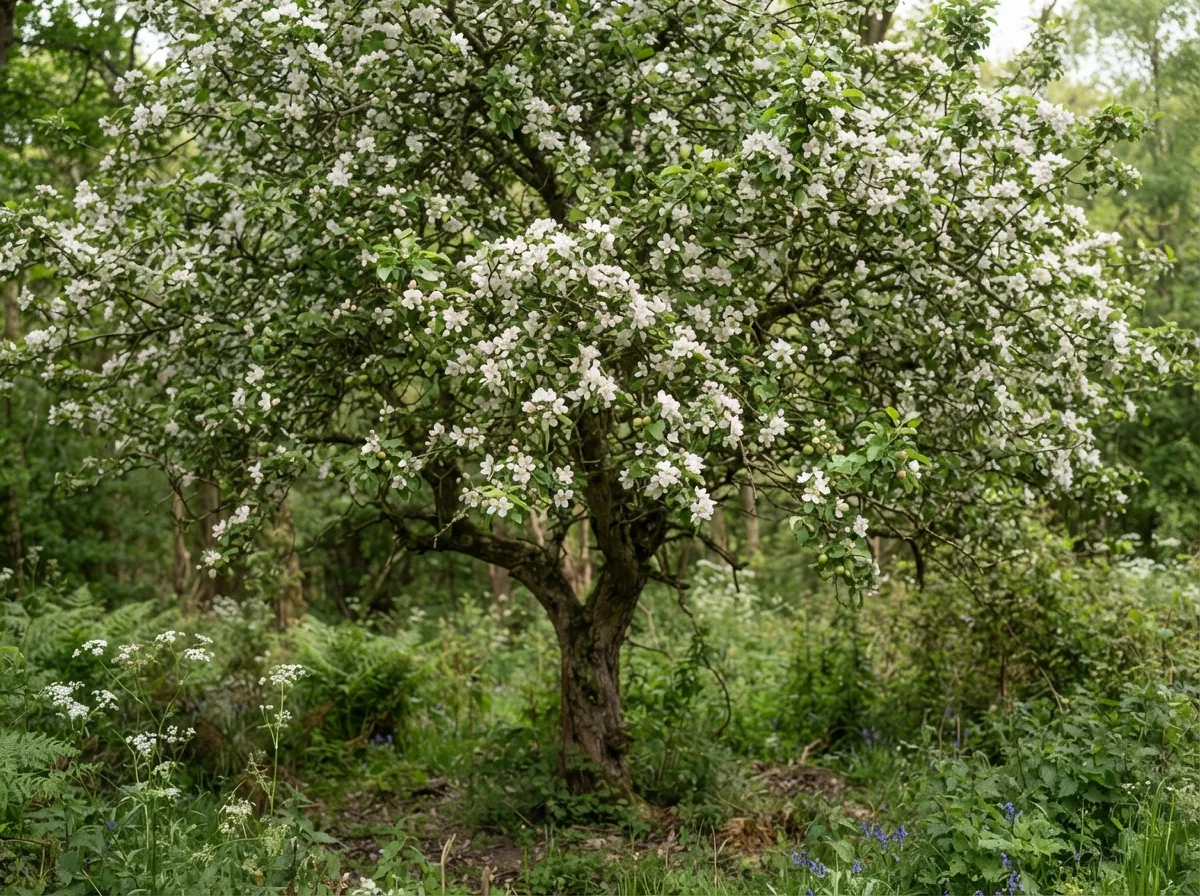
🔍 Identify it without mistakes
Discreet wild ancestor of the cultivated apple tree, a small, often thorny tree (unlike its domestic descendant) that you'll spot growing alone on forest edges or in hedgerows. Its fruits, much smaller than store-bought apples (2-3 cm), are very tart and astringent. They're easily recognized as miniature apples as soon as you cut them open: same star-shaped black seeds, same white flesh.
- small tree or shrub, often thorny in the wild (short twigs end in a thorn)
- round fruits measuring 2-3 cm, green to reddish-yellow, tiny compared to cultivated apples
- oval, toothed leaves, slightly downy underneath
- pinkish-white flowers with 5 petals, growing in small clusters, April-May
- fruit cross-section: 5-carpelled core with black seeds, identical structure to a miniature cultivated apple
⚠️ Not to be confused with
To tell them apart: the wild pear's fruit is elongated and tapers toward the stem (pear shape), while the wild apple's fruit remains round; the wild pear's silhouette is more upright and conical
🍽️ Eating it
Preparation : fruits are very tart and astringent raw, rarely eaten as is; traditionally cooked into jelly (rich in pectin, sets very well) or made into verjuice, cider, or vinegar; letting them blet (overripe) slightly softens the acidity
🪓 Other bushcraft uses
- considered one of the main wild genetic ancestors of the European domestic apple alongside Malus sieversii from Central Asia, a role confirmed by population genetics studies on the cultivated apple genome
No entry replaces a certain identification in the field, or medical advice. When in doubt: don't eat it. If ingestion is suspected: poison control or 112/911.