🌲 Eastern Hemlock
Tsuga canadensis · Pinacées
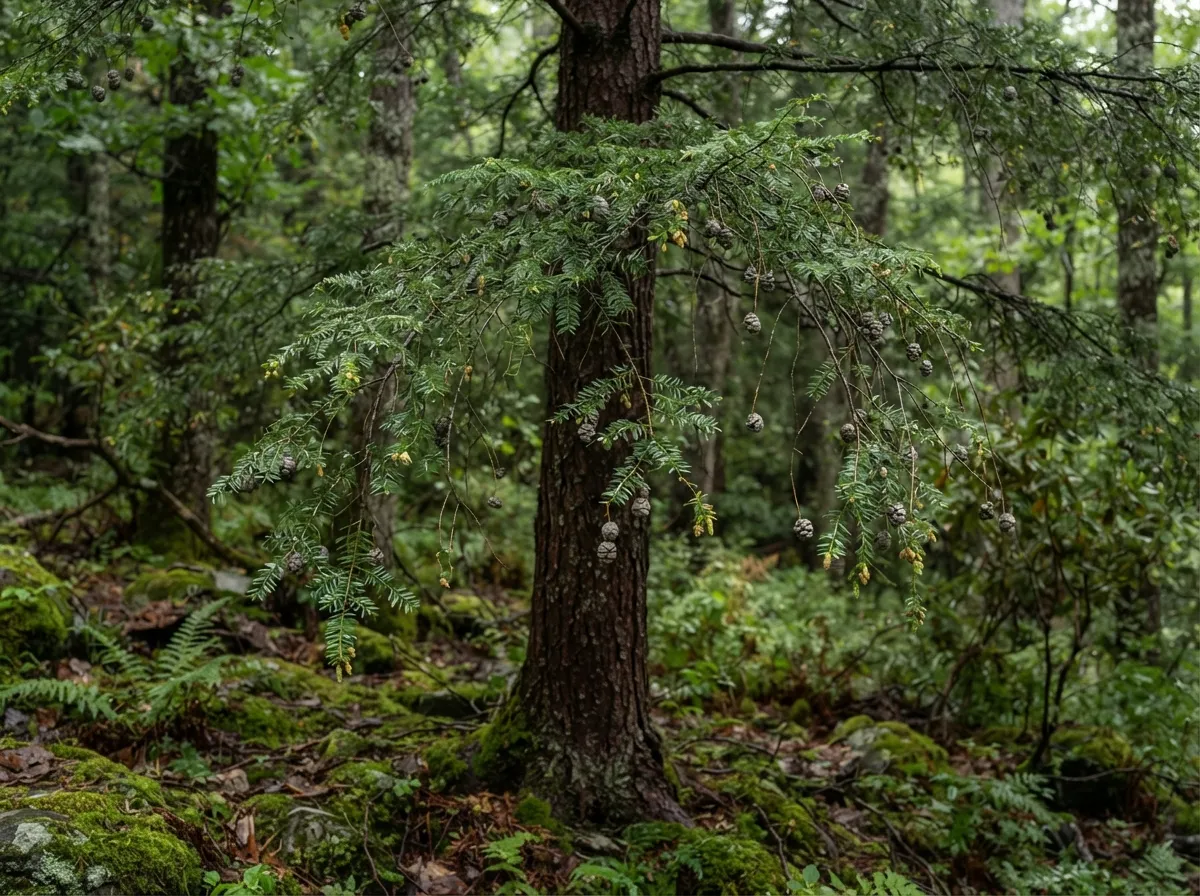
🔍 Identify it without mistakes
Conifer with short, flat needles (1-2 cm), arranged in two rows, with two white bands underneath. Always droopy terminal leader (top shoot) — a unique trait among North American conifers. Small hanging cones (~2 cm), thick reddish-brown bark, deeply furrowed, rich in tannins. Prefers cool, damp ravines.
- short, flat needles (1-2 cm), arranged in two rows, with two white bands underneath
- always droopy terminal leader, unique among North American conifers
- small hanging cones (~2 cm), the smallest among conifers in the region
- thick reddish-brown bark, deeply furrowed, rich in tannins
⚠️ Not to be confused with
To tell them apart: the eastern hemlock is a needle-bearing conifer, while poison hemlock is a herbaceous plant with a hollow purple-spotted stem — no botanical resemblance, just a shared name ('hemlock') that can lead to dangerous confusion if you misinterpret a source
🍽️ Eating it
Preparation : inner bark scraped and eaten raw or dried during famine, a practice documented among First Nations; fresh needles infused into tea, rich in vitamin C, with a lemony-resinous taste
💊 Healing with it
bark rich in tannins, used as a decoction and poultice by Indigenous peoples against diarrhea, colds, coughs, and to disinfect wounds
Level of evidence : traditional use — Arboplus — La pruche du Canada
⚠️ do not confuse with poison hemlock (see confusions); traditional use for external application and light herbal tea only
🪓 Other bushcraft uses
- industrial tanning: bark is exceptionally rich in tannins, forming the backbone of the leather tanning industry in North America throughout the 19th century
- natural shelter: dense and flexible lower branches provide effective protection against wind and snow — a great bivouac spot at the base of the trunk
- construction timber: medium-hard, straight wood, used in light framing despite its tendency to splinter
- makeshift cordage: fine and flexible roots usable as improvised cordage, a technique common to boreal conifers
- scurvy-preventing tea: young shoots provide a year-round source of vitamin C, useful during boreal winters
- healing ointment: resin traditionally applied directly onto cuts and burns
- microclimate indicator: its presence consistently signals a cool, shaded, north-facing slope, useful for anticipating damp soil and nearby water
No entry replaces a certain identification in the field, or medical advice. When in doubt: don't eat it. If ingestion is suspected: poison control or 112/911.