🫐 Kakadu plum
Terminalia ferdinandiana · Combretaceae
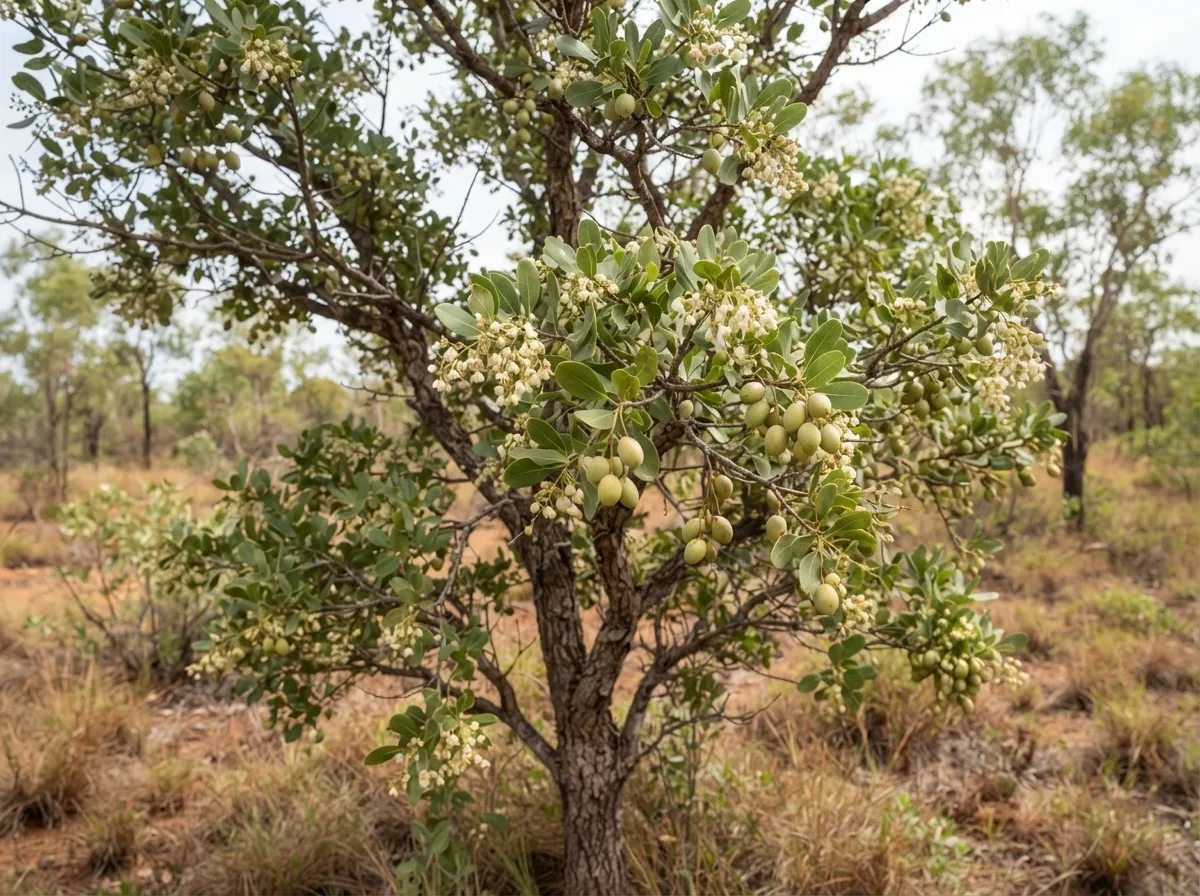
🔍 Identify it without mistakes
Small to medium-sized tree with scaly cream-grey bark and pale green deciduous foliage. The almond-sized, yellow-green fruits contain a single seed and are harvested at the end of the rainy season.
- characteristic scaly cream-grey bark
- small, almond-sized, yellow-green ovoid fruits
- found in sandy or clay soils, floodplains, stream beds
⚠️ Not to be confused with
To tell them apart: the scaly cream-grey bark and small, almond-sized, yellow-green ovoid fruits clustered at the end of the rainy season distinguish the Kakadu plum from other fruit trees in northern Australia
🍽️ Eating it
Preparation : eaten fresh directly, or dried/powdered for storage and use as a vitamin supplement
exceptional vitamin C content, measured between 2300 and 3150 mg/100 g of fresh fruit (up to 5300 mg/100 g in some samples), compared to ~50 mg/100 g for an orange - one of the highest levels ever measured in a fruit
💊 Healing with it
used for centuries by Aboriginal peoples as food and medicine; the inner bark traditionally treats various skin infections and conditions; today used as a natural food preservative and cosmetic ingredient
Level of evidence : limited studies — Wikipedia - Terminalia ferdinandiana
⚠️ no known toxicity at dietary doses
🪓 Other bushcraft uses
- used industrially as a natural antioxidant to preserve prawns and frozen foods
- sought-after cosmetic ingredient due to its high vitamin C content
Sources (1)
No entry replaces a certain identification in the field, or medical advice. When in doubt: don't eat it. If ingestion is suspected: poison control or 112/911.