🫐 Blackthorn (sloe)
Prunus spinosa · Rosaceae
🔍 Identify it without mistakes
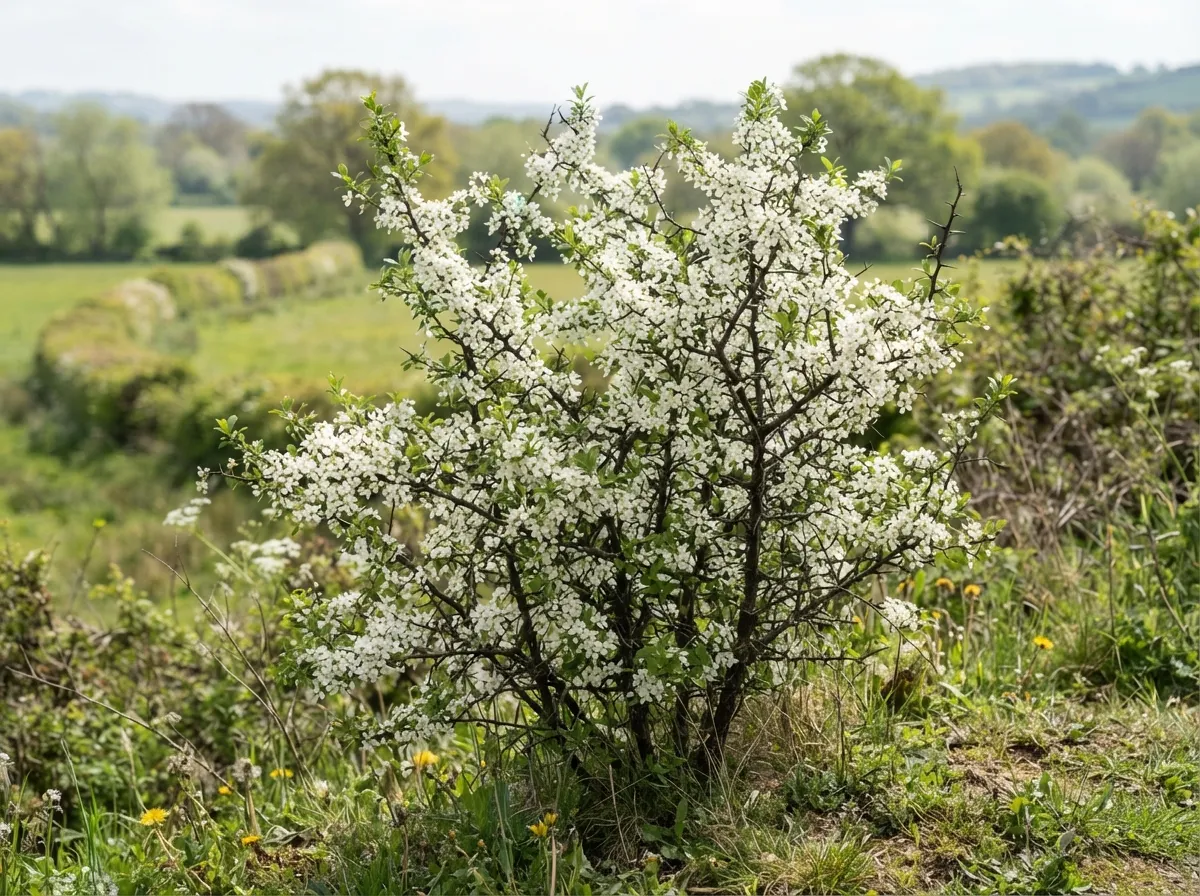
Very spiny shrub with gnarled blackish branches bearing stout thorns at the tips of the shoots. Early and spectacular flowering: a blanket of small white flowers completely covers the still-bare branches before the leaves appear, starting in March. Fruit (sloe) small, round, blue-black with a waxy bloom, very astringent before the first frosts.
- gnarled blackish branches with stout thorns at the tips of the shoots
- early and dense white flowering, before the leaves (starting in March)
- small, oval, finely toothed leaves appearing after the flowers
- small waxy blue-black sloe (1-1.5 cm)
- very astringent taste before full maturity/frost
⚠️ Not to be confused with
To tell them apart: blackthorn is distinguished by its shrubby size, its numerous stout thorns, and its small blue-black fruits, whereas the wild cherry is a large thornless tree with larger red/black fruits
🍽️ Eating it
Preparation : raw sloes are inedible before frost (extremely astringent, tannins); after one or more frosts, the flesh softens and can be used for jam, liqueur (the famous English sloe gin), or fruit leather; flowers are edible raw in small quantities
💊 Healing with it
flowers traditionally used as a mild laxative and spring blood purifier; astringent fruit traditionally used against mild diarrhea
Level of evidence : traditional use — ethnobotanical compilations (Fournier, PFAF)
⚠️ the kernels contained in the pit, as in most Prunus species, contain cyanogenic glycosides and should never be consumed in quantity; the fruit pulp is safe
🪓 Other bushcraft uses
- very hard wood used to make walking sticks and canes (the famous Irish shillelagh)
- long, rigid thorns empirically used as makeshift needles or spikes
- traditional living defensive hedges thanks to its dense thorns
No entry replaces a certain identification in the field, or medical advice. When in doubt: don't eat it. If ingestion is suspected: poison control or 112/911.