🍑 Desert Quandong
Santalum acuminatum · Santalaceae
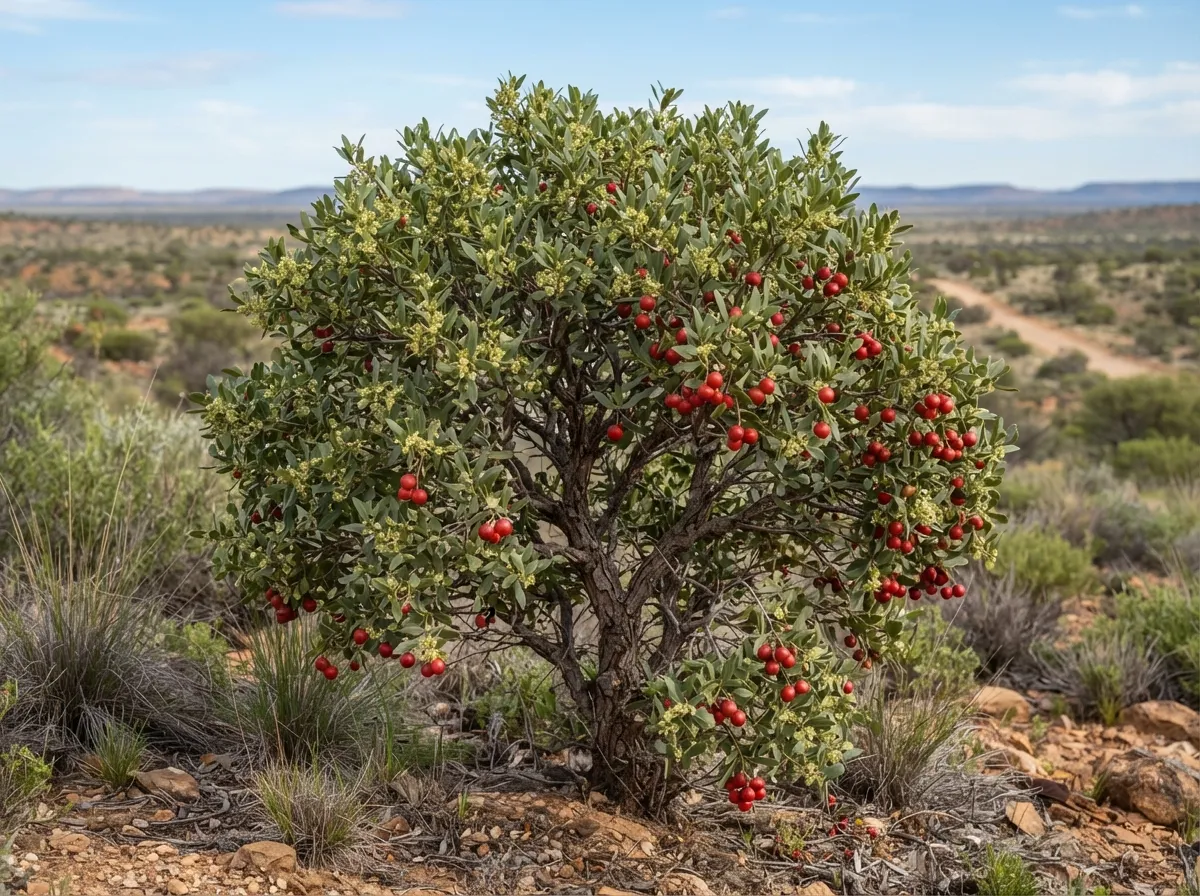
🔍 Identify it without mistakes
Small hemiparasitic tree (it draws part of its water and nutrients from the roots of neighboring plants) with pale green pointed leaves and fragrant cream-white flowers. The round fruit, turning from green to bright red when ripe, surrounds a hard, deeply pitted, very recognizable stone with a thin layer of flesh (3 mm).
- bright shiny red round fruit when ripe, thin flesh around a large hard stone
- pale green lanceolate leaves
- frequent presence in dry creek beds, granite plains, and sand dunes of central Australia
⚠️ Not to be confused with
To tell them apart: the quandong grows as a hemiparasitic shrub/small tree and its bright red fruit surrounds a single large, hard, pitted, clearly visible stone; desert tomatoes grow as low bushy plants often covered in fine hairs or prickles, and their fruit contains numerous small soft seeds, never a single large central hard stone
To tell them apart: both species are hemiparasitic Santalum from the same semi-arid habitat, but the quandong stone has a rougher, more sculpted shell while that of the Australian sandalwood is smoother; furthermore, sandalwood timber is much more aromatic (highly sought-after essential oil), unlike the quandong
🍽️ Eating it
Preparation : flesh eaten fresh, cooked into stewed fruit/pies, or dried for long storage; crack the hard shell to extract the kernel, edible raw or roasted and salted
💊 Healing with it
the kernel was traditionally applied to painful gums by Aboriginal peoples
Level of evidence : traditional use — Wikipedia - Santalum acuminatum
⚠️ no known toxicity
🪓 Other bushcraft uses
- wood used as fuel and for crafting small items
- seed oil historically used for lighting
- stones carved into ornamental objects and game pieces by Aboriginal peoples
Sources (1)
No entry replaces a certain identification in the field, or medical advice. When in doubt: don't eat it. If ingestion is suspected: poison control or 112/911.