🌸 Meadowsweet
Filipendula ulmaria · Rosaceae
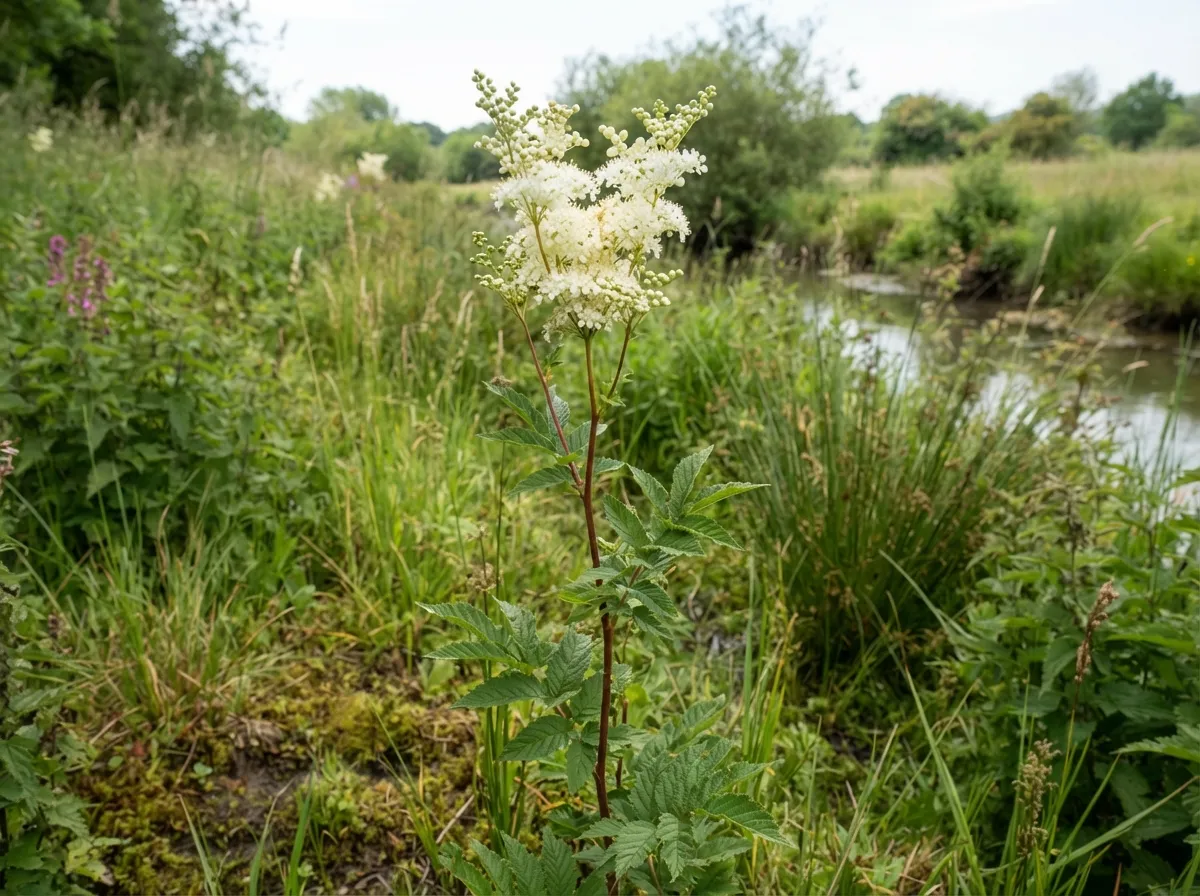
🔍 Identify it without mistakes
Tall damp-loving plant with pinnately compound leaves, toothed leaflets, whitish-downy undersides, releasing a sweet medicinal scent (similar to effervescent aspirin) when crushed. Large frothy panicles of tiny, highly fragrant creamy-white flowers top sturdy, reddish stems.
- characteristic medicinal scent (aspirin/almond) when leaves are crushed
- pinnately compound leaves with whitish-downy undersides
- frothy terminal panicle of tiny creamy-white flowers
- stem often tinged with reddish-purple
- grows in dense colonies in damp meadows and ditches
⚠️ Not to be confused with
To tell them apart: the aspirin scent and white frothy panicle are highly characteristic among wetland plants
🍽️ Eating it
Preparation : dried flowers as herbal tea or fresh infusion in syrup and liqueurs for their distinct aroma (historically used to flavor medieval mead); young leaves occasionally used in small quantities as a seasoning
💊 Healing with it
traditionally used to relieve minor joint pain, including low back pain, and mild flu-like symptoms, thanks to its natural salicylate derivative content — the plant that gave aspirin its name
Level of evidence : tradition (recognized by the EMA/HMPC for traditional use in minor joint pain) — EMA/HMPC, European Union herbal monograph on Filipendulae ulmariae herba/flos
⚠️ contraindicated if you are allergic to salicylates/aspirin, have salicylate-sensitive asthma, or are on anticoagulant treatment; avoid in children under 16 by analogy with aspirin precautions (Reye's syndrome), as a precautionary principle
🪓 Other bushcraft uses
- former name « spiraea ulmaria » is the direct origin of the name « aspirin » (a-cetyl + spir-aea), as the molecule was first isolated from this plant in 1838 by Italian chemist Raffaele Piria
- flowers used in perfumery and to flavor mead and beer in the Middle Ages
Sources (3)
No entry replaces a certain identification in the field, or medical advice. When in doubt: don't eat it. If ingestion is suspected: poison control or 112/911.