⚠️ Alpenrose
Rhododendron ferrugineum · Ericaceae
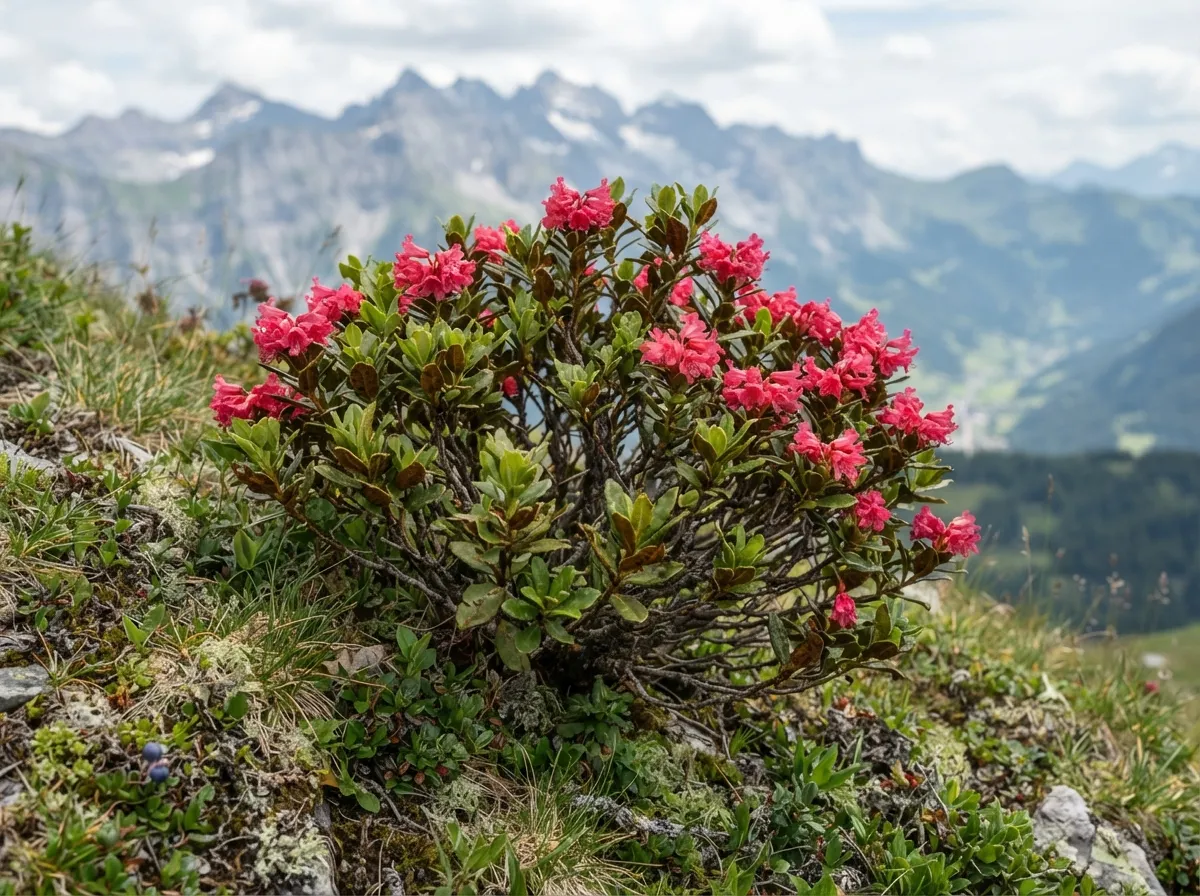
🔍 Identify it without mistakes
Low evergreen shrub, 0,3 to 1 m high, forming dense characteristic carpets ("rhododendron heaths") on acidic high-altitude slopes. Alternate, leathery, elliptical leaves, shiny dark green above, covered beneath with small rust-colored ("rusty") scales typical of the species and giving it its name. Large pink to red flowers in terminal clusters, heavily visited by bees — the source of "mad honey".
- underside of leaves covered with tiny rusty scales
- leathery evergreen elliptical leaves
- dense low carpet habit typical of acidic high-altitude slopes
- showy pink to red flowers in terminal clusters
💊 Healing with it
no safe use on your own; the plant is not consumed directly, but honey produced by bees foraging on its flowers can concentrate grayanotoxins
Level of evidence : traditional use — Mad honey — Wikipedia; Food chain surveillance platform, grayanotoxins
⚠️ the entire plant contains neurotoxic grayanotoxins; honey resulting from massive foraging on rusty-leaved alpenrose (rare in practice in Europe, with no documented cases of poisoning from European honey to date) can cause hypotension and bradycardia — make sure to distinguish it from Rhododendron ponticum, the main source of historical Black Sea "mad honey"
🪓 Other bushcraft uses
- no safe direct use — observation plant only
Sources (3)
No entry replaces a certain identification in the field, or medical advice. When in doubt: don't eat it. If ingestion is suspected: poison control or 112/911.