🌾 Wild rice (manoomin)
Zizania palustris · Poacées
🔍 Identify it without mistakes
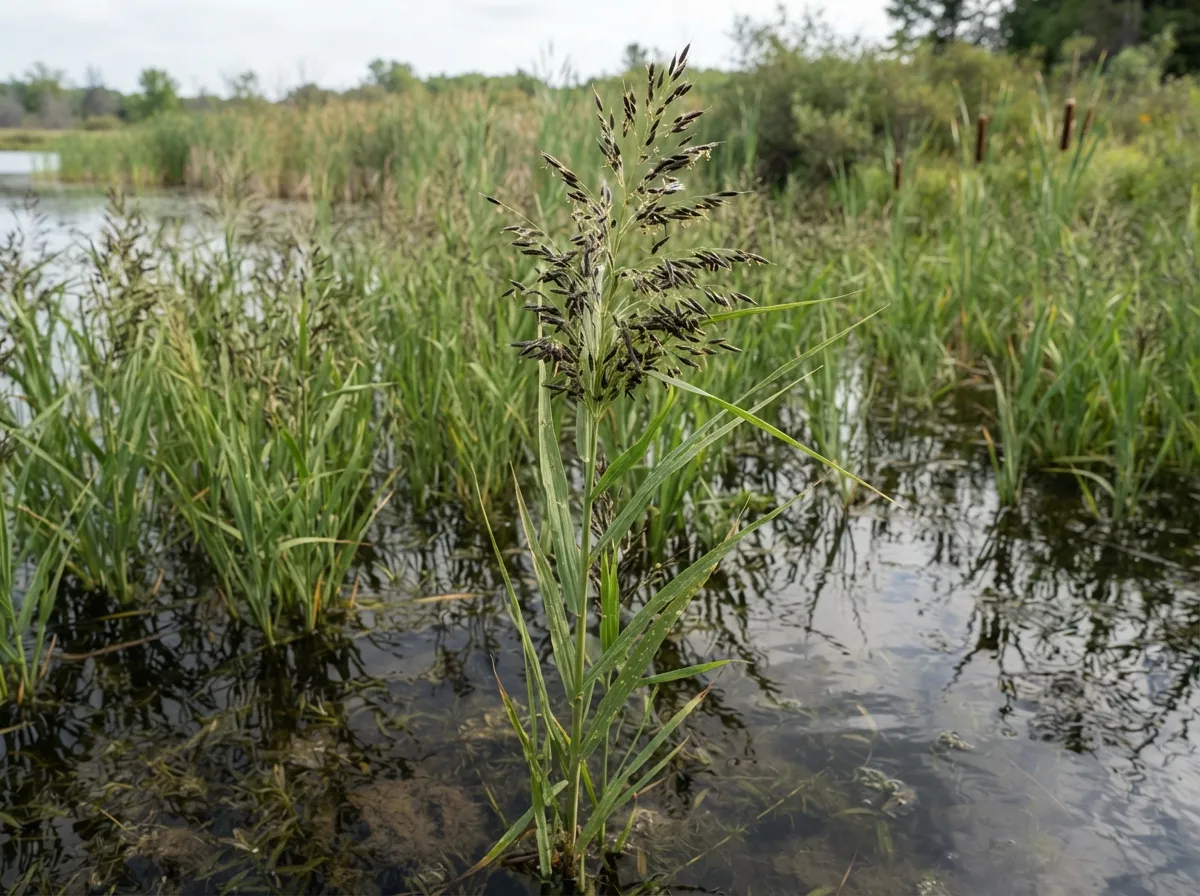
Large annual aquatic grass forming vast stands in shallow, slow-moving lakes and rivers. Stems float at first, then rise up to 2-3 m above the water. Features a distinctive terminal panicle with drooping male flowers at the bottom and upright female flowers at the top. Despite its name, it is not a true rice species (genus Oryza).
- large aquatic grass forming dense stands in shallow water
- panicle with upright female flowers at the top, drooping male flowers at the bottom
- elongated grain, brownish-green when mature, sheds easily
- ribbon-like leaves, floating then emerging
⚠️ Not to be confused with
To tell them apart: a healthy wild rice grain is slender, cylindrical, brownish-green to black at maturity, and uniform in size; an ergot-infected grain is replaced by a larger, curved, hard, purplish-black sclerotium shaped like a small horn that clearly protrudes from the other grains — systematically discard any panicle showing these dark growths before harvesting
🍽️ Eating it
Preparation : harvested traditionally by canoe, bending the stems over the boat to beat the heads with two wooden sticks (Ojibwe 'knocking' method); the gathered grain is then dried, gently parched over heat to loosen the hull, winnowed to remove the chaff, and finally boiled like regular rice for about 30-45 minutes
💊 Healing with it
no notable documented traditional medicinal use; primarily a staple food and culturally central plant
Level of evidence : traditional use — Minnesota Department of Health — Wild rice nutrition and harvest guidance
⚠️ no known toxicity; pay attention to storage (damp grain is prone to mold) and check local harvesting regulations, which protect traditional Ojibwe harvesting rights on many Minnesota and Wisconsin lakes
🪓 Other bushcraft uses
- sacred food and cultural pillar of the Ojibwe (Anishinaabe) people, called manoomin ('good berry' or 'good grain') in their language; the historic migration of several Ojibwe communities toward the Great Lakes was guided, according to their tradition, by a prophecy to find 'the place where food grows on the water'
Sources (4)
No entry replaces a certain identification in the field, or medical advice. When in doubt: don't eat it. If ingestion is suspected: poison control or 112/911.