🌳 Black locust
Robinia pseudoacacia · Fabaceae
🔍 Identify it without mistakes
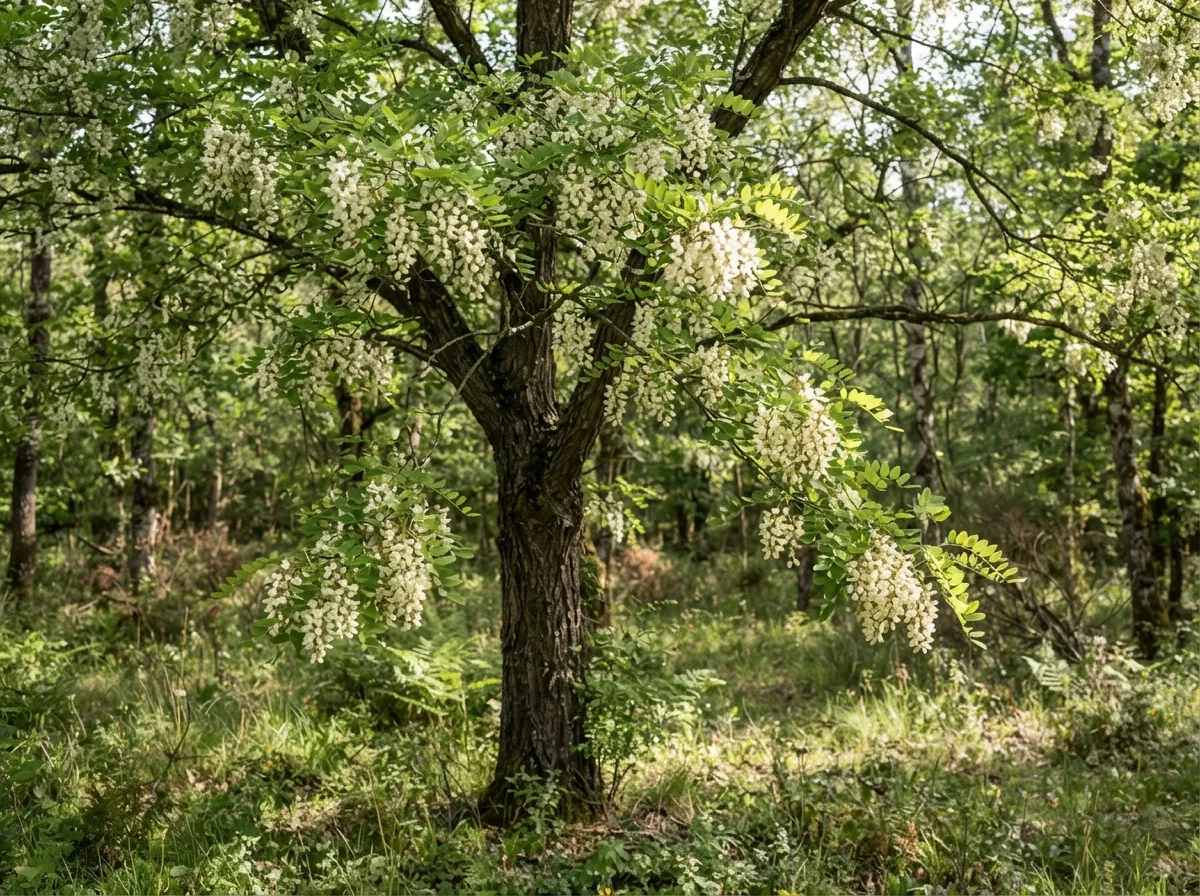
Tree with deeply longitudinally furrowed, grey-brown bark, resembling braided rope. Paired spines at the base of young twigs (modified stipules). Pinnately compound leaves with oval leaflets that fold up at night. Hanging clusters of highly fragrant white flowers in May-June, with flat brown pods persisting on the tree through winter.
- grey-brown bark, deeply furrowed longitudinally with a 'braided rope' look
- paired spines at the base of young twigs
- pinnately compound leaves, oval leaflets, folding closed at night
- hanging clusters of highly fragrant white flowers in May-June
⚠️ Not to be confused with
To tell them apart: black locust has paired spines at the base of each leaf, whereas honey locust has branched thorns growing directly on the trunk; black locust produces hanging clusters of highly fragrant white flowers
🍽️ Eating it
Preparation : raw flowers in small amounts (salads) or cooked into fritters (a classic traditional French recipe) or syrup; consume them fresh and opened in reasonable quantities; NEVER eat the bark, leaves, roots, or pods/seeds, which are toxic (robin, phasin)
🪓 Other bushcraft uses
- rot-resistant posts: dried wood resists decay better than almost any other European species (20-25 year lifespan as an untreated fence post, comparable to tropical hardwoods) — a top reference for fence posts, stakes, and sleepers
- firewood: heat value among the highest of temperate hardwoods, burns hot and long with little smoke — an excellent overnight fuel
- outdoor construction: decking and garden furniture without chemical treatment, a natural alternative to treated exotic woods
- acacia honey: abundant and highly fragrant bloom, one of the best nectar sources in Europe — a good indicator of nearby apiaries
- soil regeneration: nitrogen-fixing species (root symbiosis with Rhizobium) that rapidly colonizes and enriches poor soils and eroded slopes
- fast defensive hedge: thorny branches creating a dense, rapid barrier against intruders, useful for securing a temporary shelter
- danger to know: the bitter, toxic bark (robin) is sometimes accidentally gnawed by livestock on unpeeled posts — never make decoctions from the bark or chew on green wood
No entry replaces a certain identification in the field, or medical advice. When in doubt: don't eat it. If ingestion is suspected: poison control or 112/911.