🌿 Rosemary
Salvia rosmarinus (syn. Rosmarinus officinalis) · Lamiaceae
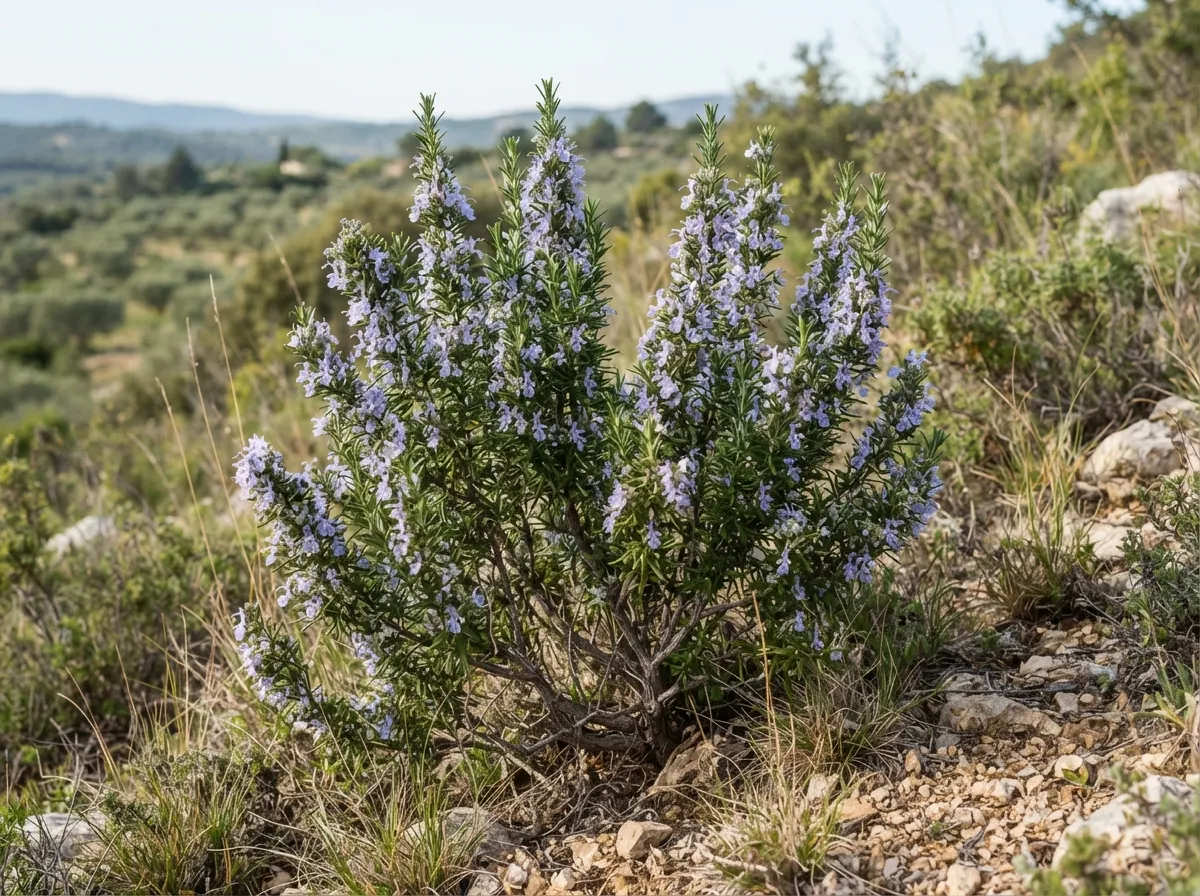
🔍 Identify it without mistakes
Bushy shrub with an erect habit, 0.5 to 2 m, with very dense evergreen foliage made of tough needle-like leaves, dark green above, whitish and felted underneath. Pale blue to purplish flowers arranged in small clusters at the leaf axils, present almost year-round in mild climates. The resinous and camphoric smell is immediate when crushed.
- linear needle-like leaves 2-4 cm, rolled edges
- white felted underside
- erect woody stem
- strong resinous smell
⚠️ Not to be confused with
To tell them apart: much finer scale-like leaves, no resinous smell when crushed
🍽️ Eating it
Preparation : fresh or dried; seasoning for grilled meats and vegetables, herbal tea, infused oil
USDA FoodData Central, fresh rosemary, per 100 g — leaves used in small quantities
💊 Healing with it
mild digestive disorders (choleretic, cholagogue), support of hepatobiliary function, external use for minor muscle pain
Level of evidence : limited studies — EMA/HMPC Monograph Rosmarini folium (well-established traditional use)
⚠️ essential oil is neurotoxic at high doses (camphor) and contraindicated during pregnancy; herbal tea at culinary doses is safe
🪓 Other bushcraft uses
- moth repellent (dried sprigs)
- traditional Mediterranean incense
- hair dye (slightly darkens)
Sources (3)
No entry replaces a certain identification in the field, or medical advice. When in doubt: don't eat it. If ingestion is suspected: poison control or 112/911.