🫐 Bramble and Wild Raspberry
Rubus fruticosus / Rubus idaeus · Rosaceae
🔍 Identify it without mistakes
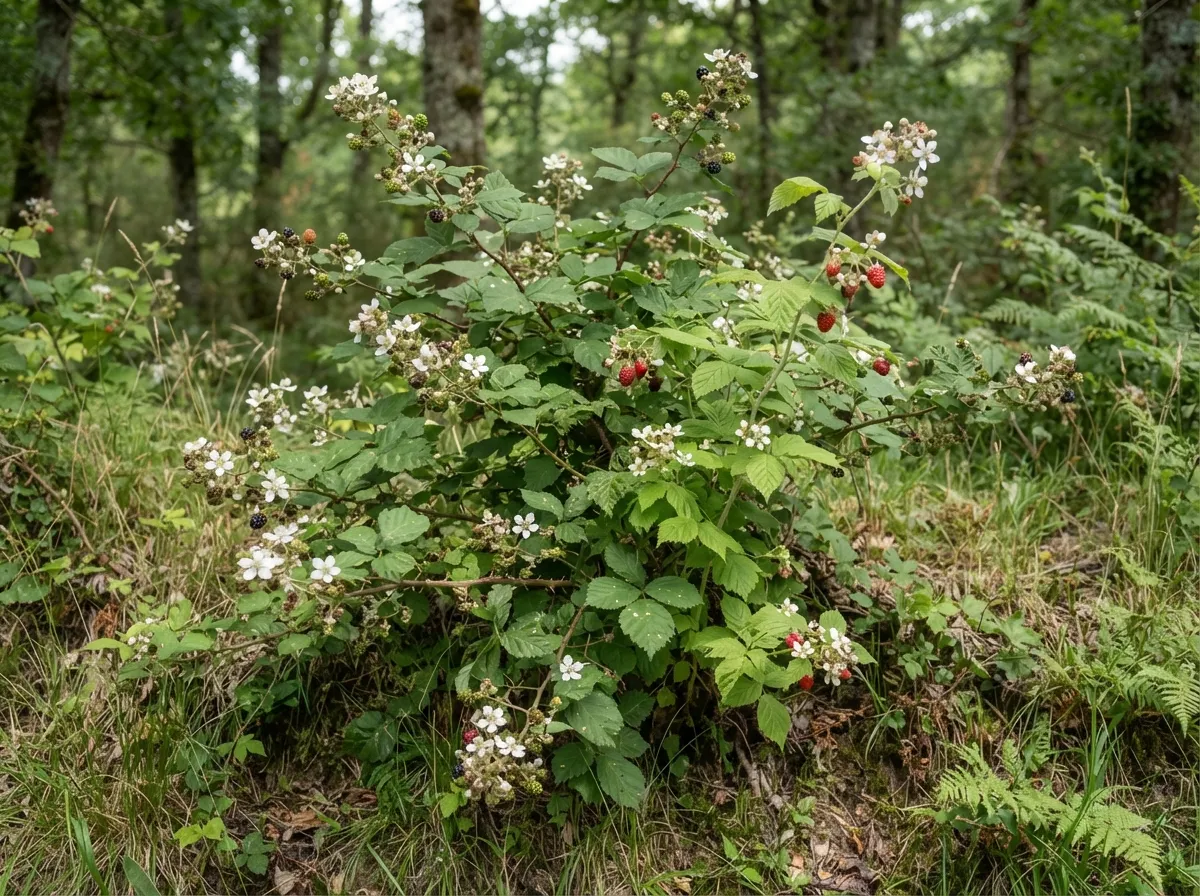
Two thorny shrubs of the genus Rubus forming dense thickets. Bramble (wild blackberry) has arched, angular, very thorny stems, compound leaves with 3-5 serrated leaflets, and shiny black fruit (blackberry) composed of multiple tight drupelets that DO NOT detach from their white receptacle when picked. Wild raspberry has straighter, erect, less prickly stems, red (sometimes yellow) fruit that easily DETACHES, leaving the white conical receptacle on the stem — the simplest distinguishing criterion.
- blackberry: does not detach from the white receptacle, strongly arched and thorny stem
- raspberry: detaches easily, straighter stem, hollow fruit once picked
- serrated compound leaves, lower surface often whitish on raspberry
- white flowers with 5 petals, typical of Rosaceae
- dense thickets quickly colonizing forest edges and clear-cuts
⚠️ Not to be confused with
To tell them apart: the detachment test of the fruit (blackberry remains solid, raspberry becomes hollow) eliminates all ambiguity; pay attention only to unripe fruits, which shouldn't be consumed anyway
🍽️ Eating it
Preparation : raw fruit, jam, syrup, or dried; young bramble shoots peeled of their prickly bark reveal a tender, raw-edible heart
USDA FoodData Central, raw raspberry, per 100 g; blackberry is similar (43 kcal, slightly lower vitamin C)
💊 Healing with it
raspberry leaf traditionally used late in pregnancy to prepare the uterus for labor (widespread midwifery practice); astringent bramble leaf used as a gargle
Level of evidence : etudes-limitees for raspberry leaf (modest-sized clinical trials, mixed results on labor duration); tradition for the rest — obstetric literature reviews cited by herbal medicine monographs (Wikiphyto, Cochrane-type reviews)
⚠️ raspberry leaf is not recommended in early or mid-pregnancy (reserve for the final trimester, following midwife advice) due to its potential uterine-stimulating effect
🪓 Other bushcraft uses
- bramble stems stripped and woven into rustic cordage for bushcraft
- bramble thickets serve as a valuable shelter habitat for small wildlife (nesting, protection from predators)
No entry replaces a certain identification in the field, or medical advice. When in doubt: don't eat it. If ingestion is suspected: poison control or 112/911.