🌿 Sea rocket
Cakile maritima · Brassicaceae
🔍 Identify it without mistakes
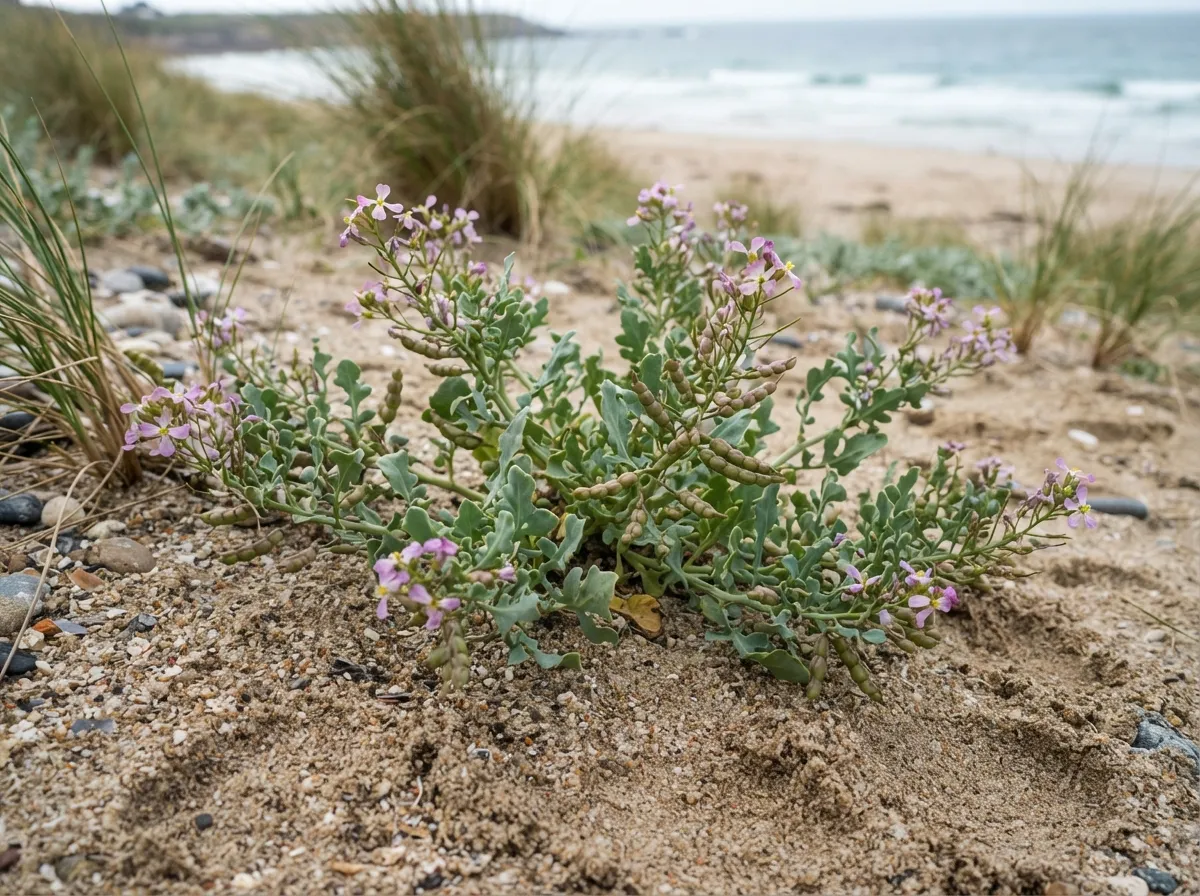
A small, hairless, fleshy annual plant, dark green and shiny, growing as a low bushy clump colonising the very first beach ridge, just above the high tide line. Thick leaves divided into rounded lobes, white to pale mauve flowers in small, fragrant terminal clusters.
- fleshy, shiny, alternate leaves, divided into rounded (not pointed) lobes
- flowers with 4 white to pale mauve petals, grouped in small fragrant terminal clusters
- characteristic silique with two stacked segments, the lower segment bearing two small side horns
⚠️ Not to be confused with
To tell them apart: sea rocket is a smaller annual plant with bright green leaves divided into rounded lobes; sea kale is a much larger perennial with broad, undivided, waxy blue-green leaves
🍽️ Eating it
Preparation : leaves, flowers, and young siliques can be eaten raw in salads for their arugula-like peppery kick, or cooked as a vegetable; the roots, being sharper, are consumed in small amounts, grated like horseradish
💊 Healing with it
traditionally used as a mild antiseptic, depurative, and tonic
Level of evidence : traditional use — Fiche biodiversifiante — Le cakilier ou « roquette de mer »
⚠️ no major known contraindications at culinary doses
Sources (3)
No entry replaces a certain identification in the field, or medical advice. When in doubt: don't eat it. If ingestion is suspected: poison control or 112/911.