🍄 Field mushroom
Agaricus campestris · Agaricaceae
🔍 Identify it without mistakes
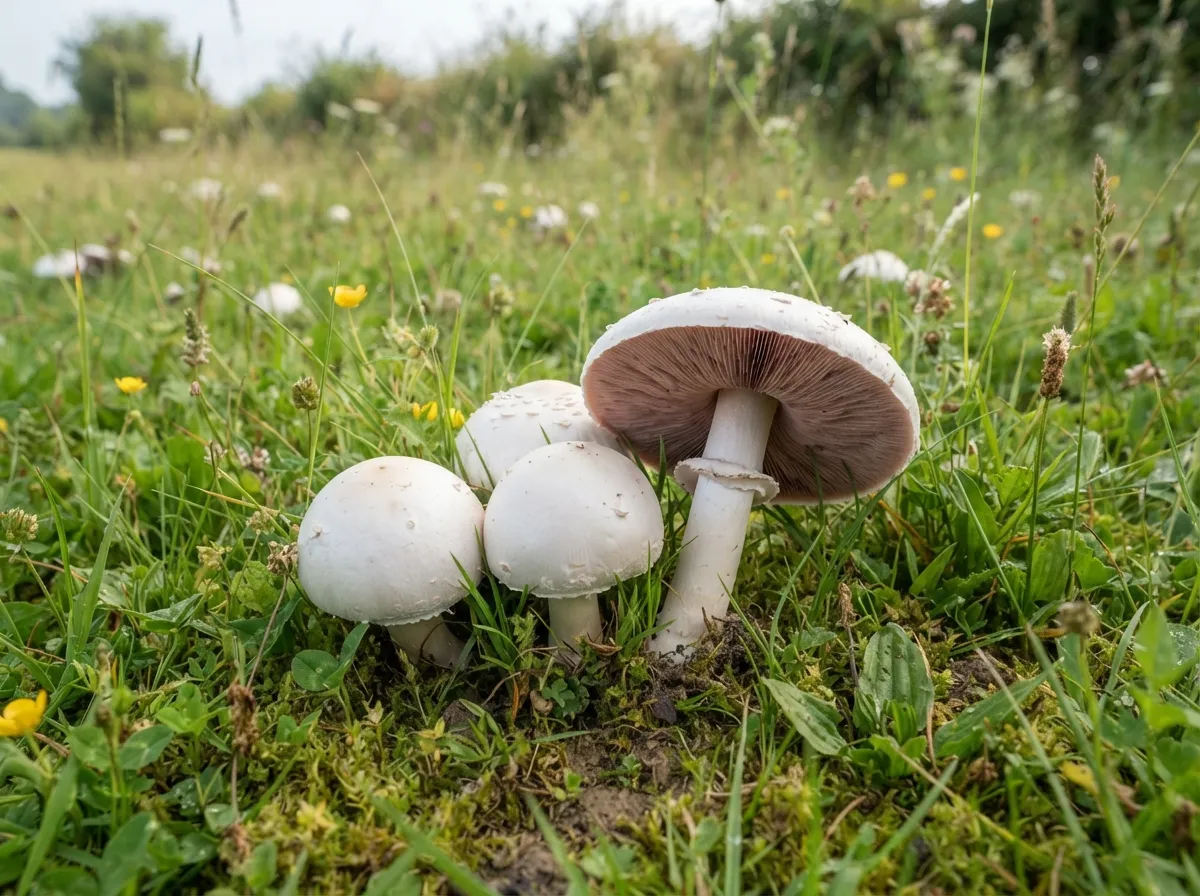
Wild cousin of the button mushroom, growing in grazed pastures. Its most dangerous look-alike is the destroying angel, which is white like it when young: the color of the gills is THE critical criterion that separates edible from deadly.
- cap white to cream, silky, convex then flattening, sometimes slightly scaly with age
- gills FREE (not touching the stem), PINK when young then chocolate-brown at maturity — never remaining white
- stem short, white, spindle-shaped, with a thin, simple, fragile ring
- base of stem WITHOUT a volva (no membranous sac)
- spore print dark chocolate-brown
- flesh white, turning slightly pink when cut, pleasant mushroom/aniseed smell
⚠️ Not to be confused with
To tell them apart: GILLS: pink then brown in the field mushroom, WHITE and remaining so in the destroying angel (never pink); stem base: no volva in the field mushroom, with a membranous sac-like VOLVA in the destroying angel — always dig up completely before harvesting any white mushroom in meadows or woodland edges; chocolate-brown spore print in the field mushroom, white in the destroying angel
🍽️ Eating it
Preparation : always cooked; cook it just like the cultivated button mushroom
Sources (3)
No entry replaces a certain identification in the field, or medical advice. When in doubt: don't eat it. If ingestion is suspected: poison control or 112/911.