🌹 Burnet rose (Scotch rose)
Rosa spinosissima · Rosaceae
🔍 Identify it without mistakes
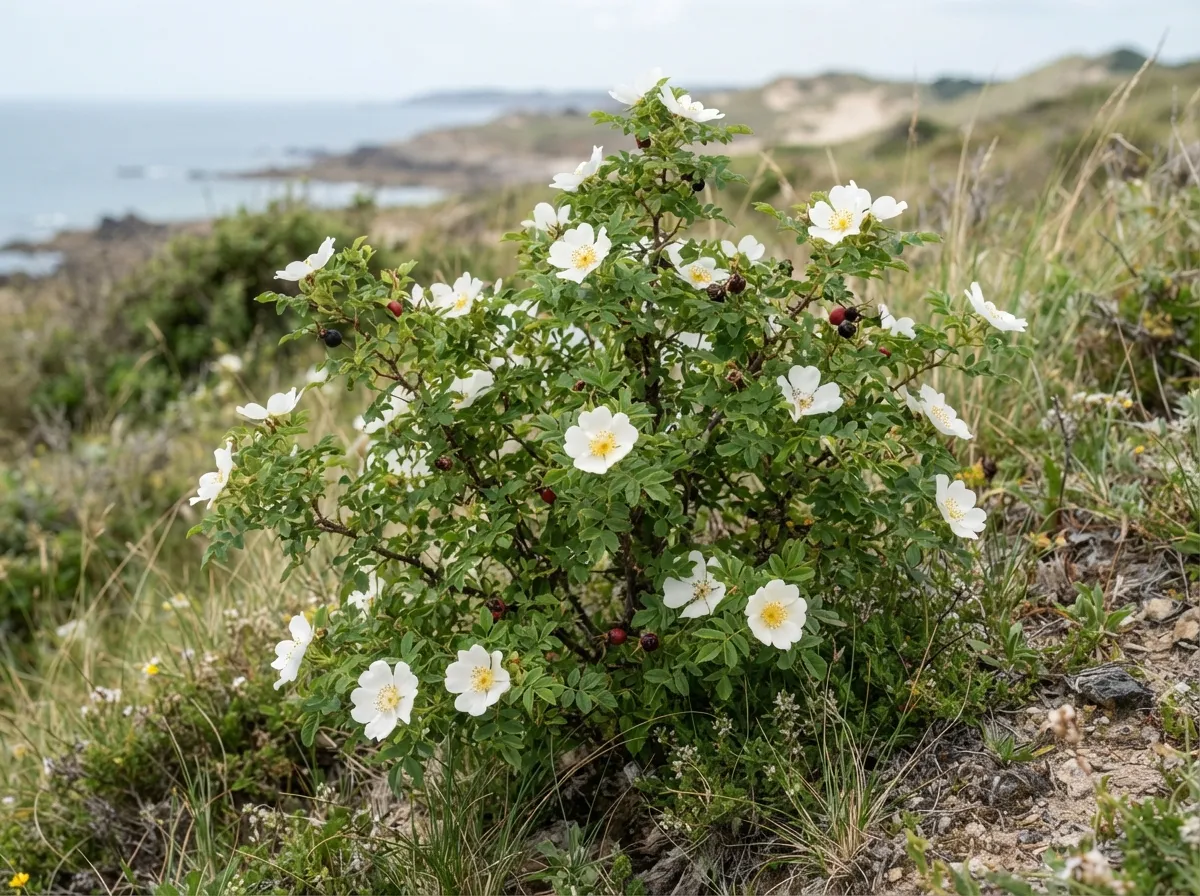
Small, low-growing, suckering rose bush forming dense, highly prickly thickets on fixed dunes. Covered in spring with small, faint-pinkish to cream-white, highly fragrant single flowers, followed in autumn by round rosehips that are unusual for their dark purple-black colour at maturity rather than red.
- low, suckering shrub (0.3-1 m), forming dense thickets, stems covered in numerous fine prickles mixed with bristles
- single flowers with 5 cream-white, faintly pinkish petals, highly fragrant, solitary
- round rosehips, dark purple-black at maturity (unlike the orange-red of most other wild roses)
- grows in dense colonies on fixed dunes and coastal limestone grasslands
⚠️ Not to be confused with
To tell them apart: the burnet rose has numerous small, fine prickles mixed with bristles and round hips that turn purple-black at maturity; the dog rose has stouter, hooked prickles that are more spaced out, and bright orange-red ovoid hips
🍽️ Eating it
Preparation : hips must be deseeded (internal achenes are covered in irritating hairs, just like the dog rose), then cooked into jam or syrup; petals can be used fresh as a garnish or in fragrant herbal teas
💊 Healing with it
traditional use similar to that of the dog rose: vitamin C-rich hips used in herbal teas and fortifying jams
Level of evidence : traditional use — INPN (MNHN) — Rosa spinosissima L.
⚠️ be sure to remove the hairy achenes before consumption to avoid digestive irritation, just as with the dog rose
🪓 Other bushcraft uses
- planted in defensive hedges and windbreaks on the coast for its exceptional resistance to salt and wind, and to stabilize dunes
Sources (2)
No entry replaces a certain identification in the field, or medical advice. When in doubt: don't eat it. If ingestion is suspected: poison control or 112/911.