🪢 Rattan
Calamus rotang · Arecaceae (Palms)
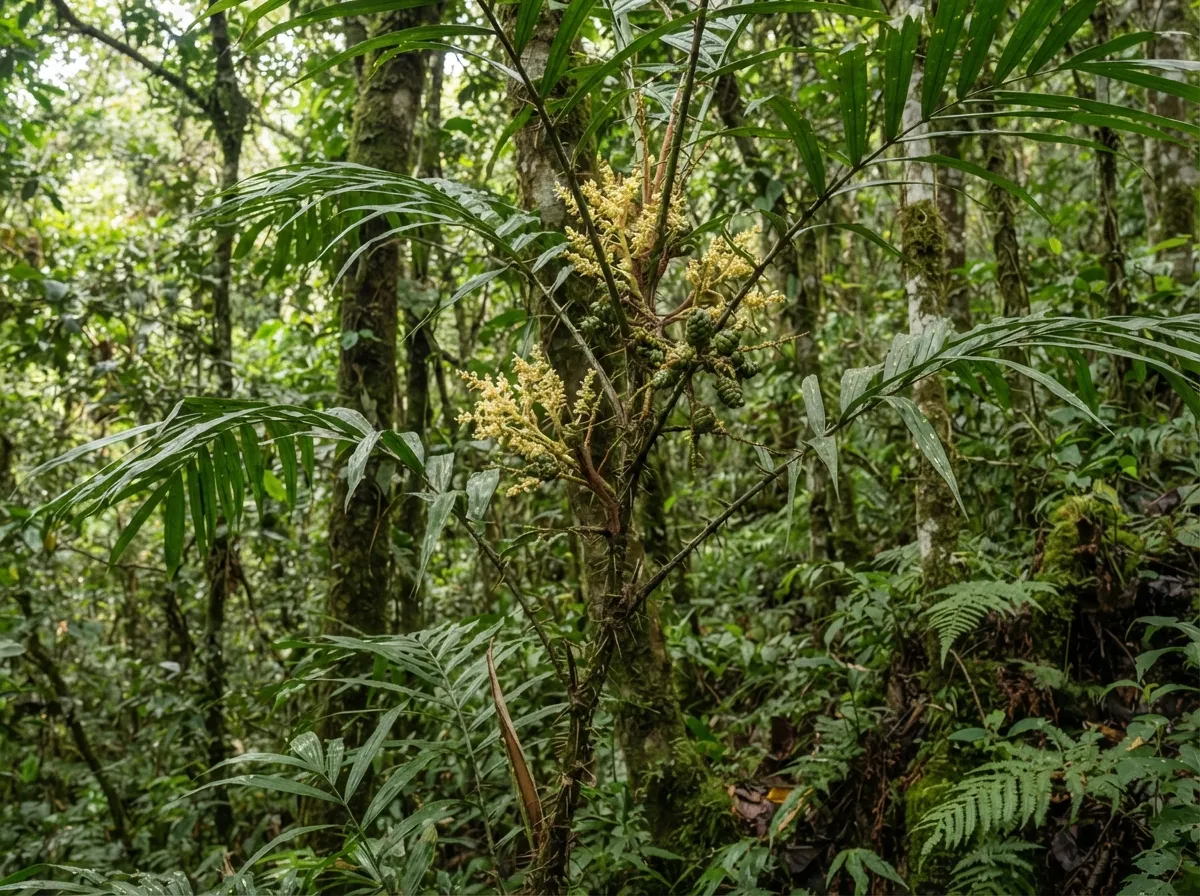
🔍 Identify it without mistakes
Climbing palm (liana) of the Southeast Asian jungle, with a thin, flexible, unbranched stem that starts its life vertically before toppling horizontally and stretching over tens, or even more than 100 meters across the canopy, clinging to neighboring trees using cirri armed with hook-like curved spines. Its round fruits are covered in overlapping scales resembling a tiny pinecone.
- thin climbing stem, round in cross-section, flexible, and unbranched
- cirri (whip-like leaf extensions) armed with hook-curved spines that catch the vine onto neighboring trees
- pinnate leaves 60-80 cm long with two rows of spines on the upper surface
- round fruits, the size of a hazelnut, covered in shiny overlapping scales like a pinecone
⚠️ Not to be confused with
To tell them apart: rattan is a true palm: round stem and pinnate leaves typical of Arecaceae, whereas non-palm spiny vines have angular or ribbed stems and simple or compound non-pinnate leaves
🍽️ Eating it
Preparation : cut the last meter of still-tender stem, strip away the bark and spines, then cook the heart like a vegetable (similar to heart of palm); suck the tangy pulp surrounding the ripe fruit seed to quench your thirst
💊 Healing with it
common rattan leaf extract is being studied in laboratories for its hepatoprotective properties
Level of evidence : limited studies — PMC — Potent hepatoprotective activity of common rattan (Calamus rotang) leaf extract
⚠️ no standardized traditional use at a known therapeutic dose; results limited to preclinical studies
🪓 Other bushcraft uses
- split stem woven into furniture, baskets, and construction lashings (the most sought-after rattan in the world)
- red fruit resin, known as 'dragon's blood', used as a dye and traditional remedy for respiratory and digestive tracts
Sources (3)
No entry replaces a certain identification in the field, or medical advice. When in doubt: don't eat it. If ingestion is suspected: poison control or 112/911.