🍄 Charcoal burner
Russula cyanoxantha · Russulaceae
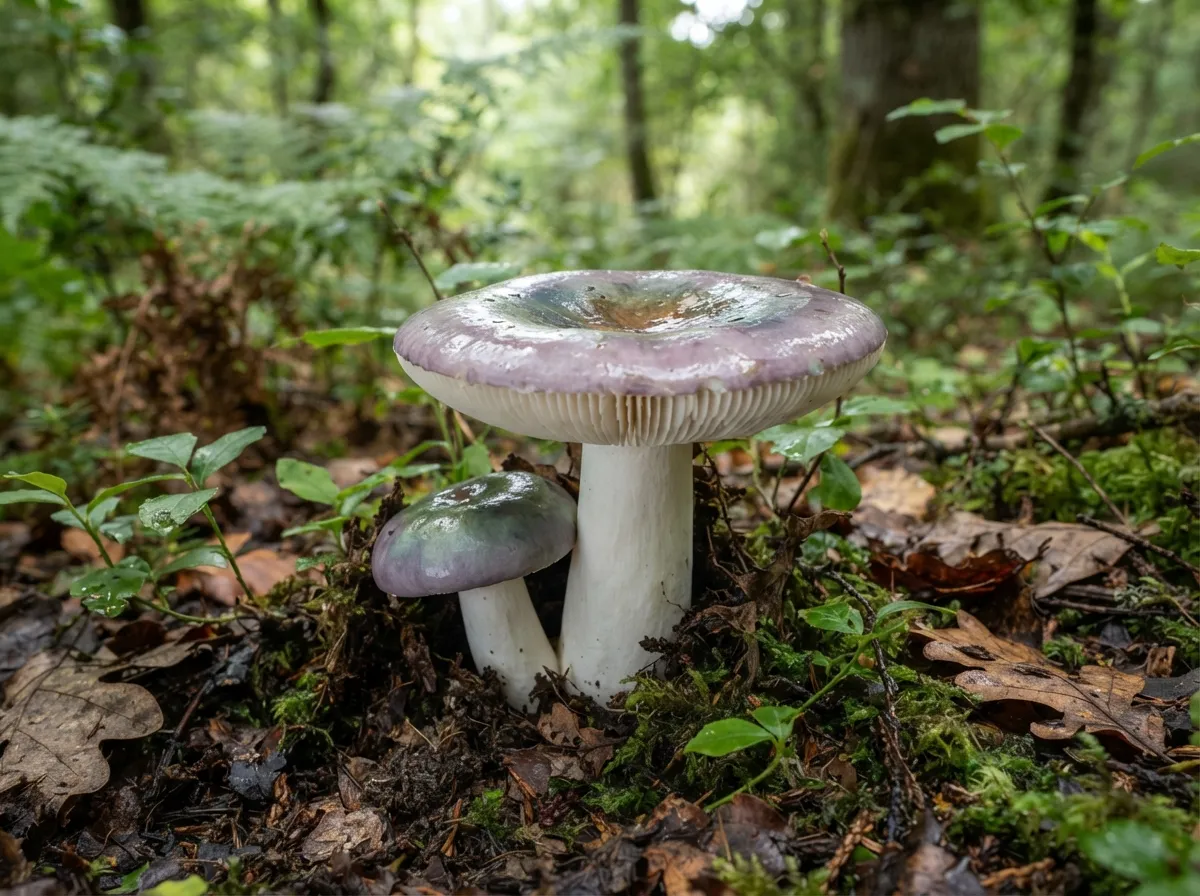
🔍 Identify it without mistakes
One of the easiest russulas to identify with certainty thanks to a unique tactile test for the genus: its gills are greasy and FLEXIBLE to the touch, bending without breaking — whereas almost all other russulas have brittle, chalk-like gills.
- cap 6-15 cm, highly variable colors (purple, lilac, olive green, gray, often variegated with several shades on the same cap), smooth surface slightly slimy in wet weather
- gills white to cream, FLEXIBLE and GREASY to the touch — they bend under your finger and spring back instead of snapping clean (decisive test for the genus Russula)
- stem white, firm, cylindrical
- flesh white, brittle, mild taste (never acrid or peppery)
- spore print white
- grows under broadleaf trees, especially beech
⚠️ Not to be confused with
To tell them apart: taste a tiny fragment of raw cap (then spit it out): the charcoal burner has a mild taste, never acrid or hot; any russula with a peppery/acrid taste should be discarded from your harvest, even if it is not dangerous in small amounts
🍽️ Eating it
Preparation : always cooked; one of the few russulas recommended even for simple pan-frying with garlic and parsley, thanks to its firm flesh that holds up well during cooking
No entry replaces a certain identification in the field, or medical advice. When in doubt: don't eat it. If ingestion is suspected: poison control or 112/911.