🌵 Saguaro
Carnegiea gigantea · Cactaceae
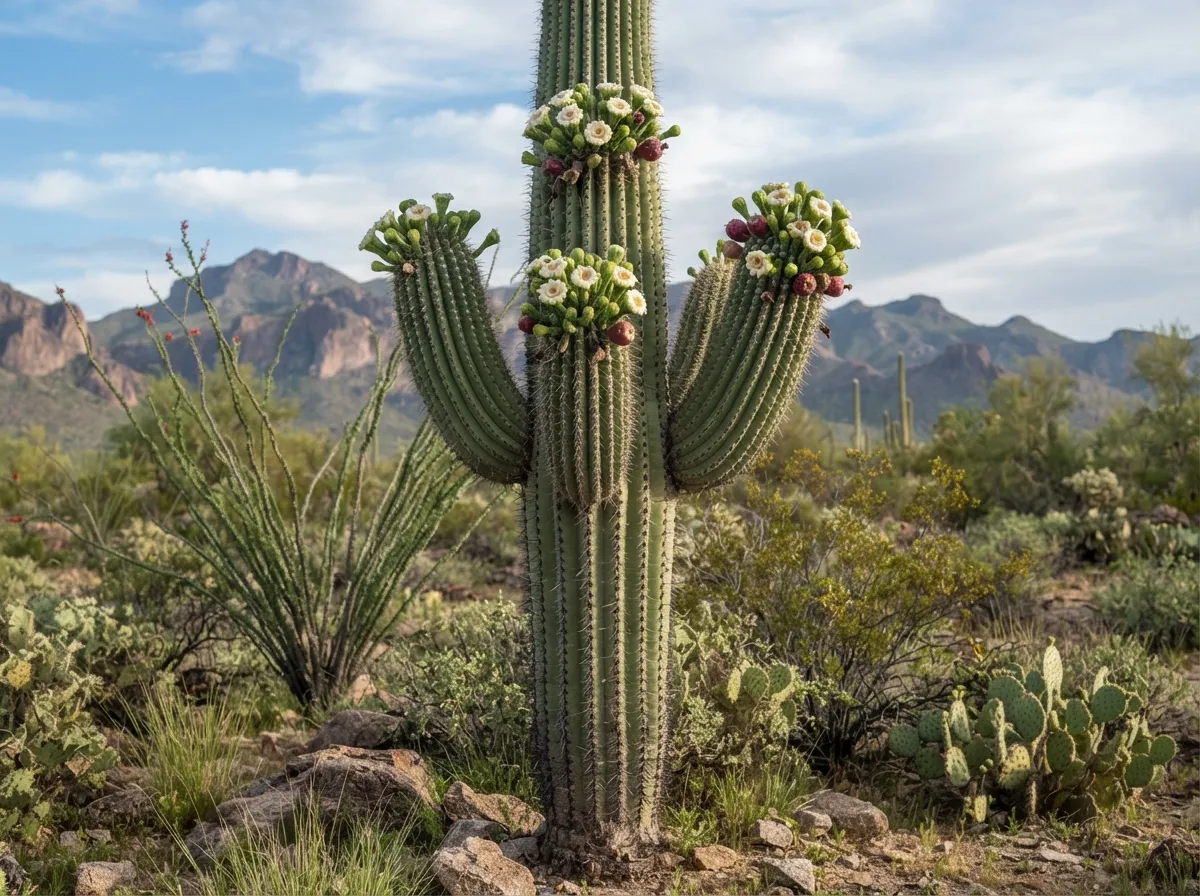
🔍 Identify it without mistakes
Arborescent columnar cactus, the largest in the United States, reaching heights of 3 to 16 m and living 150 to 200 years. The ribbed trunk, featuring an internal woody skeleton (the famous 'ribs'), develops arms around 75-100 years of age, boosting its reproductive capacity. Waxy white flowers open from April to June, followed by ruby-red fruits in June, each containing about 2,000 seeds in a sweet pulp.
- ribbed columnar trunk with visible internal woody skeleton
- very sharp spines up to 7 cm long
- arms that only appear around 75-100 years of age
- waxy white flowers (April-June) followed by ruby-red fruits (June) containing about 2,000 seeds
⚠️ Not to be confused with
To tell them apart: the saguaro is a tall, narrow columnar cactus that can exceed 10 m with upright arms, whereas the barrel cactus remains low and squat, barrel-shaped, and never develops arms; their fruits are harvested and prepared differently
🍽️ Eating it
Preparation : traditionally harvested by the Tohono O'odham using a long pole (4.5 to 9 m) made from two or three spliced saguaro ribs to reach the fruit at the top; the freshly harvested pulp is boiled down into a thick syrup over several hours, and is also used to prepare a traditional ceremonial wine
💊 Healing with it
no major traditional medicinal usage documented in consulted sources, aside from the food and ceremonial use of the fruit
Level of evidence : traditional use — Wikipedia — Carnegiea gigantea
⚠️ in Arizona, damaging or uprooting a wild saguaro is a felony offense punishable by up to about 3 years and 9 months in prison — only harvest fallen fruit or reach it without harming the plant
🪓 Other bushcraft uses
- internal woody ribs traditionally used for construction (roofing frames, harvesting poles)
- cavities carved out by woodpeckers in the trunk, reused as nesting spots by other desert birds
Sources (1)
No entry replaces a certain identification in the field, or medical advice. When in doubt: don't eat it. If ingestion is suspected: poison control or 112/911.