🌿 Glasswort (Samphire)
Salicornia europaea · Amaranthaceae (Chenopodiaceae)
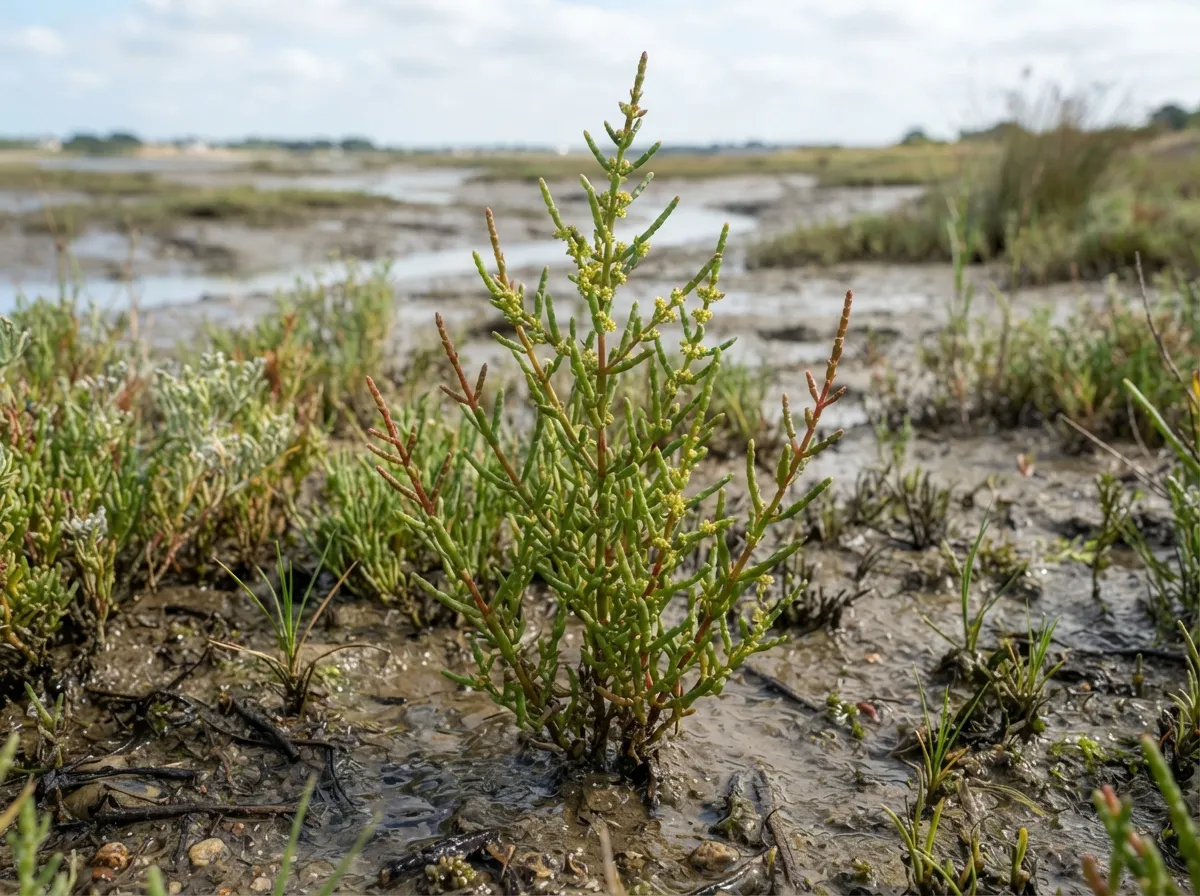
🔍 Identify it without mistakes
Small succulent annual plant, with no visible leaves, made of articulated bright green cylindrical stem segments turning red at the end of the season, branched into small dense bushes close to the ground.
- fleshy stems articulated into successive segments, with no distinct leaves
- bright green in summer, turning red in autumn
- grows in dense mats on mudflats and salt marshes flooded at high tide
⚠️ Not to be confused with
To tell them apart: glasswort has no visible leaves at all, formed entirely of fleshy articulated stem segments that only release clear, salty sap; sea spurge bears small, clearly visible fleshy blue-green leaves spiraling along the stem, and releases a milky white latex as soon as it is broken — this latex is the decisive test, glasswort never produces it
🍽️ Eating it
Preparation : eaten raw in salads (crunchy and salty) or briefly blanched/sautéed in butter like a vegetable, without adding any extra salt
💊 Healing with it
no major documented medicinal use beyond its value as a highly mineralized vegetable
Level of evidence : traditional use — Wikipedia - Salicornia
⚠️ should be limited by people on a low-salt diet due to its very high natural sodium content; some species contain saponins that can be potentially irritating in high doses
🪓 Other bushcraft uses
- seeds of some species pressed for an edible oil
- ongoing research on glasswort as a source of low-sodium salt substitutes
Sources (1)
No entry replaces a certain identification in the field, or medical advice. When in doubt: don't eat it. If ingestion is suspected: poison control or 112/911.