🌿 Toothbrush Tree (siwak/miswak)
Salvadora persica · Salvadoracées
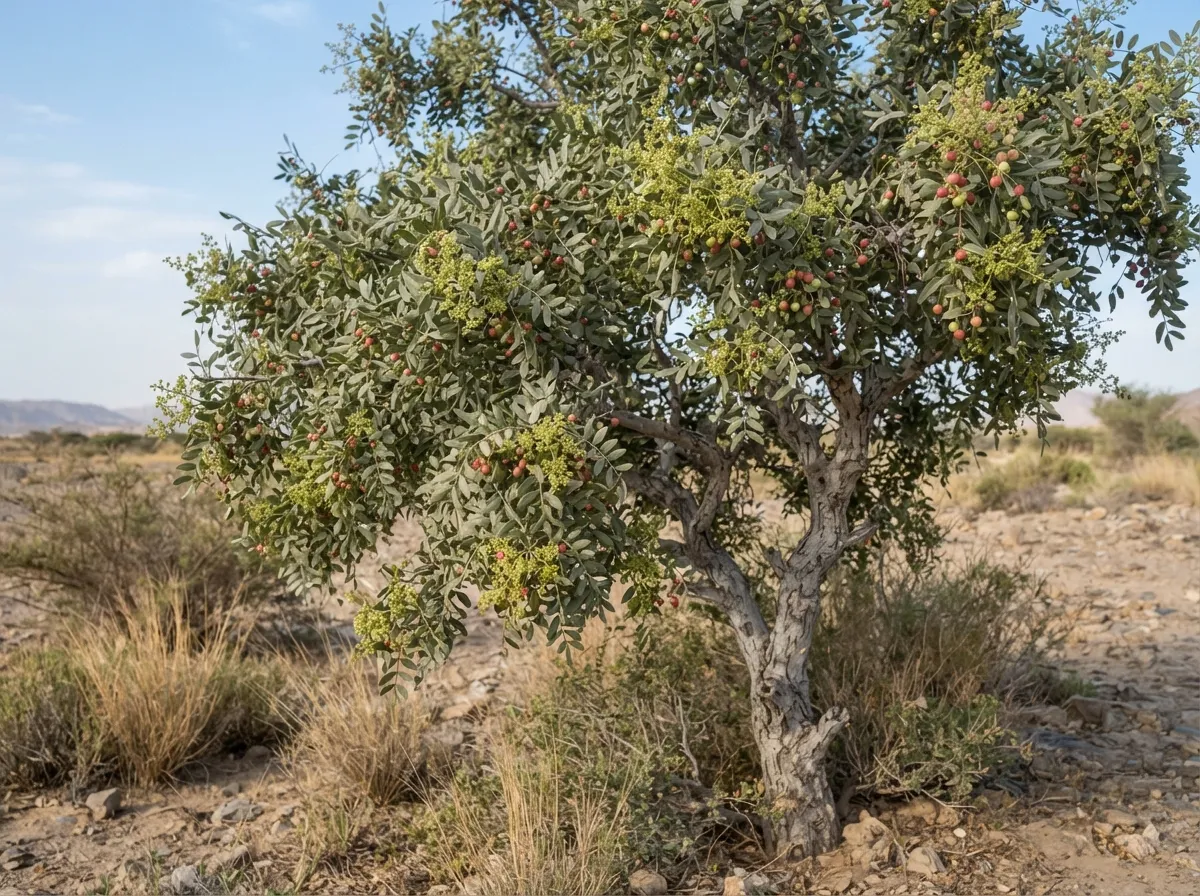
🔍 Identify it without mistakes
Small evergreen tree 6 to 7 m tall with a crooked trunk and cracked, whitish bark, often with drooping branches. Dark green, round, fleshy leaves that release a pleasant cress or mustard smell when crushed, with a warm, pungent taste. Small, fleshy red fruits grouped in clusters.
- crooked trunk, cracked whitish bark, often drooping branches
- dark green, round, fleshy leaves, cress/mustard scent when crushed
- small fleshy red fruits in clusters
- tolerates very water-poor soil (from 200 mm annual rainfall) and saline soils
⚠️ Not to be confused with
To tell them apart: the toothbrush tree has round, fleshy leaves without thorns and cracked whitish bark, whereas the desert date bears long spiral green thorns and a fluted, twisted trunk; despite similar desert habitats and also edible fruits, the two are easily distinguished by the presence or absence of thorns
🍽️ Eating it
Preparation : fresh leaves eaten raw in salads; small red fruits eaten fresh or dried
💊 Healing with it
roots and young branches have been used for over 1000 years as a traditional chewing stick (miswak/siwak), particularly widespread in the Muslim world; studies have highlighted antimicrobial compounds in the bark and wood that limit bacterial growth and plaque formation
Level of evidence : limited studies — Wikipedia — Salvadora persica
⚠️ no known special precautions for leaves, fruits, and chewing stick use
🪓 Other bushcraft uses
- traditional chewing stick (miswak/siwak), one of the oldest and most widespread oral hygiene uses in the world
- seeds pressed for detergent oil
- wood used as charcoal and firewood
- drought-resistant fodder for livestock in Namibia and elsewhere
Sources (1)
No entry replaces a certain identification in the field, or medical advice. When in doubt: don't eat it. If ingestion is suspected: poison control or 112/911.